
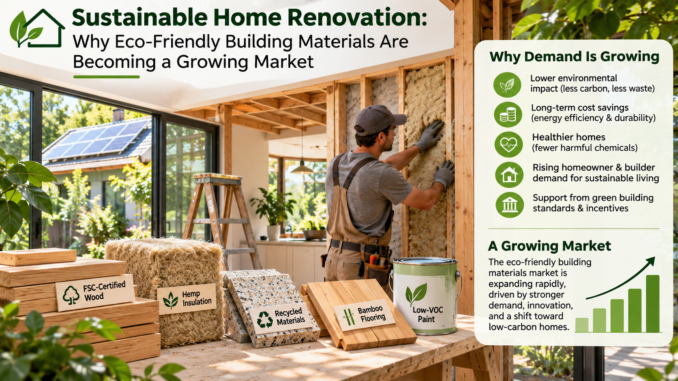
Sustainable Home Renovation Is Creating New Opportunities in the Building Materials Industry
The home improvement industry is undergoing a gradual shift as homeowners increasingly consider sustainability when planning renovation projects. Beyond aesthetics and functionality, factors such as energy efficiency, material durability, indoor air quality and environmental impact are influencing purchasing decisions. This changing preference is creating fresh opportunities for manufacturers and suppliers of eco-friendly building materials.
From bamboo flooring and reclaimed timber to recycled steel, low-carbon concrete and energy-efficient insulation, sustainable alternatives are gaining attention in residential construction and renovation. Homeowners are also exploring solar installations, energy-efficient windows and smart home systems to reduce household energy consumption.
For businesses, this transition represents an expanding market for sustainable construction products and services. Building material manufacturers, home improvement retailers, architects, interior designers and renovation contractors are finding opportunities to respond to consumers who want greener homes without compromising affordability, comfort or design.
Sustainable renovation is therefore becoming more than an environmental consideration. It is emerging as a business opportunity within the wider construction and home improvement economy.
Growing Demand for Eco-Friendly Building Materials
Conventional construction materials can involve resource-intensive manufacturing, high energy consumption and considerable waste. As environmental awareness increases, homeowners and construction professionals are exploring materials that offer better resource efficiency and longer product lifecycles.
Bamboo is attracting attention as a renewable alternative for flooring, furniture and interior applications. Reclaimed timber allows existing wood to be reused, while recycled steel and glass offer opportunities to reduce dependence on newly extracted raw materials.
Low-carbon concrete is another area attracting interest, particularly as manufacturers explore alternative cement formulations and supplementary materials to reduce the carbon footprint of construction.
Low-VOC paints, adhesives and finishes are also becoming relevant to homeowners concerned about indoor air quality. Meanwhile, insulation made from recycled cellulose, natural fibres and other alternative materials is creating additional choices for residential renovation projects.
For manufacturers, the opportunity lies in developing products that combine environmental performance with durability, availability, competitive pricing and ease of installation.
Energy Efficiency Is Driving Residential Renovation Investments
Energy consumption is becoming an important consideration in home renovation decisions. Heating, cooling, lighting and household appliances contribute to residential energy demand, encouraging homeowners to look at improvements that can make properties more efficient.
Energy-efficient windows, improved insulation, reflective roofing, LED lighting and smart temperature-control systems are among the upgrades gaining attention.
In warmer regions, including India, insulation, natural ventilation, reflective roofing and efficient cooling systems can help improve indoor comfort and manage electricity consumption.
Residential solar installations are also creating opportunities for businesses involved in renewable energy equipment, installation and maintenance.
These developments are expanding the home improvement market beyond conventional renovation services. Companies can increasingly offer integrated solutions that combine construction materials, energy systems and smart technologies.
Global Construction Industry Faces Growing Pressure to Adopt Sustainable Solutions
The commercial importance of sustainable construction is highlighted in the United Nations Environment Programme’s (UNEP) Global Status Report for Buildings and Construction 2025–2026, published in May 2026.
According to the report, buildings and construction account for approximately 37% of global carbon dioxide emissions and nearly 50% of global material extraction. The sector also represents 11–13% of global GDP and employs around 9% of the world’s workforce.
The findings highlight the scale of the opportunity for businesses developing low-carbon construction materials, energy-efficient building technologies and sustainable renovation services.
The report also points to the need for stronger investment in energy efficiency, improved building standards and wider adoption of low-carbon materials. It identifies the renovation of existing buildings as an important part of the transition towards more sustainable construction.
UNEP further reported that operational emissions from buildings increased by 1% in 2024, reaching 9.9 billion tonnes of CO₂. Its findings reinforce the need to improve building efficiency while reducing the environmental impact of construction materials.
For the home renovation industry, this creates opportunities in insulation upgrades, efficient cooling systems, sustainable roofing, recycled construction products and low-carbon alternatives to conventional materials.
Recycled Materials and Circular Construction Create Business Opportunities
The growing focus on resource efficiency is encouraging construction businesses to reconsider how materials are sourced, used and disposed of.
Reclaimed timber, recycled metal, repurposed furniture, recycled glass and recovered construction components can help reduce demand for new raw materials. These products are also supporting the development of businesses specialising in material recovery, refurbishment and recycling.
The circular construction approach focuses on extending the useful life of materials rather than treating renovation waste as a disposal problem.
For home improvement retailers, this creates opportunities to introduce dedicated product categories for recycled and responsibly sourced materials. Manufacturers can also explore partnerships with recycling companies and construction contractors to develop more efficient supply chains.
However, the commercial success of these products will depend on consistent quality, reliable availability, competitive pricing and clear information about their environmental performance.
India Offers Opportunities for Sustainable Home Improvement Businesses
India’s residential construction and home improvement sectors offer opportunities for businesses involved in energy-efficient renovation and sustainable building materials.
Increasing awareness of electricity consumption, urban housing requirements and the need for climate-responsive buildings is encouraging interest in better insulation, reflective roofing, natural ventilation, efficient cooling systems and renewable energy installations.
Materials such as bamboo, locally sourced timber, recycled steel and alternative construction products can also support more resource-conscious renovation practices when selected according to their suitability, durability and environmental performance.
For Indian manufacturers and suppliers, developing affordable sustainable products could create opportunities across residential housing, interior design and renovation services.
Small and medium-sized businesses can also participate through specialised services such as energy-efficient window installation, solar system integration, sustainable flooring and renovation waste management.
The opportunity is not limited to large construction companies. Local contractors, building material distributors, architects and home improvement retailers can also benefit from the growing interest in greener residential spaces.
Technology Is Expanding the Sustainable Home Renovation Market
Technology is becoming an important part of sustainable home improvement. Smart thermostats, automated lighting, energy monitoring devices and connected appliances are helping homeowners manage energy consumption more efficiently.
Digital design and building assessment tools are also helping architects and renovation professionals evaluate material requirements, improve space planning and identify potential energy-saving opportunities before work begins.
Online home improvement platforms are making it easier for consumers to compare sustainable products, review specifications and connect with renovation specialists.
For businesses, combining eco-friendly materials with smart home technologies could create new revenue opportunities. Companies offering integrated solutions covering insulation, energy management, solar installations and sustainable interiors can appeal to homeowners looking for comprehensive renovation services.
Challenges Affecting the Adoption of Eco-Friendly Building Materials
Despite increasing interest, the sustainable home renovation market faces several challenges.
The initial cost of certain eco-friendly materials can be higher than conventional alternatives. Limited availability, transportation costs and specialised installation requirements can also influence purchasing decisions.
Another challenge is the lack of consumer awareness about the actual environmental performance of different products. Materials marketed as sustainable do not necessarily offer the same environmental benefits, making certifications, responsible sourcing and transparent product information important.
For manufacturers and retailers, improving affordability and establishing reliable supply chains will be essential to expanding the market.
Businesses must also avoid misleading environmental claims. Providing verifiable information about recycled content, emissions, durability and product certifications can help build consumer confidence.
Future Outlook: Sustainable Renovation Could Reshape the Home Improvement Industry
Sustainable home renovation is creating opportunities across the construction, building materials and residential improvement industries. As homeowners become more conscious of energy efficiency, material quality and long-term property performance, demand for greener renovation solutions is expected to remain an important area of business development.
The findings of UNEP’s 2025–2026 Global Status Report reinforce the need to improve existing buildings, expand energy-efficient renovation and accelerate the adoption of low-carbon construction materials.
For manufacturers, this presents opportunities to invest in recycled products, alternative construction materials and energy-efficient solutions. Retailers and contractors can strengthen their offerings through sustainable product categories and specialised renovation services.
The next phase of growth will depend on making these solutions more affordable, accessible and reliable. Businesses that combine environmental responsibility with practical performance and competitive pricing will be better positioned to participate in the changing home improvement market.
Ultimately, sustainable renovation is not simply about choosing environmentally friendly paint or replacing conventional flooring. It involves rethinking how homes consume energy, use materials and manage resources throughout their lifecycle. This shift is creating a new commercial opportunity for businesses ready to support the transition towards more sustainable housing.
