
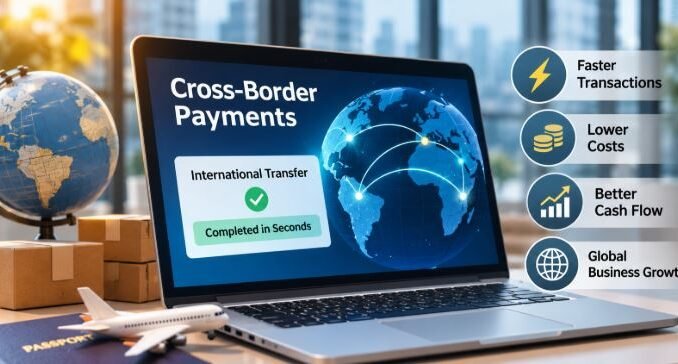
International business is no longer limited by geography. Companies can sell products to customers overseas, pay suppliers in different countries, hire remote employees and manage global operations from a single location. But while business has become increasingly borderless, moving money between countries has not always been straightforward.
For years, international payments have been associated with high transaction fees, currency conversion costs and lengthy processing times. A payment may pass through several intermediary banks before reaching its destination, with each institution carrying out checks and potentially adding charges. Differences in banking hours, regulations and payment systems can make even routine transactions complicated.
Financial technology is now changing this process. Through real-time payment networks, application programming interfaces (APIs), digital wallets, virtual accounts and new settlement technologies, fintech companies are helping businesses transfer money across borders more quickly and with greater visibility. What was once a complex banking process is gradually becoming a more connected and automated financial service.
As international trade, digital commerce and remote work continue to expand, faster cross-border payments are becoming an important part of the infrastructure supporting global business.
Why Traditional International Payments Take Time
Traditional cross-border payments often depend on a network of correspondent banks. When the sender’s bank does not have a direct relationship with the recipient’s bank, the transaction may need to pass through one or more intermediary institutions.
These banks use arrangements involving nostro and vostro accounts to manage funds held on behalf of other financial institutions. Each intermediary may conduct its own checks, update internal records, deduct fees and forward the payment. As a result, the transfer can involve several steps before the recipient receives the money.
The Society for Worldwide Interbank Financial Telecommunication (SWIFT) plays an important role in this process by transmitting payment instructions between financial institutions. However, SWIFT itself does not move the money. The actual transfer depends on the banks and settlement arrangements involved.
Time zones and banking hours create another challenge. A payment initiated after one institution’s cut-off time may have to wait until the next business day. Differences in local payment systems, data requirements and compliance procedures can add further delays.
For businesses making regular international payments, these uncertainties can affect supplier relationships, payroll schedules and working capital management.
Fintech Is Creating Faster Routes for Money Transfers
The latest generation of payment technology is focused on reducing unnecessary intermediaries and connecting domestic financial networks more efficiently. Several developments are helping make international transactions faster and easier to manage.
Real-Time Payment Networks
Many countries have introduced domestic instant payment systems that allow money to move between bank accounts within seconds or minutes. Increasingly, financial institutions and payment providers are exploring ways to connect these networks across borders.
Systems such as India’s Unified Payments Interface (UPI), Europe’s Single Euro Payments Area (SEPA) and its instant credit transfer service, SEPA Instant Credit Transfer (SCT Inst), demonstrate how domestic payment infrastructure can support faster transactions. Cross-border links, such as the PayNow–PromptPay arrangement between Singapore and Thailand, also show how connected payment systems can simplify transfers between participating markets.
For businesses, the potential benefit is significant. Instead of relying entirely on traditional international banking routes, payment providers can use local payment networks to collect funds in one country and deliver them through a domestic network in another.
Availability, speed and fees still depend on the payment corridor and participating institutions, but these connections are helping reduce reliance on slower processes.
APIs Are Automating Payment Operations
Application programming interfaces, commonly known as APIs, are becoming a key part of modern payment infrastructure. They allow banks, fintech platforms and currency providers to exchange information directly and automatically.
Through API-based systems, businesses can initiate payments, track transaction status and reconcile incoming or outgoing funds without relying on manual instructions or batch files. Payment platforms can also compare available routes and select an option based on factors such as cost, speed and network availability.
This level of automation can reduce administrative work for finance teams. It also gives businesses better visibility into where their money is and whether a payment has been completed, delayed or rejected.
Standardised messaging formats such as ISO 20022 further support this development by allowing richer and more structured payment information to travel between institutions. Better data can improve processing, compliance checks and reconciliation.
Digital Wallets and Multi-Currency Accounts
Digital wallets and multi-currency accounts are giving businesses more flexibility when managing international funds.
Instead of converting every payment immediately into their domestic currency, companies may be able to hold balances in several currencies, receive payments locally and decide when to convert funds. This can be useful for businesses that regularly pay suppliers or employees in different countries.
Virtual accounts also allow payment providers to offer local-style receiving details in multiple markets without requiring a business to open a separate traditional bank account in every country. This can simplify collections from international customers and make payment administration more manageable.
Regional systems such as SEPA also provide established payment options within markets that share common payment rules.
Blockchain and Stablecoins Are Expanding Settlement Options
Blockchain technology and stablecoins are attracting attention as alternative ways to transfer and settle value internationally.
Distributed ledger systems can support transactions without depending on the same sequence of correspondent banks used in traditional transfers. Stablecoins—digital tokens designed to maintain a stable value, commonly by referencing a fiat currency—can enable transfers and settlement around the clock, including outside conventional banking hours.
For companies operating across multiple markets, this could provide another option for moving funds and managing liquidity.
However, these technologies are not without challenges. Regulatory requirements, anti-money laundering controls, custody arrangements, liquidity and the reliability of conversion into local currencies all need to be considered. Their use and availability also vary across jurisdictions. Blockchain-based payments should therefore be viewed as an evolving part of the payment landscape rather than a universal replacement for banking networks.
Artificial Intelligence Is Improving Routing and Compliance
Artificial intelligence and machine learning are increasingly being used to make payment systems more efficient. These technologies can analyse historical transaction data, currency movements, bank availability and risk indicators to help identify suitable payment routes.
AI can also support fraud detection and compliance processes by identifying unusual transaction patterns and prioritising cases that need further review. Automated screening may reduce unnecessary manual intervention while helping financial institutions identify potentially suspicious activity.
The objective is not to remove regulatory checks, but to make them more accurate and efficient. Human oversight remains important, particularly when transactions involve complex documentation or higher-risk jurisdictions.
How Faster Payments Benefit International Businesses
The impact of modern payment technology extends beyond the speed of a bank transfer. It can influence how companies manage cash, plan international operations and serve customers in different markets.
Improved working capital management: Faster and more predictable settlement helps businesses access funds sooner. Companies can use available cash for inventory, operating expenses, marketing or expansion instead of maintaining large reserves to cover uncertain payment delays.
Better control over foreign exchange costs: Multi-currency accounts and more flexible conversion options can help businesses manage when and how they exchange money. Companies may be able to match payments and receipts in the same currency, reducing the need for unnecessary conversions and helping manage foreign exchange exposure.
Greater financial visibility: Real-time transaction updates, detailed payment references and clearer fee information can make reconciliation easier. Finance teams can identify completed payments, investigate exceptions and close accounts with less manual effort.
Easier international expansion: Automated payment workflows allow businesses to handle growing transaction volumes without increasing administrative work at the same rate. This is particularly valuable for online marketplaces, exporters, digital service providers and companies managing international payroll.
Stronger supplier and customer relationships: Reliable payment delivery helps businesses pay suppliers on schedule and offer more convenient payment options to international customers. This can improve confidence and support long-term commercial relationships.
Regulatory and Operational Challenges Remain
Despite the progress, cross-border payments remain more complicated than domestic transactions. Every country has its own financial regulations, reporting requirements and compliance expectations.
Anti-money laundering (AML) rules and sanctions screening may require payments to be reviewed by several institutions. Know Your Customer (KYC) requirements also differ between markets. A document accepted in one jurisdiction may not meet the requirements of another, resulting in additional checks or delays.
Technical differences can create problems too. Payment systems do not always use identical data formats, and information may be shortened or altered as it moves between institutions. Even small inconsistencies can trigger compliance alerts or require manual investigation.
Some countries also impose capital controls, transaction limits, tax documentation requirements or purpose-of-payment declarations. Businesses need to understand these local rules before sending or receiving funds.
Security is another priority. Faster payments can leave less time to identify and stop fraudulent transactions once they have been authorised. Payment providers therefore need strong identity verification, transaction monitoring, data protection and fraud prevention systems.
Choosing the Right Cross-Border Payment Partner
For businesses operating internationally, selecting a payment provider involves more than comparing transaction fees. The right partner should offer reliable coverage across the countries and currencies relevant to the company’s operations.
Businesses should assess payment speed, service reliability, transparent foreign exchange pricing and the provider’s ability to manage failed or delayed transactions. Strong compliance systems and appropriate regulatory permissions are equally important.
Integration should also be considered. APIs, bulk payment facilities, automated reconciliation and clear reporting tools can reduce the workload for finance and operations teams. As a business expands, its payment partner should be able to support additional markets and higher transaction volumes without creating unnecessary complexity.
A provider that combines local payment access, clear pricing, strong security and dependable customer support can make international financial operations easier to manage.
The Future of International Business Payments
Cross-border payments are becoming a critical part of the global digital economy. As international trade, e-commerce, remote employment and digital services grow, businesses will increasingly expect money to move across borders with the same convenience they experience with domestic payments.
Fintech is helping move the industry in that direction through connected payment networks, API-driven automation, multi-currency accounts, AI-supported compliance and emerging settlement technologies. These developments are improving speed and transparency, although differences in regulation, infrastructure and market access mean that progress will not be uniform everywhere.
The opportunity is substantial. Global cross-border payment values are expected to continue increasing, while international initiatives, including the G20 roadmap, are pushing for improvements in payment speed, cost, transparency and accessibility.
For businesses, the message is clear: payment infrastructure is no longer just a back-office function. It is becoming a strategic part of international growth. Companies that adopt reliable, secure and efficient cross-border payment solutions will be better equipped to manage global operations, strengthen commercial relationships and compete in an increasingly connected marketplace.
