

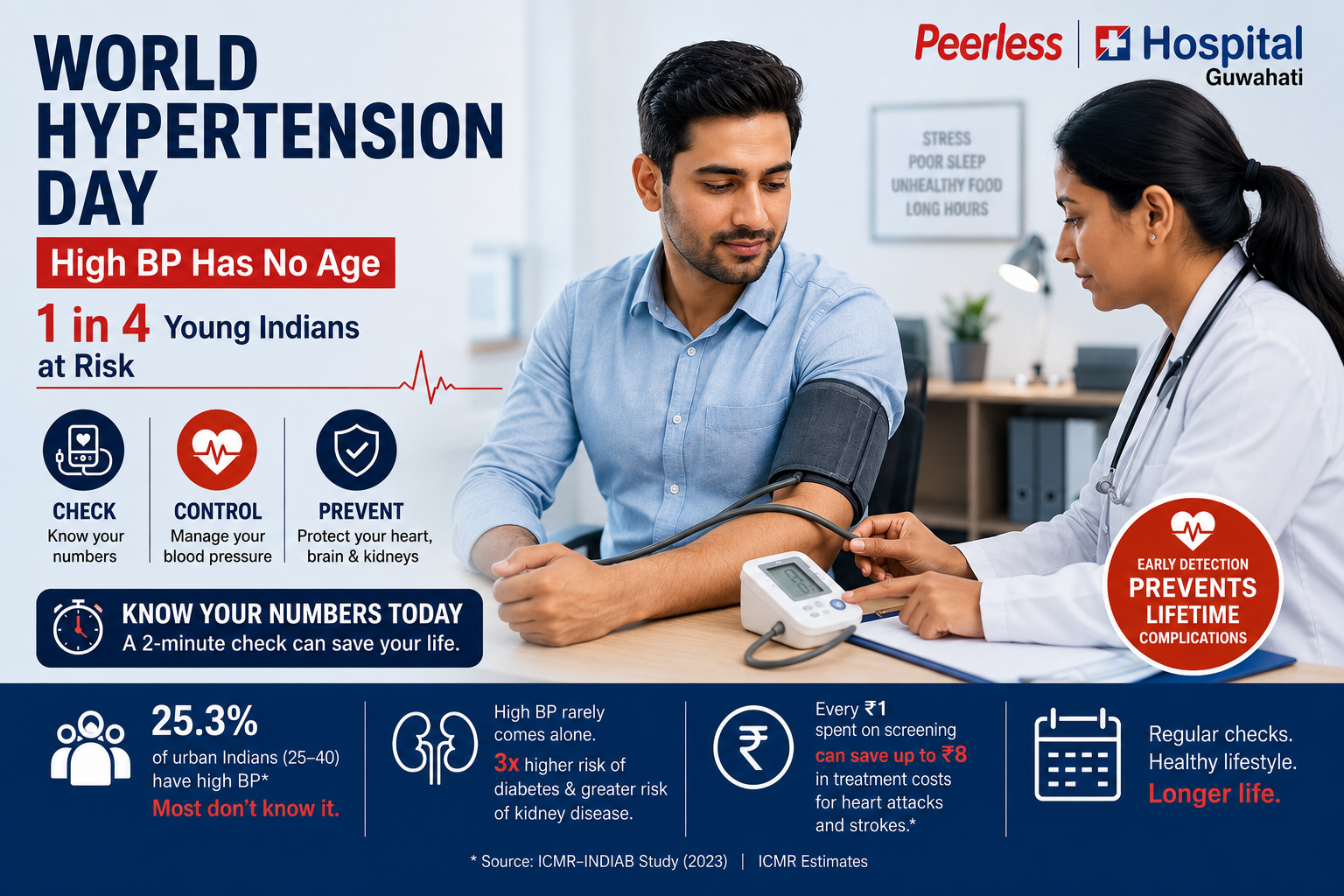
Guwahati; May 15: Ahead of World Hypertension Day, Peerless Hospital Guwahati emphasised the concerning increase in high blood pressure among Indians in their 20s and 30s. They pointed out that hypertension is no longer confined to older adults and is quickly becoming a significant health issue for young adults.
World Hypertension Day is observed globally to raise awareness about the “silent killer” – a condition that often has no warning signs but dramatically increases the risk of heart attack, stroke, kidney failure, and premature death. According to the ICMR‑INDIAB study (2023), 25.3% of urban Indian adults aged 25–40 have elevated blood pressure, with most individuals unaware of their condition.
In India, a large section of people still believe that hypertension is a problem of old age, or that if they feel healthy and fit, their blood pressure must be normal. Data from the National Family Health Survey 5 (NFHS 5, 2021) shows that only 37% of adults aged 18–35 have ever had their blood pressure checked. The 2026 theme of World Hypertension Day, “Measure Your Blood Pressure Accurately, Control It, Live Longer,” is an important reminder that high BP can strike at any age, and that early detection is the only way to prevent life‑threatening complications.
“Young Indians today are developing high blood pressure at an alarming rate – something we rarely saw a decade ago. Sedentary desk jobs, chronic stress, late‑night work, frequent consumption of high‑salt processed foods, and poor sleep hygiene are driving this epidemic in the 25–40 age group,” said Dr. Pranab Barua, Medical Superintendent and Senior Consultant, Department of Emergency Medicine, Peerless Hospital Guwahati.
He said that many young patients are shocked when they first see their blood pressure readings. “They come in for a routine health check or a minor illness, and walk out with a diagnosis of hypertension that will require lifelong management. The tragedy is that most of these cases could have been prevented or reversed with early awareness and lifestyle modification. Youth is not immunity.”
Key risk factors driving hypertension among young Indians include:
- Long working hours and high stress
- Frequent food delivery and restaurant meals
- Sleep deprivation (less than six hours per night)
- Lack of routine health checks
- Ignoring symptoms such as headaches, giddiness, or fatigue
“What people fail to realise is that uncontrolled hypertension silently damages blood vessels and vital organs over years. By the time a heart attack or stroke occurs in a seemingly ‘healthy’ young adult, the damage is already done,” Dr. Barua added.
He also pointed out that hypertension in young adults is closely linked to other lifestyle diseases. “High BP rarely comes alone. According to ICMR, hypertensive individuals have a three‑fold higher risk of developing diabetes and a significantly greater chance of kidney dysfunction later in life.”
Addressing common myths, Dr. Barua said many young people believe that “no symptoms means no problem,” or that “since I exercise and am not overweight, my BP must be normal.” Some also think that once they start BP medication, they can never stop. “In reality, many young patients with early‑stage hypertension can achieve normal levels with consistent lifestyle changes alone, without lifelong medicines – but only if they detect it early. That is why regular screening from the age of 18 is critical,” he explained.
Dr. Gautam Kr Das, CEO of Peerless Hospital Guwahati, strongly feels that hospitals today need to move beyond treating diseases to actively preventing them. “Hypertension is one of the most preventable yet ignored health risks today. A simple two-minute check can prevent decades of complications. Healthcare must move beyond treatment and actively drive early detection, especially among younger populations.”
Blood pressure measurement is readily available across healthcare institutions, including Peerless Hospital Guwahati, yet remains underutilised. Detecting hypertension early is one of the simplest and most cost-effective ways to prevent serious health complications, sparing families from the high costs associated with heart attacks and strokes. The Indian Council of Medical Research estimates that just one rupee invested in hypertension screening can save up to eight rupees in the cost of treating heart attacks and strokes later.
As healthcare gradually shifts from reactive treatment to prevention, institutions like Peerless Hospital Guwahati are positioning themselves not only as treatment centres, but as long‑term health partners. Detecting high blood pressure early in young adults offers a rare advantage – the power to prevent a lifetime of disability before any symptom ever appears.