
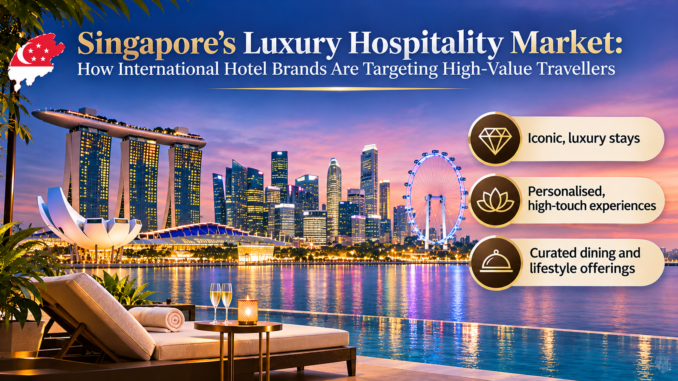
Nov 20: Singapore is strengthening its position as a leading destination for luxury travel in Asia. Its international connectivity, premium shopping districts, fine-dining restaurants and established hospitality infrastructure continue to attract affluent leisure travellers, business executives and international visitors.
However, the expectations of luxury travellers are changing. A premium hotel is no longer judged only by its location, room design or facilities. Guests increasingly look for personalised services, wellness experiences, privacy and opportunities to explore a destination in a more meaningful way.
This shift is creating new opportunities for international hotel brands operating in Singapore. Instead of competing only through room rates and brand reputation, hotels are investing in experiences that encourage longer stays, repeat bookings and higher spending.
Singapore’s position as a financial centre and international business hub further strengthens its hospitality market. For hotel operators, the opportunity lies in attracting visitors who value quality, convenience and distinctive experiences while being willing to spend more for premium services.
Singapore’s Luxury Hospitality Market: Tourism Growth and Industry Performance
Singapore’s tourism industry provides a strong foundation for the expansion of its luxury hospitality segment.
According to the Singapore Tourism Board, the country welcomed approximately 16.9 million international visitors in 2025, representing a 2.3% increase compared with 2024. Tourism receipts reached a record S$32.8 billion, growing by 10% year-on-year.
The hotel industry also maintained a high occupancy level. Average occupancy reached 81.9% in 2025, compared with 81.4% in 2024. However, the average room rate was S$273.56, down 1%, while revenue per available room (RevPAR) declined slightly by 0.4% to S$224.04.
These figures reveal an important business consideration. Although visitor numbers and tourism spending are growing, hotels still need to manage pricing, operating expenses and competition to improve revenue.
Singapore’s hotel industry includes more than 450 properties and over 73,000 rooms, contributing approximately 20% of the country’s tourism receipts. This makes hospitality an important part of the wider tourism economy.
The market is also seeing investment in new accommodation concepts. Raffles Sentosa Singapore, Mandai Rainforest Resort by Banyan Tree, The Laurus at Resorts World Sentosa and Mett Singapore reflect the growing diversity of the country’s premium hospitality offering.
These developments demonstrate how hotel operators are exploring different ways to attract visitors, from private villa accommodation to nature-inspired stays and lifestyle-focused properties.
How International Hotel Brands Are Attracting High-Value Travellers
International hotel groups are changing their approach to luxury hospitality. Rather than relying entirely on premium rooms and established brand names, they are developing services that respond to individual guest preferences and travel motivations.
1. Personalised Experiences Are Becoming More Important
Personalisation has become an important part of the luxury hotel experience. Affluent travellers often expect hotels to understand their preferences, from room arrangements and dining choices to transportation and leisure activities.
Hotels are responding with customised guest services, private experiences and tailored travel itineraries.
For example, a business executive visiting Singapore may require airport transfers, meeting facilities and flexible dining arrangements. A family travelling for leisure may prefer private sightseeing, child-friendly activities and exclusive access to attractions.
Hotel groups are also using customer relationship management systems and digital tools to understand guest preferences and improve their services.
This approach allows brands to move beyond standard accommodation packages and create experiences that can encourage repeat visits and stronger customer relationships.
2. Wellness Tourism Is Creating New Revenue Opportunities
Wellness is becoming an important consideration for travellers choosing premium accommodation. Many visitors want their holidays to provide opportunities to relax, improve their well-being and take a break from demanding routines.
Luxury hotels are responding by expanding their wellness offerings through:
-
Premium spas and therapeutic treatments.
-
Fitness centres and personal training.
-
Yoga, meditation and relaxation programmes.
-
Healthy dining and personalised nutrition.
-
Sleep-focused accommodation experiences.
-
Private wellness retreats.
Singapore attracts business travellers who may have limited time to relax during their visits. For these guests, access to wellness facilities can influence their hotel selection.
Leisure travellers are also showing interest in properties that combine comfortable accommodation with relaxation and lifestyle activities.
For hotel operators, wellness is becoming more than an additional facility. It creates opportunities to differentiate properties, attract new customer segments and generate revenue beyond room bookings.
3. Fine Dining Is Becoming Part of the Luxury Stay
Food is an important part of the travel experience, particularly for visitors who want to explore a destination’s culture and lifestyle.
Singapore’s diverse culinary environment gives luxury hotels an opportunity to attract guests through premium restaurants, international cuisines, chef-led experiences and customised dining arrangements.
Hotels are investing in distinctive restaurant concepts, private dining rooms, tasting menus and collaborations with established chefs.
These offerings can attract both international visitors and local residents, giving hotel restaurants a wider customer base.
For hospitality businesses, food and beverage services also provide an opportunity to build a recognisable brand identity. A distinctive restaurant or dining concept can strengthen a property’s appeal even among visitors who are not staying at the hotel.
4. Privacy and Exclusive Accommodation Are Attracting Affluent Guests
Privacy is increasingly important for wealthy travellers, families and senior business executives.
Many guests prefer accommodation that provides more space, dedicated services and a quieter environment. This has encouraged interest in private villas, luxury suites, private pools and resort-style properties.
Raffles Sentosa Singapore is an example of this approach. Its villa-only concept offers guests a more private alternative to conventional city accommodation.
International hotel groups are also exploring premium accommodation formats that combine exclusivity with access to restaurants, wellness facilities and leisure experiences.
Such properties can attract guests who place greater importance on privacy, personal attention and distinctive surroundings than on room prices alone.
Business Travel and MICE Tourism Support Luxury Hospitality
Singapore’s luxury hotel industry is not dependent only on leisure tourism. Corporate travel and Meetings, Incentives, Conferences and Exhibitions (MICE) also contribute to demand for premium accommodation.
The city regularly hosts international conferences, financial events, corporate meetings and industry exhibitions. These activities bring executives, investors, professionals and business delegations who often require high-quality accommodation.
According to the Singapore Tourism Board, MICE tourism receipts reached approximately S$2.3 billion in 2025, representing a 35% increase from 2024.
This creates opportunities for hotels to develop services specifically for corporate guests. These include executive suites, private meeting facilities, corporate dining spaces, chauffeur-driven transportation and dedicated concierge services.
Business travellers may also extend their visits for leisure, creating additional opportunities for hotels to promote shopping, dining, entertainment and wellness experiences.
The combination of business and leisure travel can help hotels attract different customer segments and diversify their revenue sources.
How Technology Is Changing Premium Hotel Services
Technology is influencing how hotels communicate with guests and manage their operations. Although personal attention remains essential in luxury hospitality, digital tools can make the overall experience more convenient.
International hotel brands are increasingly exploring artificial intelligence, mobile applications and data analytics.
AI-powered services can help hotels respond to routine enquiries, recommend restaurants and provide travel suggestions based on guest preferences.
Mobile check-in and digital room access can reduce waiting times, while smart room technology allows guests to adjust lighting, temperature and entertainment settings.
Hotels are also using customer data to understand booking patterns and previous interactions. This can help them provide more relevant recommendations, improve service delivery and encourage customer retention.
Technology, however, cannot replace the human element of luxury hospitality. Many high-value travellers continue to appreciate personal attention, discretion and assistance from experienced hotel staff.
The business opportunity lies in combining digital convenience with attentive service rather than allowing automation to make the guest experience impersonal.
Why International Hotel Brands Are Investing in Singapore
Singapore offers several advantages for international hospitality companies looking to strengthen their presence in Asia.
Its international connectivity makes it accessible to travellers from major global markets. The country’s position as an aviation and business hub supports demand from both short-haul and long-haul visitors.
Singapore also has an established shopping, dining and entertainment ecosystem. Visitors can combine premium accommodation with luxury retail, cultural attractions, entertainment venues and exclusive lifestyle experiences.
Its reputation for safety, reliable infrastructure and business connectivity further strengthens its appeal to international executives and affluent families.
Major hospitality developments are adding to the country’s premium tourism offering.
One significant example is the planned US$8 billion expansion of Marina Bay Sands. The development includes an all-suite luxury hotel tower with 570 suites, a 15,000-seat entertainment arena and additional premium meeting, dining and retail facilities.
The investment reflects a wider shift towards integrated hospitality, where accommodation is connected with entertainment, dining, retail and business events.
Marina Bay Sands has also reported strong performance following a US$1.75 billion reinvestment programme that upgraded its guest accommodation, dining and entertainment offerings. Its 2025 annual review highlighted the importance of attracting high-value international travellers through a broader luxury experience.
For international hotel operators, such developments demonstrate the commercial potential of combining premium accommodation with experiences that encourage guests to spend across multiple services.
Competition and Challenges in Singapore’s Luxury Hotel Industry
Despite strong tourism performance and investment, Singapore’s luxury hospitality market faces several challenges.
Intense competition: International hotel groups compete through location, brand reputation, exclusive services and premium experiences. Independent luxury properties also contribute to the competitive environment.
Rising operating expenses: Property, labour, energy and maintenance costs can affect hotel profitability. Operators need to maintain premium service standards while improving operational efficiency.
Changing guest expectations: Affluent travellers increasingly expect personalised experiences, sustainability initiatives and technology-enabled convenience. Meeting these expectations requires continuous investment.
New hotel supply: Additional accommodation capacity can increase competition, particularly when several properties target similar customer segments.
International economic conditions: Currency movements, geopolitical developments and changes in global travel spending can influence visitor demand and hotel revenue.
The 2025 hotel performance figures also highlight the importance of revenue management. Despite higher occupancy, average room rates and RevPAR recorded slight declines. This means hotel operators need to focus not only on attracting more visitors but also on improving the value generated by each stay.
Brands that understand their target customers and establish a clear market position will be better placed to manage these challenges.
Sustainability Is Becoming Part of Responsible Luxury
Sustainability is gaining importance in the hospitality industry as travellers become more conscious of environmental practices and responsible tourism.
Luxury hotels are exploring energy-efficient operations, reduced food waste, responsible sourcing and more sustainable accommodation practices.
Singapore’s Tourism 2040 strategy places emphasis on sustainable development, distinctive visitor experiences and a more innovative tourism industry. The Singapore Tourism Board projects tourism receipts of S$47 billion to S$50 billion by 2040.
For hotel brands, sustainability can become part of the guest experience rather than simply an operational requirement.
Examples include locally sourced dining, reduced single-use plastics, energy-efficient facilities and experiences that introduce visitors to Singapore’s natural and cultural environment.
Nature-focused developments, including Mandai Rainforest Resort by Banyan Tree, illustrate how hospitality can be connected with the surrounding environment and nature-based experiences.
As expectations develop, hotels that integrate responsible practices into their operations may strengthen their appeal among environmentally conscious travellers while improving long-term resource efficiency.
The Future of Singapore’s Luxury Hospitality Market
Singapore’s luxury hospitality market is likely to become increasingly experience-driven as international hotel brands compete for high-value travellers.
Personalised services, premium dining, wellness tourism, private accommodation and technology-enabled guest experiences will remain important areas of investment.
The country’s Tourism 2040 roadmap provides a longer-term direction for this development. Its focus on distinctive experiences, sustainable growth and tourism innovation creates opportunities for hospitality businesses to develop new products and reach higher-value visitor segments.
The expansion of integrated resorts, premium hotel concepts and international events can also strengthen Singapore’s appeal among business and leisure travellers.
For hotel operators, the next phase of competition will involve understanding what affluent travellers value most and developing services that go beyond traditional luxury accommodation.
Brands that successfully combine personalised hospitality, local experiences, service quality and operational innovation may be better positioned to build customer loyalty and attract repeat visitors.
Conclusion: Experience Will Define the Next Phase of Luxury Hospitality in Singapore
Singapore’s luxury hospitality market is evolving as international hotel brands shift their attention towards high-value travellers seeking more than premium accommodation.
Personalised services, wellness facilities, exclusive dining, private stays and technology-enabled experiences are becoming important elements of the modern luxury hotel offering.
The country’s strong tourism spending, international connectivity, business travel demand and major hospitality investments provide opportunities for hotel operators. At the same time, rising operating costs, competition and changing customer expectations require brands to continuously refine their strategies.
For international hotel groups, success will increasingly depend on their ability to create distinctive experiences that justify premium pricing and encourage repeat visits.
As Singapore continues to strengthen its position as a global tourism and business destination, experience-led hospitality is likely to play an important role in shaping the next phase of its luxury hotel industry.
