
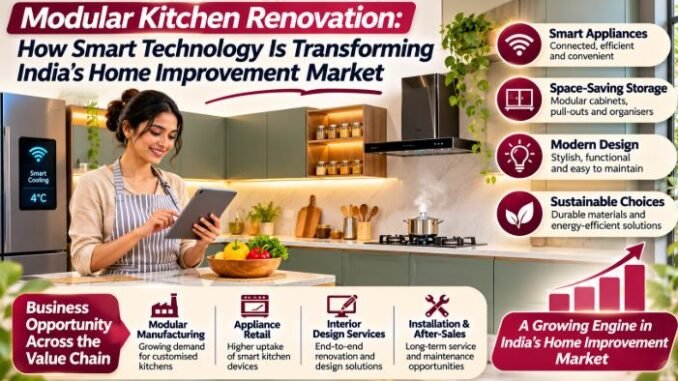
A kitchen is no longer just a place to prepare meals; it has become an important part of modern home design, where functionality, comfort and style need to work together. As Indian homeowners upgrade older spaces and look for smarter ways to organise their homes, modular kitchen renovation is gaining attention across the home improvement market. From space-saving cabinets and customised storage to smart appliances and modern fittings, changing consumer preferences are creating fresh opportunities for manufacturers, interior designers, appliance retailers and renovation service providers. This shift is also encouraging businesses to rethink their products and services, as customers increasingly expect kitchen solutions that combine convenience, durability, attractive design and value for money.
Changing Consumer Lifestyles Are Driving Kitchen Renovation Demand
The growing interest in kitchen renovation reflects changing household needs and expectations. Homeowners are increasingly looking for kitchens that are easier to maintain, better organised and suited to their daily routines. Older kitchen layouts may lack adequate storage, efficient work surfaces or space for modern appliances, making renovation an attractive option.
Urban housing patterns are also influencing demand. Compact apartments require intelligent space planning, while larger homes often prioritise customised layouts, premium finishes and integrated appliances. Nuclear families and dual-income households may place greater importance on convenience, accessibility and easy maintenance.
For businesses, these changing preferences are creating opportunities to serve different customer segments. Modular kitchen manufacturers and interior design companies can develop solutions for compact homes, mid-range renovations and premium residential projects. Companies that understand the practical requirements of different households can build stronger market positions.
Smart Kitchen Technology Is Creating New Business Opportunities
Technology is becoming an important part of modern kitchen planning. Consumers are showing interest in appliances and fittings that make everyday tasks easier, improve efficiency and offer greater convenience.
Smart appliances, sensor-based lighting, touch-operated fittings and connected home devices are changing expectations around kitchen functionality. Features such as remote appliance controls, automated settings and maintenance alerts can make household management more convenient.
Even relatively simple upgrades, including soft-close drawers, sensor-enabled lights, modern chimneys and efficient ventilation systems, can improve the kitchen experience.
This creates opportunities for appliance manufacturers, electronics retailers, hardware suppliers and home automation businesses. Companies can expand their offerings by combining traditional kitchen products with technology-enabled solutions. However, businesses need to focus on practical benefits, reliability and ease of use rather than treating smart features as an expensive selling point without clear customer value.
Modular Kitchen Design Is Transforming Space Utilisation
Storage remains one of the most important considerations in kitchen renovation. Poorly designed cabinets, inaccessible corners and limited work surfaces can make daily cooking and cleaning difficult.
Modular kitchen design offers a structured approach to using available space more effectively. L-shaped, U-shaped, parallel and straight kitchen layouts can be adapted to different room dimensions and household requirements.
Pull-out baskets, tall pantry units, corner storage systems, drawer organisers and overhead cabinets help homeowners make better use of available space. Built-in appliances and coordinated cabinetry can also create a cleaner and more organised appearance.
For manufacturers, modular systems offer opportunities to standardise production while providing customers with different configurations, materials and finishes. This can support business growth through product customisation and more organised manufacturing processes.
However, quality remains essential. Cabinet materials, hinges, drawer channels, countertops and installation standards all influence the durability of a finished kitchen. Businesses that maintain consistent product quality can strengthen customer confidence and encourage referrals.
Digital Design Tools Are Changing the Kitchen Buying Experience
The kitchen renovation business is becoming increasingly technology-driven, even before installation begins. Digital design software, 3D visualisation and online kitchen configurators allow customers to explore layouts, colours, finishes and storage options before committing to a project.
These tools can help homeowners understand how a proposed kitchen may look within their available space. They also allow designers to present different configurations and make adjustments based on customer feedback.
For businesses, digital planning can improve the sales process and reduce uncertainty. More accurate measurements, clearer design presentations and better communication between designers, suppliers and installers can help reduce costly mistakes.
Digital platforms also provide opportunities to reach customers beyond traditional showroom locations. Businesses can use online consultations, project galleries and customised quotations to generate enquiries and support purchasing decisions.
Companies that connect digital design with manufacturing, delivery and installation can create a more efficient customer journey while improving project coordination.
Home Improvement Businesses Are Finding Opportunities Across Multiple Segments
The expansion of modular kitchen renovation is creating business opportunities throughout India’s home improvement ecosystem.
- Modular furniture manufacturers: Demand for customised cabinets, kitchen units and storage systems creates opportunities for manufacturers offering durable materials and flexible designs.
- Hardware and fitting suppliers: Hinges, drawer channels, handles, pull-out baskets and specialised storage fittings are essential components of modern kitchens.
- Appliance manufacturers and retailers: Renovation projects create demand for cooking appliances, refrigerators, dishwashers, chimneys and smart kitchen equipment.
- Interior designers and contractors: Professional planning, material selection, installation and project management services can help businesses offer complete renovation solutions.
- Digital home improvement platforms: Online consultations, 3D visualisation and customised quotations can make it easier for customers to plan projects and compare solutions.
The commercial opportunity extends beyond individual product sales. Businesses that offer coordinated design, supply and installation services can create stronger customer relationships and differentiate themselves in a competitive market.
Smaller Cities Are Expanding the Market
Opportunities in India’s home improvement sector are increasingly extending beyond major metropolitan markets. Consumers in Tier II and Tier III cities are exploring modern interiors, organised furniture solutions and improved household appliances.
For modular kitchen businesses, these markets offer opportunities to reach new customers and expand distribution networks. However, success requires an understanding of regional preferences, purchasing power, housing layouts and local service requirements.
A premium product range designed for metropolitan customers may not suit every smaller-city market. Businesses may need to introduce flexible packages, accessible pricing and customised solutions that reflect local demand.
Digital marketing and online consultations can help companies generate enquiries from a wider geographical area. Physical showrooms, local installation teams and dependable after-sales support can then help convert those enquiries into completed projects.
Businesses that combine digital reach with reliable local execution can strengthen their presence in emerging markets.
Sustainability and Product Durability Are Influencing Buying Decisions
Homeowners are increasingly considering the long-term performance of kitchen materials and appliances. A kitchen renovation involves a significant investment, making durability, maintenance requirements and product reliability important purchasing factors.
Manufacturers can respond by offering durable materials, efficient appliances and products designed for longer service life. Better production planning and accurate measurements can also reduce material wastage during manufacturing and installation.
For retailers and designers, explaining material specifications, maintenance requirements and warranty coverage can help customers make informed decisions.
Sustainability can also become a point of differentiation for businesses, provided environmental claims are supported by credible product information and responsible practices.
Challenges Facing the Modular Kitchen Business
Despite the opportunities, kitchen renovation involves several operational challenges. Customised projects require accurate measurements, reliable suppliers, skilled installation teams and careful coordination between different service providers.
Delays in material supply, poor workmanship, incorrect measurements and inconsistent product quality can affect project completion and customer satisfaction. Such issues can also increase costs and damage a company’s reputation.
Pricing transparency is another important consideration. Customers may find it difficult to compare quotations when materials, hardware quality, appliance specifications and installation services vary. Businesses that provide detailed estimates and clearly explain product options can build greater trust.
After-sales service also plays an important role. Cabinets, fittings and appliances may require maintenance or repairs after installation. Companies that offer dependable support and clear warranty terms can improve customer retention and strengthen their market reputation.
For businesses, sustainable growth will depend on combining attractive designs with professional execution, reliable sourcing and consistent service standards.
Conclusion:
The growing interest in modular kitchen renovation reflects a wider change in how Indian households approach home improvement, with greater emphasis on practical design, smart technology and long-term convenience. For businesses, this presents opportunities across modular furniture, kitchen appliances, storage solutions, interior design and professional renovation services. However, sustainable growth will depend on more than offering attractive designs or the latest technology; product quality, transparent pricing, skilled installation and dependable after-sales support will remain essential to customer satisfaction. As homeowners continue to seek kitchens that suit their lifestyles and available spaces, businesses that understand these changing needs and deliver reliable, well-designed solutions will be better placed to strengthen their position in India’s expanding home improvement market.
