
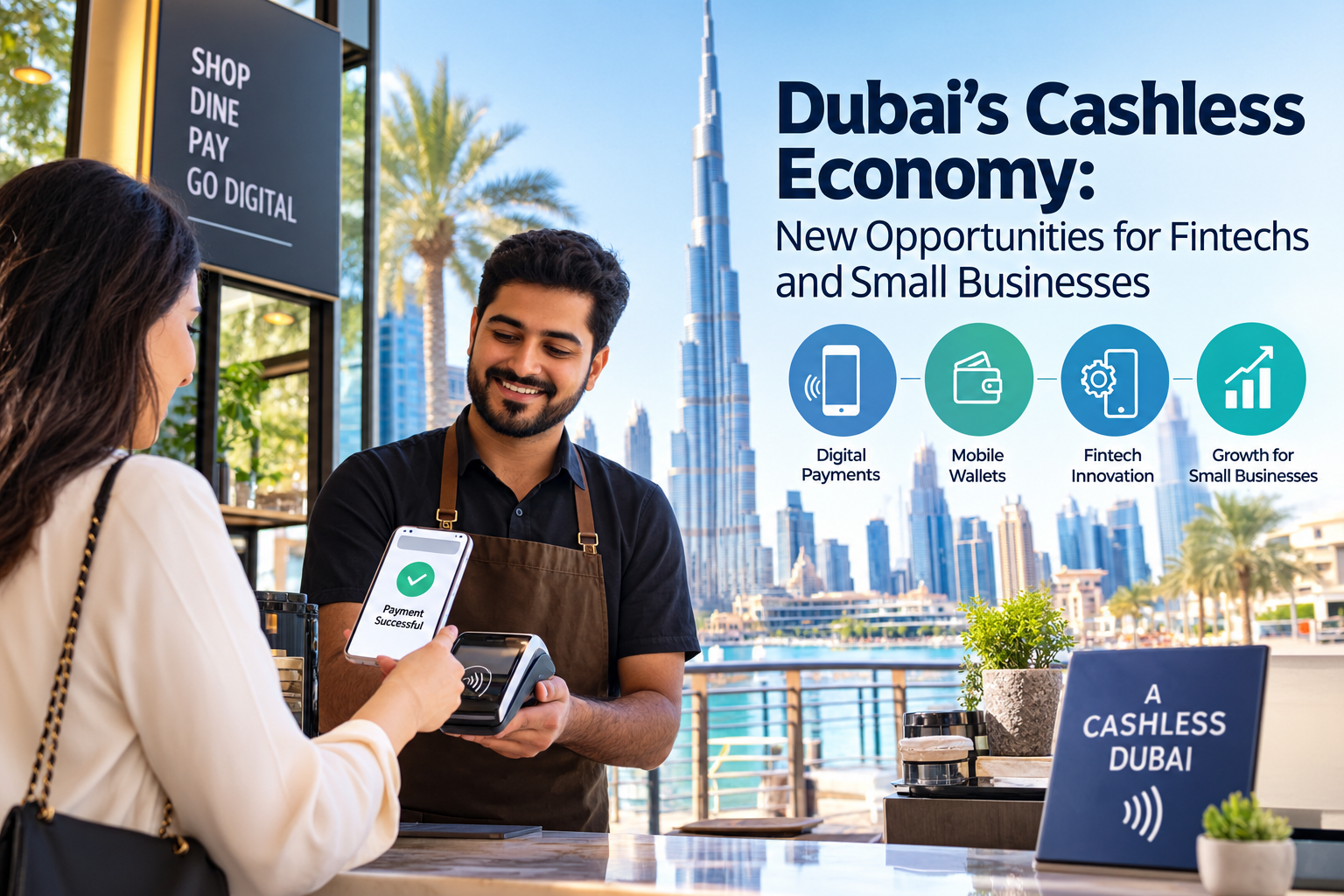
Oct 13: Dubai’s move towards a cashless economy is creating new opportunities for fintech companies and small businesses. From retail stores and restaurants to e-commerce platforms and professional services, digital payments are changing how businesses collect money, manage transactions and serve customers.
The shift is no longer just about replacing cash with cards or mobile wallets. It is about making payments easier, improving financial management and helping businesses operate more efficiently. For fintech companies, it opens the door to new services beyond payment processing. For small and medium-sized enterprises (SMEs), it offers practical ways to simplify everyday operations and reach customers who prefer digital transactions.
Dubai’s Cashless Economy Crosses a Major Milestone
Dubai has made significant progress towards its cashless economy ambitions. According to Dubai Finance, the emirate’s cashless transactions index reached 90.1% in October 2026, exceeding the 90% target set for the year. The Dubai Cashless Strategy, launched in October 2024, also contributed more than AED 8 billion to the emirate’s economy, surpassing its original economic contribution target. The government sector’s Digital Enablement Index reached 100%.
These figures reflect the growing role of digital payments across government services and the wider business ecosystem. The strategy aims to establish a secure and integrated payment environment while supporting Dubai’s broader ambition to strengthen its position as a global digital economy hub.
For businesses, the milestone has practical implications. Customers increasingly expect convenient payment options, while merchants need systems that help them collect payments, track transactions and manage accounts without adding unnecessary work.
This creates opportunities for fintech providers to offer services such as digital invoicing, automated reconciliation, payment integration and financial management tools. The next stage of growth will depend on how effectively these solutions address the needs of businesses of different sizes.
Digital Payment Adoption Opens New Business Opportunities
Dubai’s cashless strategy offers a useful indication of where the emirate’s financial technology market is heading. The October 2026 results show that the cashless transactions target was exceeded ahead of the strategy’s scheduled two-year timeframe. The reported economic contribution of more than AED 8 billion further highlights the importance of digital payments to the emirate’s economic development.
At the national level, the UAE is also developing its digital payment infrastructure. One example is Aani, the instant payment platform operated by Al Etihad Payments, a subsidiary of the Central Bank of the UAE. The platform is designed to enable quick account-to-account transfers and support digital payment experiences for individuals and businesses.
The wider significance of these developments lies in the services that can be built around digital transactions. Once businesses have reliable ways to accept payments, they can explore connected tools for bookkeeping, sales tracking, expense management and cash-flow monitoring.
For fintech startups, this creates opportunities to develop affordable services for retailers, restaurants, online sellers and independent professionals. Small businesses, in turn, can benefit from better-organised transaction records and more convenient ways to collect money.
However, the expansion of digital payments does not automatically translate into higher profits for every business. Payment fees, settlement times, customer preferences and technology costs will continue to influence adoption. The strongest opportunities will come from solutions that deliver clear benefits without adding unnecessary complexity.
Fintech Startups Can Look Beyond Payment Processing
As digital payments become more common, fintech companies have an opportunity to address challenges that businesses face every day.
A retailer might need a payment system that also generates invoices and reconciles daily sales. An online seller may want to accept multiple payment methods while managing refunds and identifying suspicious transactions. A service provider might need a simple way to send payment links and track outstanding invoices.
These needs create room for integrated financial technology platforms that bring several functions together.
Digital wallets, QR-code payments, contactless transactions and online payment gateways remain important parts of the market. But fintech providers can differentiate themselves by combining payments with accounting, expense management and business reporting.
Affordability will be especially important for SMEs. Solutions with transparent pricing, straightforward onboarding and reliable support are more likely to appeal to businesses that cannot afford complex financial systems.
For startups entering this market, understanding merchants’ everyday problems may prove more valuable than offering a long list of features.
Small Businesses Can Improve Customer Experience and Efficiency
For small businesses, digital payments can make everyday transactions more convenient for both customers and employees.
A café can accept contactless payments at the counter, while a salon can send a payment link when a customer books an appointment. Home-service providers can collect payments digitally after completing a job, and online sellers can allow customers to pay directly through their websites or social media storefronts.
These options reduce the need to handle cash and can make purchasing easier for customers who prefer digital methods.
Electronic transaction records can also help business owners monitor sales and identify discrepancies. When connected to accounting software, payment systems can reduce manual data entry and make financial reporting more organised.
For a small business with limited staff, these improvements can free up time for customer service and business development.
Nevertheless, owners should compare providers carefully. Transaction fees, settlement schedules, refund policies and support arrangements all affect the value a payment system delivers.
E-Commerce and Retail Can Benefit From Integrated Payments
Dubai’s cashless transition is particularly relevant to businesses selling through both online and physical channels.
Customers increasingly expect a consistent experience whether they shop through a website, use a mobile application or visit a store. Businesses that connect payment systems across these channels can simplify transactions and improve order management.
Fintech providers can support this process with payment gateways, subscription billing, automated refunds and transaction monitoring. Retailers may also benefit from connecting payment data with inventory and sales systems.
For businesses that depend on repeat purchases, subscription payments and automated billing can reduce the administrative work involved in collecting recurring revenue.
The opportunity for fintech companies is to move beyond processing individual transactions and provide tools that help businesses manage more of the sales process. For retailers and online sellers, the priority is to make purchasing straightforward while keeping costs under control.
Digital Payment Records Could Support SME Financing
Another potential benefit of a cashless economy is the ability to maintain more organised financial records.
Small businesses that consistently record sales electronically may find it easier to demonstrate their transaction history and cash flow when approaching lenders. With appropriate consent and regulatory safeguards, authorised financial institutions may use this information alongside other financial data when assessing credit applications.
This could support the development of services such as working-capital financing and invoice financing for eligible businesses.
Fintech companies can contribute by helping SMEs organise financial information and connect with licensed financial institutions. Such services may be useful to businesses that lack dedicated finance teams or sophisticated accounting systems.
However, digital payment records alone do not guarantee access to credit. Lenders must still assess repayment capacity, business risks and other eligibility requirements.
Cross-Border Payments Offer Further Opportunities
Dubai’s position as an international trade and business hub makes cross-border payments another important area for fintech innovation.
Importers, exporters, travel companies and online sellers often need to manage overseas supplier payments, currency conversion and international transactions. These processes can be time-consuming and costly, particularly for smaller businesses.
Fintech providers can address these challenges through international payment gateways, multi-currency services, transaction tracking and automated reconciliation.
The UAE’s expanding payment infrastructure provides a foundation for more connected financial services. However, businesses offering cross-border solutions must account for relevant licensing requirements, foreign-exchange rules and anti-money-laundering obligations.
For fintech startups, the opportunity lies in making international transactions easier to manage while maintaining transparency, reliability and regulatory compliance.
Cybersecurity Will Remain a Priority
As businesses become more dependent on digital payments, protecting transactions and customer information becomes increasingly important.
Payment fraud, account takeovers and data breaches can affect businesses of any size. Fintech companies can respond by developing tools for identity verification, secure authentication, transaction monitoring and suspicious-activity detection.
Artificial intelligence may help identify unusual payment patterns, although such systems require proper testing and oversight.
Small businesses can also reduce risks by choosing trusted payment providers, updating software, limiting access to financial accounts and enabling additional authentication measures where available.
Trust is essential to the long-term success of cashless transactions. Businesses need to protect customer information, communicate payment terms clearly and respond promptly when transactions go wrong.
For fintech providers, security and regulatory compliance must be built into their services from the outset.
Challenges Small Businesses Need to Consider
Although digital payments offer clear advantages, adopting them requires careful planning. Processing fees, equipment expenses and settlement delays can affect profit margins, particularly for businesses operating on tight budgets.
Integrating payment systems with existing accounting or inventory software may also require additional investment. Before choosing a provider, business owners should compare total costs, supported payment methods, settlement schedules, refund procedures and customer support.
Customer preferences matter, too. Dubai’s progress towards a cashless economy does not mean every customer is ready to abandon cash. Some businesses may find that offering a combination of payment methods remains the most practical approach.
Companies must also meet applicable payment regulations, consumer-protection requirements and data-privacy obligations. Working with appropriately licensed providers can help them navigate these responsibilities.
Ultimately, the best solution is not necessarily the most advanced one. It is the system that makes transactions easier without introducing costs or complications the business cannot justify.
The Road Ahead for Dubai’s Cashless Economy
Dubai’s achievement of its cashless transaction target highlights the scale of the emirate’s digital payment transformation. The next opportunity lies in helping businesses use this infrastructure to improve efficiency, manage finances and deliver better customer experiences.
For fintech startups, growth could come from integrated payment platforms, SME financial management, cross-border transactions and fraud prevention. For small businesses, adopting the right digital tools can support more organised records, convenient payments and smoother operations.
The market will reward solutions that combine affordability with reliability and security. As Dubai’s digital economy continues to evolve, fintech companies and SMEs that focus on practical business needs will be better positioned to benefit from the shift towards cashless transactions.
