
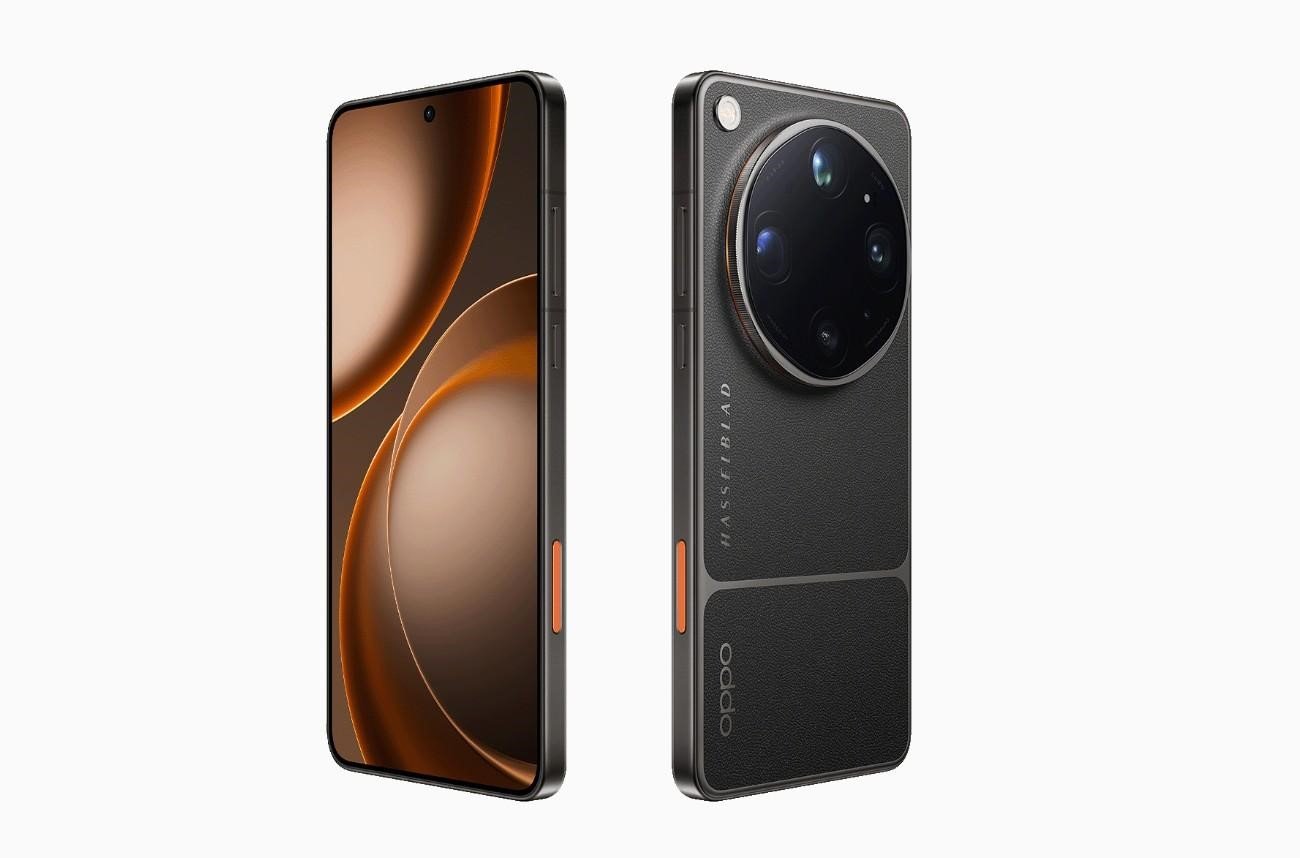
OPPO brought its most ambitious camera phone to Vietnam on May 5, 2026, at a launch event held in Hoi An. The OPPO Find X9 Ultra is the flagship of the Find X9 series, positioned around the tagline “Your Next Camera,” arriving alongside the more compact Find X9s. For anyone hunting a rugged flagship for high-zoom wildlife and landscape photography, this is one of the more interesting camera-focused flagships released this year.
A Closer Look at the 10x Telephoto
Let’s get straight to the headline feature: the Hasselblad 50MP 10x Ultra-Sensing Optical-Zoom Telephoto. OPPO built it around a Quintuple Prism Reflection Periscope Structure — five prisms, not the usual two or three — to achieve a 230mm equivalent focal length in a body that’s just 8.65mm thick(for the Canyon Orange variant).
What does 10x optical zoom mean in practice? Subjects 30 to 50 metres away can be brought into frame with the spatial compression previously reserved for dedicated telephoto glass. The f/3.5 aperture is DSLR-grade, and the 1/2.75-inch sensor feeds that zoom with enough light to keep noise controlled. Push it to 20x optical-quality zoom, and rendering still holds depth — the kind of background compression that makes wildlife shots look intentional rather than cropped.
There’s also the optional Hasselblad Earth Explorer Kit: a 300mm Explorer Teleconverter with 16 all-glass elements, pushing optical reach to 300mm (optical-quality reach extending to 690mm), with OIS+EIS fusion stabilisation. For Vietnam’s more demanding outdoor scenarios — shooting from a moving boat on Ha Long Bay, or tracking birds on Cat Tien’s trails — this is where the OPPO Find X9 Ultra offers capabilities that remain uncommon among current smartphones.
Two 200MP Cameras: When Numbers Actually Matter
Most 200MP claims on smartphones deserve skepticism. Here, the math is more defensible.
The main camera uses a brand new 1/1.12-inch Sony sensor at f/1.5, with 10% more light intake compared to the Find X8 Ultra’s main shooter. Multi-frame fusion at both 23mm and 70mm focal lengths delivers 200MP output — which translates to photos where you can crop heavily and still retain usable detail. In a landscape like the terraced rice fields of Mu Cang Chai, that detail matters.
The 3x Super Portrait Telephoto — a 70mm f/2.2 lens on a 1/1.28-inch sensor — is actually the camera that sees most use day-to-day. OPPO claims 36% more light intake than its predecessor. That lens pulls double duty as a close-focus option too, with 15cm telephoto macro capability.
The sibling model, the Find X9s, features a highly capable 50MP main camera (f/1.8, 1/1.56 inch) with a 50MP 3x periscope telephoto, optimized for everyday travel photography. For landscape and wildlife work, the jump from the Find X9s to the OPPO Find X9 Ultra is meaningful. The Find X9s is easier to carry, while the Find X9 Ultra is better suited to users who prioritize photography over portability.
4K HDR Motion Photo: For the Moments You Can’t Restage
Vietnam’s most photogenic moments tend to be moving ones: fishermen casting nets at dawn, water buffalos crossing misty mountain passes, street vendors weaving through market crowds. The 4K HDR Motion Photo mode captures across focal lengths from 0.6x to 10x — every shutter press produces a short 4K HDR clip alongside a still frame. The format preserves highlights and shadows that JPEGs clip, and holds up on large screens.
What makes this useful is the consistency of the color science. The True Color Camera system runs 24 spectral channels across all lenses, adapting continuously to shifting color temperatures. Vietnam’s light is notoriously mixed — golden hour in the Old Quarter, fluorescent-lit markets, overcast beaches. The system reads those shifts and adjusts, reducing editing overhead from multi-lens shooting.
Reliable in Challenging Conditions
Here’s where the OPPO Find X9 Ultra makes a stronger argument than spec sheets suggest.
The IP66, IP68, and IP69 ratings provide reliable protection against the elements, offering peace of mind during unpredictable weather. IP69, specifically, covers high-pressure, high-temperature water jets; most flagships stop at IP68. The Corning Gorilla Glass Victus 2 screen holds up against drops and scratches, and the Swiss SGS Five-star Drop Resistance certification adds another layer of confidence.
Splash Touch is the feature that quietly earns its keep outdoors: the ultrasonic fingerprint sensor and display remain responsive even with wet hands. Sounds like a minor thing until you’re shooting in a downpour and need to change settings fast.
While the camera system is clearly the focus, several supporting specifications also contribute to its suitability for outdoor photography.
- 7050mAh battery with 100W SUPERVOOC wired and 50W AIRVOOC wireless charging
- Snapdragon 8 Elite Gen 5 with Trinity Engine (20% CPU, 23% GPU gains, 3D cryo-velocity cooling)
- 144Hz 2K ProXDR display at 3,600 nits peak brightness
- 360° Surround Antenna with NetworkBoost Chip S1 for stronger signal in rural zones
- 8K 30fps video with ACES-certified color, Dolby Vision 4K at 120fps
- Wi-Fi 7 and Bluetooth 6.0
Who This Is For
The Find X9s, designed as a premium travel companion, weighs just 202g and measures a sleek 7.99mm thin, powered by the Dimensity 9500s. For most travelers, that’s the lighter daily option. The OPPO Find X9 Ultra is heavier at 235-236g and more expensive — but the telephoto gap is real, and the Earth Explorer Kit adds an extraordinary reach that stands out prominently in the current smartphone market.
Vietnam rewards long-range optical capability. Wildlife reserves, rice terrace viewpoints, and coastal cliffs all call for a phone that can reach deep into a scene. The OPPO Find X9 Ultra — one of the more capable options for outdoor photography for high-zoom wildlife and landscape photography in this lineup — is built for exactly that kind of shooting. Whether most buyers ever push it to 300mm with the teleconverter attached is a fair question. The baseline 10x optical zoom alone sets a new bar for travel camera phones.
