
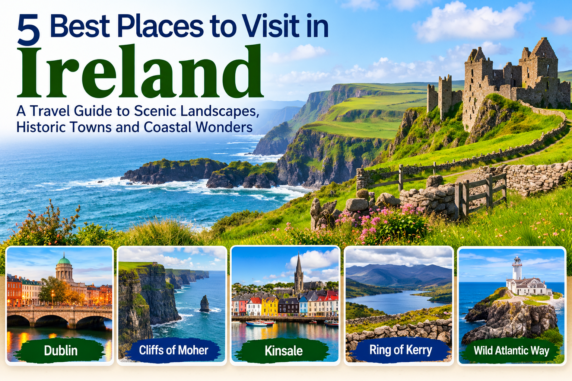
Oct 15: Ireland is a destination where dramatic coastlines, historic castles and lively cultural communities come together to create memorable travel experiences. From watching waves crash against the Cliffs of Moher to wandering through Dublin’s historic streets or listening to traditional music in Galway, the island offers plenty of reasons to slow down and explore.
For travellers planning an Ireland holiday, the experience extends far beyond the capital. Charming coastal villages, peaceful national parks and scenic driving routes reveal a different side of the country, making Ireland an appealing destination for nature lovers, history enthusiasts, families and independent travellers.
Whether you are planning your first visit or looking for places to explore beyond familiar tourist attractions, these five destinations offer a starting point for discovering Ireland’s natural beauty, cultural heritage and local character.
1. Cliffs of Moher: Experience Ireland’s Wild Atlantic Coast
Few Irish landmarks are as instantly recognisable as the Cliffs of Moher in County Clare. Rising dramatically above the Atlantic Ocean, these rugged cliffs offer sweeping views of the coastline and create one of the most memorable stops on Ireland’s western shore.
Visitors can walk along designated pathways, enjoy the viewing areas and watch the ocean change colour with the shifting weather. On clear days, the views can extend towards the Aran Islands and Galway Bay.
The surrounding region is equally rewarding. Travellers can combine their visit with the Burren, a distinctive limestone landscape known for its unusual terrain, walking routes and historic sites. The nearby villages also provide opportunities to experience local food and traditional Irish hospitality.
The Cliffs of Moher are part of the Wild Atlantic Way, making them a natural addition to a coastal road trip. Allow at least half a day for the cliffs and nearby stops, particularly if photography and walking are part of your plans.
Best time to visit: Late spring and summer generally offer longer daylight hours, although coastal weather can change quickly throughout the year.
Best for: Nature lovers, photographers, scenic drives and coastal walks.
2. Killarney: Lakes, Mountains and Peaceful Countryside
For travellers who want to experience Ireland’s countryside, Killarney in County Kerry is an excellent choice. The town sits close to Killarney National Park, where lakes, woodlands, mountain views and historic estates create a landscape suited to outdoor exploration.
Visitors can spend a morning walking beside the lakes, explore the grounds of Muckross House and Gardens or discover Ross Castle. Cycling and walking routes offer opportunities to enjoy the park at a relaxed pace.
Killarney is also a popular starting point for the Ring of Kerry, a scenic touring route that passes coastal villages, mountain landscapes and quiet stretches of countryside. Rather than rushing through the route, travellers can stop at viewpoints and small towns along the way.
Two nights in Killarney can provide a comfortable introduction to the region, allowing time for the national park and a scenic drive. Those who enjoy hiking or photography may want to stay longer.
Best time to visit: Late spring through early autumn is particularly appealing for outdoor activities, though visitors should always prepare for changing weather.
Best for: Nature holidays, cycling, hiking, scenic road trips and countryside escapes.
3. Dublin: History, Literature and Contemporary Irish Life
Dublin offers a different perspective on Ireland, combining historic landmarks with a lively urban culture. The capital is known for its literary heritage, museums, historic architecture, independent shops and neighbourhoods filled with cafés and restaurants.
Trinity College Dublin is a major attraction, particularly for visitors interested in the Book of Kells, a celebrated medieval illuminated manuscript. Dublin Castle and the city’s museums provide further opportunities to explore Ireland’s history.
However, some of Dublin’s most enjoyable experiences happen between the main attractions. Travellers can browse bookshops, discover local markets, explore neighbourhood streets and enjoy live music in traditional venues.
For a coastal excursion, consider Howth, a harbour community known for its seafood, sea views and walking routes. It offers a welcome contrast to the busy city centre.
First-time visitors should consider spending two or three days in Dublin before travelling elsewhere. The city is also a practical starting point for journeys by train or bus.
Best time to visit: May to September is popular for sightseeing and longer days, while the cooler months can suit travellers interested in museums, restaurants and cultural attractions.
Best for: First-time visitors, history enthusiasts, literary tourism, shopping and city breaks.
4. Galway: Traditional Music, Local Food and West Coast Culture
Galway has a character that makes it especially appealing to travellers who enjoy exploring places on foot. Located on Ireland’s western coast, the city is known for its colourful streets, independent businesses, traditional music and lively cultural scene.
Visitors can spend time exploring the city centre, stopping at cafés, browsing local shops or listening to musicians performing in traditional venues. Galway’s food scene also provides opportunities to discover regional produce and seafood.
The city is an excellent base for exploring Connemara, a region of mountains, lakes, stone walls and rugged coastal scenery. The changing landscape offers a striking contrast to the urban atmosphere and makes the surrounding area particularly rewarding for scenic drives.
Galway also works well as part of a wider western Ireland itinerary, with access to the Cliffs of Moher and other destinations along the Atlantic coast.
Consider staying for two nights to enjoy both the city and a countryside excursion. An evening spent listening to traditional music can be one of the most memorable parts of the visit.
Best time to visit: Late spring and summer bring longer days and a busy calendar of outdoor activities and cultural events.
Best for: Cultural tourism, traditional music, local food, festivals and exploring western Ireland.
5. Giant’s Causeway: A Geological Wonder on Northern Ireland’s Coast
On the north coast of Northern Ireland, the Giant’s Causeway offers a landscape unlike almost anywhere else on the island. Thousands of interlocking basalt columns extend towards the sea, creating distinctive geometric formations shaped by ancient volcanic activity.
Recognised as a UNESCO World Heritage Site, the Giant’s Causeway attracts visitors interested in geology, coastal scenery and folklore. Local legend tells the story of the giant Finn McCool, who supposedly built a causeway across the sea.
Travellers can explore the stone formations, follow designated walking routes and enjoy views of the surrounding coastline. The wider region also features attractions such as the ruins of Dunluce Castle and scenic coastal villages.
Belfast provides a convenient starting point for exploring this part of Northern Ireland. Visitors can plan a day trip or spend additional time along the Causeway Coast.
Remember that Northern Ireland is part of the United Kingdom, while the Republic of Ireland is a separate country. Travellers visiting both should check entry requirements and transport arrangements before departure.
Best time to visit: Late spring and summer offer longer daylight hours, although the coastline remains attractive throughout the year when weather conditions permit.
Best for: Geology enthusiasts, photographers, coastal walks, folklore and heritage tourism.
Ireland Tourism Trends: Growing Interest in Regional Destinations
Tourism remains an important part of Ireland’s visitor economy, with international travellers drawn to its scenery, heritage and cultural experiences.
Tourism Ireland’s Island of Ireland Overseas Tourism Performance: Facts & Figures 2024 reported approximately 8.4 million overseas tourists visiting the island in 2024. Their visits generated around €6.9 billion in tourism revenue and accounted for approximately 59.9 million overnight stays. The average stay was 7.1 nights.
The figures reflect the importance of international tourism to the island’s accommodation, transport, hospitality and visitor-experience businesses. They also provide context for travellers considering a longer itinerary rather than limiting their visit to one city.
Dublin offers museums and historic landmarks, Galway provides access to western Ireland’s cultural and coastal experiences, and Killarney opens the door to national park landscapes and scenic drives. The Cliffs of Moher and Giant’s Causeway offer two very different ways to experience Ireland’s coastline.
For visitors, the report reinforces the appeal of exploring several regions during a single holiday. For local tourism businesses, it highlights opportunities to connect with travellers through regional attractions, food experiences, heritage activities and outdoor adventures.
When Is the Best Time to Visit Ireland?
Ireland can be visited throughout the year, but the best season depends on your preferred travel experience.
Spring (March to May): The countryside becomes greener, gardens come into bloom and daylight hours gradually increase. Spring can be a good time for city sightseeing and countryside excursions.
Summer (June to August): Longer days make it easier to enjoy coastal drives, national parks and outdoor attractions. This is a popular period for travel, so booking accommodation and major attractions in advance can be helpful.
Autumn (September to November): Changing foliage and a generally quieter travel atmosphere make autumn appealing for visitors interested in scenic routes, cultural experiences and city breaks.
Winter (December to February): Shorter days and cooler, wetter weather can limit some outdoor activities, but museums, historic sites, cafés and cultural venues remain worthwhile attractions.
Ireland’s weather can change quickly in every season. Pack layers, waterproof clothing and comfortable walking shoes, especially if your itinerary includes exposed coastlines or countryside walks.
How to Plan an Ireland Holiday
A well-planned itinerary can make a considerable difference to your experience. Ireland’s attractions are spread across the island, and attempting to cover too much ground in a short time can leave little room to enjoy individual destinations.
For a first visit, consider beginning in Dublin and then travelling west to Galway and the Cliffs of Moher. Killarney can be added for a countryside stay, while the Giant’s Causeway fits naturally into a separate Northern Ireland excursion.
A trip of seven to ten days may provide a useful starting point for a multi-region itinerary, depending on your arrival point, transport choices and preferred pace. Travellers who want to explore more remote areas should consider allowing additional time.
Public transport is useful for many city-to-city journeys, while a rental car can offer greater flexibility for rural attractions and scenic stops. Check journey times carefully and avoid planning too many long drives on consecutive days.
Before travelling, confirm accommodation, attraction opening arrangements, insurance and applicable visa or entry requirements. If crossing between the Republic of Ireland and Northern Ireland, check the rules relevant to your nationality and travel documents.
Conclusion
Ireland offers a remarkable combination of dramatic scenery, historic landmarks and everyday cultural experiences. The Cliffs of Moher showcase the power of the Atlantic, Killarney offers lakes and mountains, Dublin introduces visitors to Irish history and literature, Galway celebrates music and local culture, and the Giant’s Causeway reveals a distinctive geological landscape.
Tourism Ireland’s visitor figures underline the island’s international appeal, but the most rewarding part of a visit often lies in the details: a quiet countryside walk, a conversation in a local café or an unexpected stop along a coastal road.
For travellers planning an Ireland holiday, these five destinations provide a strong starting point. With thoughtful planning and enough time to explore at a comfortable pace, the island offers a travel experience that goes well beyond ticking famous attractions off a list.
