
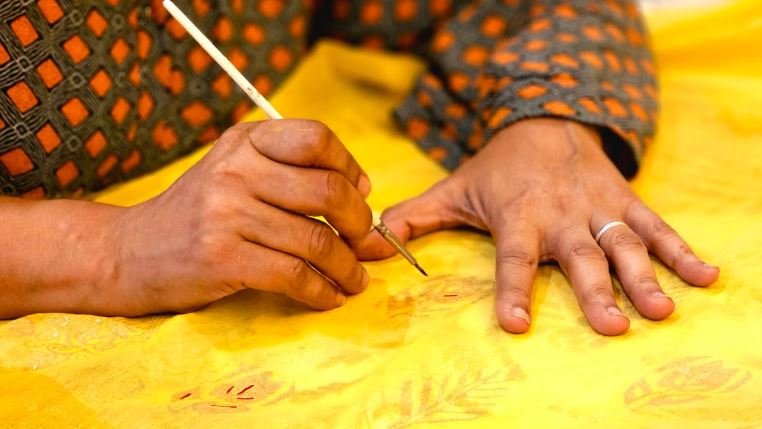
A hand-painted saree carries more than a design. Behind every detailed figure, decorative border and carefully applied colour is an artisan whose skill may have taken years to develop. In Odisha, the traditional Pattachitra art form is finding a new commercial identity through silk sarees, connecting the work of Chitrakar families with India’s expanding market for handcrafted fashion.
This shift is creating an opportunity that goes beyond fashion. By moving from traditional paintings to wearable textiles, Pattachitra artists can explore new customers, product categories and sources of income. Sarees featuring mythological stories and traditional motifs are also attracting interest from boutiques, designers, online retailers and consumers looking for distinctive handmade products.
However, the real business potential lies in ensuring that the artisans who create these pieces receive a fair share of the value generated by their work.
From Traditional Painting to a Marketable Fashion Product
Pattachitra has deep roots in Odisha’s cultural and religious traditions, particularly the Jagannath tradition of Puri. The word comes from the Sanskrit terms patta, meaning cloth, and chitra, meaning picture. Traditionally, artists created detailed paintings on prepared cloth and palm leaves, depicting deities, mythological stories and scenes from Indian epics.
The craft has been preserved by the Chitrakar community, where artistic knowledge is passed through generations. What makes the transition into fashion commercially interesting is the ability to apply this established artistic skill to a different product.
A traditional painting is generally purchased as an artwork or decorative object. A Pattachitra saree, on the other hand, brings the art into a larger clothing market. It can attract buyers who may not regularly purchase paintings but are willing to invest in distinctive ethnic wear.
This creates an opportunity to expand the customer base without abandoning the original artistic identity of the craft.
The Making of a Hand-Painted Pattachitra Saree
A hand-painted Pattachitra saree involves several stages of work, from selecting the fabric and planning the composition to painting the motifs and completing the final details.
Tussar silk is one of the fabrics used for these creations. Its natural texture and subtle sheen provide an attractive surface for detailed artwork. The artisan decides how the painting will appear across the saree, whether through a detailed pallu, decorative borders or a larger narrative composition.
The painting process involves outlining figures, filling colours and adding fine details. Subjects may include Lord Jagannath, Radha and Krishna, scenes from the Ramayana and Mahabharata, floral patterns and traditional motifs.
Traditional Pattachitra paintings are associated with natural pigments and specially prepared cloth surfaces. Contemporary saree adaptations may also use fabric-specific paints, including acrylic colours. The materials and processes can differ depending on the artist and the product.
The time required varies with the complexity of the design. A simpler composition may take less time, while a saree featuring elaborate figures and detailed borders can require days or weeks of work.
From a business perspective, this production time matters. Unlike machine printing, hand-painting cannot be increased rapidly simply by placing a larger order. Every additional piece requires skilled labour and careful execution.
Why Hand-Painted Sarees Can Command a Different Market Value
The commercial value of a Pattachitra saree comes from the combination of fabric, artistic skill, production time and cultural significance.
A machine-printed saree can reproduce the same design across hundreds of pieces. A hand-painted saree is different because the artist creates the artwork individually. Small variations in brushwork and composition make each piece distinct.
This allows artisans and craft businesses to position hand-painted sarees in a specialised market rather than competing directly with mass-produced textiles on price.
Customers interested in handmade clothing may be willing to pay more when they understand the effort involved. But premium pricing must be supported by transparent information about the fabric, painting method, artisan contribution and time taken to complete the product.
For artisans, fair pricing is especially important. If a saree requires several days of painting, its selling price should account for the artist’s labour, materials and experience. When the final retail price rises but the artisan’s payment remains low, the economic benefits of the craft’s popularity do not reach the people responsible for preserving it.
The Artisan Business Ecosystem Behind Every Saree
Pattachitra sarees can support a wider network of small businesses and traditional occupations. Their production and sale may involve silk weavers, fabric suppliers, painters, finishing specialists, packaging providers, retailers and online sellers.
This creates an opportunity to build a more connected artisan-led value chain.
For example, a collaboration between a silk producer and a Chitrakar family can bring together two traditional skills in one product. A local business can handle marketing and customer service, while the artist focuses on painting. Designer partnerships can introduce new collections, and craft retailers can help products reach customers in different cities.
Such partnerships can make the business more sustainable, provided the roles, payments and ownership of designs are clearly agreed upon.
There is also scope for artisan groups and cooperatives to develop shared business services. Collective purchasing of materials, product photography, packaging, digital marketing and access to exhibitions can reduce individual costs and improve bargaining power.
Digital Commerce Is Expanding the Market
Online selling has changed the way traditional crafts reach customers. An artisan or small craft business no longer needs to depend entirely on local shops, exhibitions or tourist purchases.
E-commerce platforms and social media allow sellers to showcase hand-painted sarees to customers across India and international markets. They can also use short videos and photographs to explain how a saree is made, introduce the artist and describe the stories represented in the painting.
This storytelling is commercially important. Customers buying handmade products often want to know who made them, how they were created and what makes them different from factory-produced alternatives.
However, digital visibility alone does not guarantee business growth. Sellers need reliable product descriptions, accurate photographs, transparent pricing, secure packaging, delivery arrangements and a clear process for handling customer complaints or returns.
For small artisan businesses, these responsibilities can be difficult to manage without training, technology support or partnerships with experienced retailers.
Designer Collaborations Can Create Higher-Value Opportunities
Pattachitra’s detailed visual style offers opportunities for collaborations with fashion designers, boutique labels and independent clothing brands.
Designers can work with Chitrakar artists to introduce the craft into contemporary collections, including sarees, dupattas, jackets and accessories. These partnerships can help traditional art reach customers who may not usually visit craft exhibitions or heritage villages.
The important consideration is how these collaborations are structured. Artisans should be recognised as creative partners rather than treated only as suppliers of decorative work.
Clear agreements on design ownership, payment, production timelines and attribution can help protect their interests. Long-term partnerships may also offer more stable income than occasional orders for individual pieces.
Hand-Painted and Printed Designs Need Clear Distinction
The growing popularity of Pattachitra motifs has also created a need for greater transparency in the market. Many sarees feature Pattachitra-inspired patterns produced through digital printing, block printing or screen printing.
These products serve different price segments and can make the visual style more accessible. However, they should not be confused with individually hand-painted garments.
In a hand-painted saree, the lines and details show the variation of an artist’s brushwork. A printed design reproduces a pattern mechanically. Neither category needs to be dismissed, but buyers should be told clearly how the product was made.
This distinction protects customers from misleading descriptions and helps genuine artisans compete on the value of their work rather than being compared unfairly with mass-produced imitations.
The Challenges of Turning Craftsmanship into a Scalable Business
Despite its potential, the Pattachitra saree market faces practical challenges.
Hand-painted production is time-consuming, making it difficult to fulfil large orders quickly. Artisans may also struggle with access to working capital, quality materials, packaging, marketing and wider distribution networks.
Another challenge is balancing traditional techniques with changing consumer preferences. Designers may want lighter designs, new colour combinations or contemporary compositions, but adaptations should not weaken the identity of the original art form.
There is also a need to attract younger generations to the craft. Traditional skills can survive only when they provide a reasonable livelihood. Better earnings, business training, exposure to new markets and opportunities to develop independent collections can encourage young artists to continue the profession.
The aim should not be to turn every artisan into a large-scale manufacturer. Instead, the market needs business models that allow small workshops and family-based studios to grow at a pace that respects the time required for handmade work.
Sustainability and the Value of Handmade Fashion
Pattachitra sarees also fit into the wider discussion around slow fashion and responsible consumption. Their appeal lies in individual craftsmanship, traditional knowledge and the possibility of creating garments that customers value and preserve for years.
Tussar silk and other natural-fibre textiles can strengthen this appeal. Traditional Pattachitra practices also have a history of using natural materials for colours and surface preparation. Modern textile adaptations, however, may use different paints and finishing methods.
Therefore, businesses should be careful about making environmental claims. The sustainability of a saree depends on its complete production process, including fabric sourcing, dyes, paints, packaging and durability.
A genuinely responsible business model should combine fair artisan payments, transparent production practices and reduced waste with a clear commitment to preserving traditional skills.
Building a Stronger Future for Odisha’s Artisan Economy
Pattachitra’s journey from traditional cloth paintings to hand-painted silk sarees shows how cultural heritage can create new economic opportunities. It connects artists with fashion businesses, gives consumers access to distinctive handmade products and creates possibilities for traditional skills to reach markets beyond Odisha.
But commercial success should not be measured only by the number of sarees sold or the popularity of the designs. It should also be measured by the income earned by artisans, the stability of their work and the number of younger people choosing to learn the craft.
For Odisha’s Chitrakar families, the future of Pattachitra depends on a market that values both the finished product and the person who creates it. With fair partnerships, better market access and responsible business practices, a traditional painting can become more than a fashionable garment. It can become a source of sustainable livelihood and a stronger foundation for the state’s artisan economy.
