
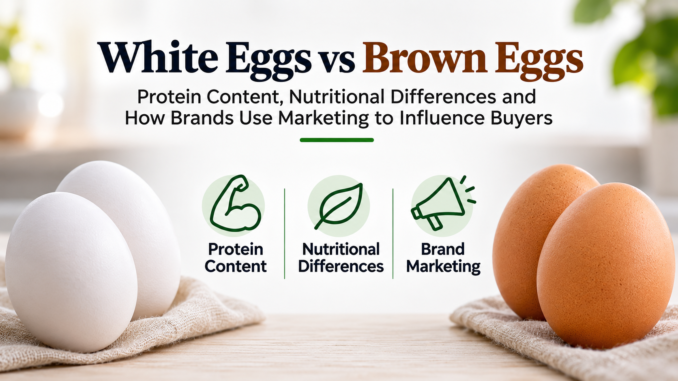
Nov 17: Walk into a supermarket and you will often find white eggs and brown eggs displayed as two different product choices. While both are common breakfast staples, brown eggs are frequently perceived as healthier, more natural and more nutritious. They are also sometimes sold at higher prices, giving consumers the impression that they offer better nutritional value.
However, scientific evidence suggests that shell colour is not an indicator of an egg’s nutritional superiority. The Food and Agriculture Organization (FAO), in its publication Marketing Quality Eggs, explains that the colour of an eggshell, whether white or brown, does not affect its nutritional value, flavour or cooking characteristics. The publication also explains that shell colour is primarily determined by the breed of the laying hen.
The United States Department of Agriculture (USDA) also lists approximately 6 grams of protein in a large egg weighing 50 grams, illustrating why egg size is more relevant than shell colour when comparing protein intake.
So, is there really a difference in protein content? Are brown eggs healthier than white eggs, or is their premium positioning largely influenced by marketing?
The debate around white eggs vs brown eggs offers an interesting look at consumer behaviour, food branding and the growing demand for protein-rich products. As more consumers pay attention to their daily protein intake, egg producers and retailers are finding new ways to position an everyday food item as a premium product.
White Eggs vs Brown Eggs: What Is the Actual Difference?
The difference between white and brown eggs primarily comes down to the breed of the hen that lays them.
Certain breeds produce white eggs, while others lay brown eggs. The shell colour develops through natural pigments deposited during the egg formation process.
Brown eggs receive their colour from a pigment called protoporphyrin IX, while white eggs have little or no such pigmentation.
However, the colour of the shell does not determine the nutritional quality of the egg.
Both varieties can provide comparable amounts of protein, vitamins and minerals when their size and production characteristics are similar. The Academy of Nutrition and Dietetics also explains that brown and white eggs offer similar nutritional value.
Do Brown Eggs Have More Protein Than White Eggs?
One of the most common beliefs among consumers is that brown eggs contain more protein than white eggs. This perception has also helped brown eggs develop a premium image in some markets.
However, there is no meaningful protein advantage simply because an egg has a brown shell.
According to USDA nutritional data, a large egg weighing approximately 50 grams contains around 6 grams of protein. The amount can vary depending on egg size, but shell colour is not a reliable indicator of protein content.
For consumers looking to increase their protein intake, both varieties can be equally useful.
The more important factors include:
-
Egg size: Larger eggs generally contain more protein than smaller eggs.
-
Hen’s diet: Feed composition can influence certain nutritional characteristics.
-
Nutritional enrichment: Specially formulated feed can increase specific nutrients, including omega-3 fatty acids.
-
Production conditions: Farming practices can influence other aspects of egg quality.
For someone buying eggs primarily for protein, comparing egg sizes and nutritional information makes more sense than paying extra for shell colour.
White Eggs vs Brown Eggs: A Nutritional Comparison
The following comparison highlights why consumers should look beyond the appearance of an eggshell.
| Comparison | White eggs | Brown eggs |
|---|---|---|
| Shell colour | White | Brown |
| Protein content | Similar | Similar |
| Nutritional value | Comparable | Comparable |
| Health benefits | Comparable | Comparable |
| Price | Often lower | Sometimes higher |
| Determines organic quality? | No | No |
| Indicates free-range production? | No | No |
The comparison makes one point clear: shell colour alone cannot establish nutritional superiority or farming standards.
Consumers interested in organic, free-range or enriched eggs should check the actual product labels and relevant certifications.
Why Are Brown Eggs Often Marketed as Premium Products?
The difference between white and brown eggs becomes more interesting when viewed from a marketing perspective.
Although their protein content can be similar, brown eggs are often positioned as premium products. Their appearance, packaging and association with traditional farming can influence how consumers perceive their quality.
1. The Power of Natural-Looking Packaging
Brown eggs are frequently sold in kraft-paper cartons, earthy packaging and designs featuring farm imagery.
These visual elements create associations with traditional farming, freshness and natural food production.
White eggs, meanwhile, are commonly presented as everyday household products, with greater emphasis on affordability and convenience.
This shows how packaging can influence purchasing decisions even when the nutritional difference is minimal.
2. The Farm-Fresh and Natural Appeal
Terms such as ‘farm fresh’, ‘country eggs’ and ‘naturally produced’ can influence consumer expectations.
When these descriptions appear alongside brown eggs, shoppers may associate them with healthier farming practices.
However, brown shells do not automatically mean that eggs are organic, free-range or produced under specific animal-welfare standards.
Such claims need to be supported by actual production practices and appropriate certification.
3. Using Protein as a Marketing Advantage
Protein has become an important selling point across the food industry.
From breakfast products to ready-to-eat meals, brands increasingly highlight protein content to attract fitness enthusiasts and health-conscious consumers.
Eggs already have a strong position in this market because they are an accessible source of high-quality protein.
Food brands and egg producers can build on this demand by highlighting:
-
Protein content per egg.
-
Convenient breakfast options.
-
Everyday nutrition.
-
Fitness-friendly meal choices.
-
Nutritional enrichment, where applicable.
The important distinction is that protein marketing should focus on actual nutritional content rather than suggesting that brown eggs naturally contain more protein.
4. Premium Pricing and Consumer Psychology
Brown eggs are sometimes more expensive than white eggs, reinforcing the perception that they are better.
Part of this difference can be explained by production costs. Some brown-egg-producing breeds tend to be larger birds with higher feed requirements.
Other factors can also influence the final retail price, including:
-
Organic and free-range production systems.
-
Specially formulated or nutrient-enriched feed.
-
Premium packaging and branding.
-
Transportation and distribution costs.
-
Retail margins and market positioning.
The USDA’s egg grading guidance also explains how consumer preferences for particular shell colours influence sorting and retail presentation. This demonstrates how appearance can become a marketing consideration even when it does not indicate nutritional quality.
For marketers, premium pricing can help establish a product’s identity. For consumers, however, a higher price should not automatically be interpreted as better nutrition.
How Egg Brands Can Turn Consumer Awareness Into a Business Opportunity
The white-versus-brown egg debate offers useful lessons for poultry businesses, food manufacturers and retailers.
As consumers become more interested in protein-rich foods, brands have an opportunity to build stronger customer relationships through transparent communication.
Nutritional transparency: Clearly displaying protein content, egg size and other nutritional information can help consumers make informed decisions.
Trust through sourcing: Information about feed, farming practices and production standards can provide genuine reasons for premium positioning.
Digital marketing and consumer education: Short videos, social media comparisons and nutrition explainers can help brands address misconceptions while building credibility.
Product differentiation: Businesses can offer everyday eggs, certified organic options, free-range products and nutrient-enriched varieties to serve different consumer preferences.
Responsible health claims: Brands that communicate genuine product benefits are more likely to build long-term consumer trust.
For the egg industry, the opportunity lies in creating value beyond the appearance of the eggshell.
What Should Consumers Check Before Buying Eggs?
Rather than choosing eggs based only on colour, consumers should look at the information that actually matters.
| Buying factor | What consumers should consider |
|---|---|
| Protein content | Nutritional information and egg size |
| Freshness | Packing date and best-before information |
| Farming method | Verified production claims |
| Nutritional enrichment | Specific nutrients listed on packaging |
| Food safety | Clean, uncracked shells and proper storage |
| Price | Value in relation to size and verified quality |
Consumers in India should also pay attention to applicable food safety and labelling requirements when purchasing packaged eggs.
Conclusion: Is It Worth Paying More for Brown Eggs?
White eggs and brown eggs may look different on supermarket shelves, but their shell colour does not establish a difference in protein content. Both can provide similar nutritional benefits, making either a suitable choice for consumers looking to include more protein in their diets.
The more interesting difference lies in how these products are marketed. Premium packaging, farm-fresh messaging, health-conscious positioning and pricing can influence consumer perceptions and purchasing decisions.
For poultry businesses and food brands, this presents an opportunity to move beyond appearance-based marketing and focus on genuine product value.
Ultimately, consumers do not need to pay more simply because an egg has a brown shell. What matters is its size, freshness, nutritional composition and the credibility of the claims made by the brand.
