
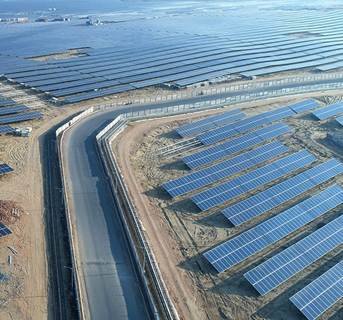
India’s energy landscape has undergone a remarkable transformation over the past decade, with solar power emerging as a major force in the country’s transition towards cleaner energy. From vast solar parks in Rajasthan to rooftop panels on homes and solar-powered pumps in agricultural fields, the use of sunlight to generate electricity is becoming an increasingly visible part of everyday life.
The scale of this change is striking. India’s installed solar capacity, which stood at just 2.82 GW in 2014, reached approximately 175 GW by October 31, 2026 — an expansion of nearly 62 times. This growth reflects a combination of policy support, infrastructure development, investment in manufacturing and wider participation from households, farmers and businesses.
Solar energy is no longer simply an alternative source of electricity. It is becoming an important part of India’s energy security, economic development and climate ambitions.
A Decade That Changed India’s Solar Story
India’s solar journey has moved from ambitious targets to large-scale implementation. The National Solar Mission, the Solar Parks Scheme, the Green Energy Corridor Programme and competitive bidding mechanisms helped create the foundation for the sector’s expansion.
The pace of growth has accelerated in recent years. India added 44.61 GW of solar capacity in FY 2025–26, compared with 23.83 GW in the previous financial year. During calendar year 2025, the country added 37 GW, becoming the world’s second-largest solar growth market that year.
These developments reflect the growing role of solar power in India’s electricity mix and its expanding position in the global renewable energy sector.
Solar Parks: Turning Open Landscapes into Energy Hubs
Large solar parks have played a significant role in India’s renewable energy expansion. By providing land and supporting infrastructure, these projects have helped developers establish solar power facilities at scale.
Rajasthan’s Bhadla Solar Park stands out as a prominent example. Located in an arid region with high solar irradiation and low rainfall, the park covers nearly 5,700 hectares and has an installed capacity of 2,245 MW. Developed in phases beginning in 2015, it demonstrates how suitable locations and common infrastructure can support large-scale solar generation.
Other important projects include Pavagada Solar Park in Karnataka, the Ananthapuramu and Kurnool solar parks in Andhra Pradesh, and Rewa Ultra Mega Solar Park in Madhya Pradesh.
The Solar Parks Scheme had approved 56 parks with a combined sanctioned capacity of 39,461 MW as of October 2026. These projects are helping strengthen India’s renewable energy infrastructure across several states.
However, generating electricity is only one part of the challenge. It must also be transported efficiently to homes, businesses and industries. The Green Energy Corridor Programme addresses this need by strengthening transmission networks and supporting the movement of renewable electricity from generation centres to demand centres.
Bringing Solar Power to Homes and Farms
The expansion of solar energy is not limited to large power stations. Increasingly, its benefits are reaching individual households and agricultural communities.
The PM Surya Ghar: Muft Bijli Yojana is encouraging households to install rooftop solar systems and generate their own electricity. With financial assistance for eligible installations, the programme aims to make rooftop solar more accessible while helping families reduce electricity expenses.
By November 2026, around 65 lakh households had been solarised under the programme, while more than 21 lakh households had received zero electricity bills. The initiative represents an important shift towards greater household participation in electricity generation.
In rural areas, the PM-KUSUM scheme is extending solar energy into agriculture. It supports standalone solar agricultural pumps, decentralised solar power plants and the solarisation of grid-connected agricultural pumps.
For farmers, solar-powered irrigation can reduce dependence on diesel and provide access to daytime electricity. Where permitted, surplus electricity can also create an additional source of income.
By September 30, 2026, nearly 11.91 lakh off-grid solar pumps had been installed, while more than 17.18 lakh agricultural pumps were covered through feeder-level solarisation. The scheme had also supported the commissioning of around 2,426 MW of decentralised solar power capacity on farmers’ land.
Together, these initiatives show how the solar transition is extending beyond the energy sector and becoming part of household finances and agricultural development.
Building a Stronger Domestic Solar Industry
The growth of solar power has also created a need for a stronger manufacturing ecosystem. Producing more solar equipment within the country is important for expanding supply, supporting investment and reducing import dependence.
India’s solar module manufacturing capacity has grown substantially — from 2.3 GW in 2014 to around 192 GW by June 2026.
The Production Linked Incentive Scheme for High-Efficiency Solar PV Modules is one of the measures supporting this expansion. Launched in 2021 and expanded in 2022, the scheme aims to encourage domestic manufacturing and greater value addition across the solar supply chain.
The Approved List of Models and Manufacturers framework also supports quality assurance by specifying eligible solar equipment for certain projects.
The expansion of manufacturing capacity is an important development in India’s solar story. It connects the country’s renewable energy ambitions with industrial growth, investment and employment.
Floating Solar: Making Better Use of Water Bodies
As solar capacity expands, finding suitable land for new projects becomes an important consideration. Floating solar offers another approach by placing photovoltaic panels on suitable water bodies, including reservoirs and industrial ponds.
The Pradhan Mantri Surya Sarovar Yojana, approved on July 31, 2026, aims to support 5,000 MW of floating solar photovoltaic projects with co-located energy storage systems. The scheme has an outlay of ₹5,070 crore and is scheduled for implementation from FY 2026–27 to FY 2030–31.
By using suitable existing water surfaces, floating solar projects can reduce pressure on land resources. The integration of energy storage is also intended to help states manage peak electricity demand and improve grid reliability.
The scheme reflects India’s effort to explore different technologies and locations as it continues to expand its renewable energy capacity.
Solar Power and the Climate Agenda
India’s solar expansion is closely connected to its wider climate commitments. At COP26 in Glasgow, the country announced its Panchamrit goals, including achieving 500 GW of non-fossil fuel energy capacity by 2030 and reaching net-zero emissions by 2070.
The expansion of renewable energy is central to these ambitions. As of September 30, 2026, India’s total non-fossil fuel capacity had reached 308.03 GW, including 299.25 GW of renewable energy and 8.78 GW of nuclear power.
Alongside infrastructure and technology, initiatives such as Mission LiFE encourage citizens to adopt more sustainable lifestyles and make environmentally responsible choices.
The transition therefore involves more than adding solar panels or building power plants. It also requires efficient electricity networks, energy storage, responsible consumption and participation across society.
Taking India’s Solar Experience to the World
India’s role in solar energy is increasingly international. The International Solar Alliance, co-founded by India and France in 2015, provides a platform for countries to cooperate on solar deployment, technology, investment and capacity building.
The One Sun One World One Grid vision offers another dimension to this cooperation. It seeks to promote interconnected renewable energy networks across regions, with the broader aim of enabling cross-border electricity trade and strengthening energy security.
