
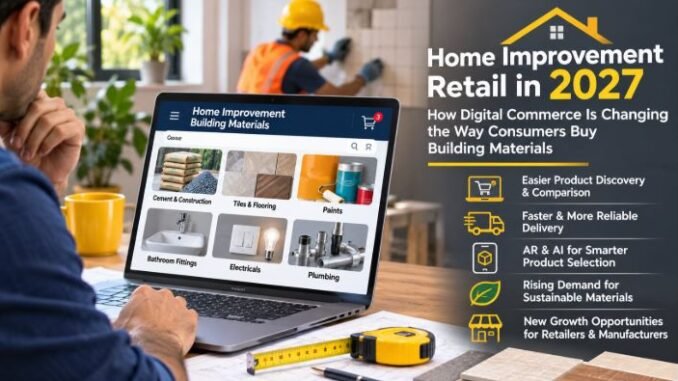
Digital commerce is reshaping the home improvement retail industry, changing how consumers discover, compare and purchase building materials. From cement, tiles and paints to flooring, sanitaryware and electrical fittings, online platforms are making product information more accessible and purchasing decisions more convenient. As the industry moves towards 2027, retailers and manufacturers face a growing need to combine digital capabilities with reliable delivery, competitive pricing and expert customer service.
Buying building materials has traditionally meant visiting several shops, speaking with dealers, comparing prices and checking whether products were available. For homeowners renovating a property and contractors managing construction projects, this process could take considerable time and effort.
Today, much of that initial research is moving online.
Consumers increasingly expect to explore product ranges, compare specifications, check prices and contact sellers without having to visit multiple stores. Digital catalogues, online marketplaces, social commerce and retailer websites are becoming important parts of the home improvement buying journey.
This shift is about more than moving transactions from physical shops to websites. It is changing how businesses attract customers, present products, manage orders and compete in an increasingly connected marketplace.
For the home improvement retail sector, the opportunity is significant. Businesses that make purchasing simpler, provide accurate product information and deliver a dependable customer experience can strengthen their position in a changing market.
1. Online Shopping Is Changing Building Materials Purchasing Behaviour
The way consumers research home improvement products is evolving. Before visiting a showroom or contacting a local dealer, many buyers now begin their search online.
A homeowner planning a kitchen renovation may compare tiles, countertops, lighting and fittings across several websites. Someone building a house may research flooring, plumbing supplies, paints and electrical products before speaking to a supplier.
Having product information readily available helps customers understand their options and make more informed purchasing decisions.
This behaviour is also influencing professional buyers. Contractors, builders, interior designers and small construction businesses increasingly value convenient access to product catalogues, technical specifications and pricing information. For businesses managing several projects, digital ordering can also make repeat purchases and supplier comparisons easier.
The commercial implication is clear: physical retail remains important, but customers increasingly expect retailers to support their decisions online as well as in-store.
Retailers that fail to provide basic digital information risk losing potential customers before they even enter the shop.
2. Digital Marketplaces Are Expanding Opportunities for Retailers and Manufacturers
Online marketplaces are creating additional routes to market for building material manufacturers, distributors and independent retailers.
Traditionally, smaller suppliers depended heavily on local dealer networks, showrooms and established business relationships. Digital platforms provide another way to display products, generate enquiries and connect with buyers outside their immediate trading areas.
Categories such as bathroom fittings, decorative lighting, tiles, flooring, modular kitchen products and home décor can benefit from online discovery. Customers often want to compare designs, finishes, dimensions and prices before making a purchase.
For manufacturers, digital channels can improve product visibility and provide a direct way to communicate product features. Retailers can use online listings to attract customers who may not otherwise know what their stores offer.
However, simply uploading a product catalogue is not enough to build a successful online business.
Customers need accurate descriptions, clear product images, updated availability, transparent pricing and accessible support. In categories where technical details influence purchasing decisions, incomplete information can quickly undermine buyer confidence.
Businesses that treat digital marketplaces as an extension of their overall retail strategy, rather than just another sales channel, will be better placed to benefit from this change.
3. Technology Is Making Product Discovery and Selection Easier
Choosing building materials is rarely a straightforward decision. Buyers must consider appearance, dimensions, durability, quality, installation requirements, maintenance and compatibility with other products.
Digital technology is helping make this process more manageable.
Detailed product specifications, installation guides, demonstration videos and customer reviews allow consumers to understand products before committing to a purchase. Digital catalogues also make it easier to compare alternatives without travelling between multiple stores.
Visualisation technology is creating further opportunities. Augmented reality tools can help customers preview how tiles, flooring, wall colours and certain furniture products might look in their homes. This can make design decisions more practical and help buyers feel more confident about their selections.
Artificial intelligence is also beginning to influence online shopping experiences. Recommendation systems can suggest products based on browsing behaviour, stated preferences and project requirements. More advanced digital tools may help customers narrow down options using room measurements, design preferences and budget considerations.
For retailers, these technologies offer opportunities to improve customer engagement, provide more relevant recommendations and reduce uncertainty during the buying process.
The real value, however, lies in solving practical customer problems. Technology must make product selection easier, not add another layer of complexity.
4. Delivery, Inventory and Logistics Are Becoming Competitive Advantages
In building materials retail, completing a sale is only part of the customer experience. Getting the correct product to the right location at the right time is equally important.
Construction and renovation projects often depend on carefully coordinated schedules. A delayed delivery of tiles, plumbing supplies, electrical fittings or other essential materials can interrupt work and create additional costs for contractors and homeowners.
As online purchasing becomes more common, customers are paying closer attention to delivery charges, estimated arrival times, order tracking and stock availability.
This is putting greater pressure on retailers to improve their logistics and inventory management.
Digital inventory systems can help businesses monitor stock levels, coordinate orders and provide more accurate availability information. Better integration between online platforms, warehouses and physical stores can also help reduce order-processing delays.
For businesses selling heavy, bulky or fragile materials, delivery planning is particularly important. Transport costs, handling requirements and the possibility of damage must be considered when designing an online sales model.
Retailers that can combine convenient ordering with dependable local delivery may gain an advantage over competitors that focus only on offering low prices.
In the building materials market, operational reliability is an important part of the product being sold.
5. Small Retailers Can Use Digital Commerce to Compete More Effectively
Digital transformation is not an opportunity reserved for large retail chains. Independent hardware stores, tile dealers, sanitaryware suppliers and regional building material distributors can also benefit.
A local retailer can use a website, digital catalogue, business listing or social media account to showcase products and attract enquiries. Messaging services and online payment options can make communication and transactions more convenient.
These tools can help smaller businesses remain visible to customers who increasingly use digital channels to research products and compare suppliers.
Manufacturers can also support this transition by providing distributors with better product photographs, technical information, digital catalogues and updated pricing materials.
Importantly, smaller retailers do not need to invest in complex technology immediately. A practical starting point could include maintaining accurate online product listings, responding promptly to enquiries, accepting digital payments and introducing basic stock-management software.
The bigger challenge is consistency. Online information must reflect what the business can actually supply. Incorrect prices, outdated listings and slow responses can damage customer trust.
For independent retailers, digital visibility combined with local product knowledge and personal service can become a valuable competitive proposition.
6. Sustainable Building Materials Are Creating New Retail Opportunities
Sustainability is becoming an increasingly relevant consideration in construction and home improvement purchasing decisions.
Homeowners and property developers may consider energy efficiency, water conservation, indoor air quality and the environmental impact of materials when choosing products.
This creates opportunities for retailers to improve the visibility of products such as energy-efficient lighting, water-saving plumbing fittings, low-emission paints, recycled building materials and sustainable flooring.
Digital platforms can help customers explore these options and compare product specifications, certifications and other relevant information.
For manufacturers and retailers, presenting sustainability information clearly can help buyers understand the benefits of different materials. However, environmental claims should be supported by reliable product documentation and recognised certifications wherever applicable.
As interest in more resource-efficient homes develops, retailers that provide transparent and useful product information can strengthen their position in this segment.
Sustainability should not be treated simply as a marketing message. Customers need credible information that helps them make practical purchasing decisions.
7. The Challenges of Selling Building Materials Online
Despite its potential, digital commerce presents specific challenges for the home improvement retail industry.
Building materials are different from many everyday consumer products. Some are heavy, bulky, fragile or difficult to transport. Others require technical knowledge, accurate measurements or professional installation.
These characteristics can make online transactions more complicated.
Delivery expenses can affect product competitiveness, while damaged goods, inaccurate stock information and complicated returns can create dissatisfaction. Customers may also struggle to judge colours, textures, finishes and material quality from photographs alone.
Technical guidance is another important consideration. A buyer selecting flooring, electrical fittings or plumbing products may need assistance with measurements, compatibility and installation requirements.
This explains why physical stores and showrooms will continue to play an important role, even as digital sales expand.
Many customers may prefer to research products online before visiting a store to inspect them in person. Others may seek advice from a dealer before placing an order through a digital channel.
Retailers therefore need to develop an integrated approach that connects online convenience with physical product experience and professional assistance.
8. Omnichannel Retail Will Shape the Future of Home Improvement Shopping
One of the most important developments in home improvement retail is the growing connection between digital and physical shopping.
Customers do not necessarily think in terms of separate online and offline channels. They want to find a product, understand its features, check its availability, receive advice and complete a purchase with as little difficulty as possible.
An integrated retail model can support this expectation.
For example, a customer might discover a particular tile through an online catalogue, visit a showroom to inspect its finish, confirm availability through a salesperson and arrange delivery to a construction site.
Another buyer may compare prices online, contact a local supplier through a messaging service and complete the transaction digitally.
For retailers, this approach requires coordination across product information, inventory, customer service, payments and logistics. When these systems work together, businesses can create a more consistent purchasing experience.
Omnichannel retail is therefore not simply about operating a website alongside a physical shop. It is about making different sales and service channels work as part of one connected business.
9. What Retailers Need to Prioritise as 2027 Approaches
As digital commerce becomes more closely integrated into the building materials market, retailers will need to focus on practical improvements rather than technology for its own sake.
Several priorities stand out:
- Accurate digital product information: Maintain updated descriptions, dimensions, specifications, prices and availability.
- Convenient customer communication: Make it easy for buyers to ask questions and receive timely assistance.
- Reliable inventory management: Improve visibility across stores, warehouses and online sales channels.
- Efficient delivery operations: Provide realistic delivery estimates and strengthen coordination with transport partners.
- Better product discovery: Use quality images, comparison tools, installation information and relevant recommendations.
- Connected retail channels: Allow customers to move smoothly between online research, showroom visits and purchasing.
- Credible sustainability information: Present environmental and performance claims clearly and accurately.
These improvements can help retailers reduce friction in the buying process while building stronger relationships with customers.
The businesses most likely to benefit will be those that understand their customers’ actual requirements and invest in solutions that address them.
Conclusion:
The home improvement retail industry is moving towards a more connected and customer-focused business model. Digital platforms are changing how consumers discover products, compare prices, seek advice and arrange purchases, while retailers are rethinking the way they manage inventory, logistics and customer relationships.
As 2027 approaches, the distinction between online and traditional retail is likely to become less important than the overall quality of the buying experience.
For manufacturers, distributors and independent retailers, digital commerce offers opportunities to expand market reach, improve product visibility and serve customers more efficiently. At the same time, success will depend on overcoming practical challenges such as delivery costs, product handling, technical support and accurate inventory information.
Physical stores will continue to matter because building materials often require inspection, expert advice and confidence in product quality. The strongest retail models will bring these advantages together with the convenience of digital platforms.
Ultimately, the future of home improvement retail will not be determined simply by how many products businesses sell online. It will depend on how effectively they connect product discovery, expert guidance, competitive pricing, reliable delivery and after-sales service. Retailers that get this balance right will be better positioned to compete and grow in the evolving building materials market.
