
Running a small business involves managing sales, expenses, customers, inventory and daily operations. For many small and medium-sized enterprises (SMEs) in Dubai, keeping track of all these activities can be challenging. When business information is scattered across different records and spreadsheets, identifying problems and opportunities becomes more difficult.
Business intelligence helps companies organise their information and understand how their business is performing. By reviewing sales figures, expenses and customer trends, business owners can make decisions based on actual results rather than assumptions.
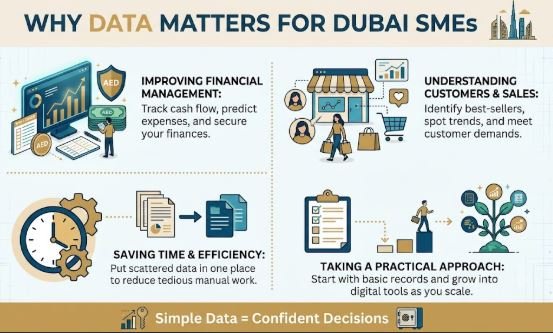
Why Data Matters for Dubai SMEs
Dubai’s competitive business environment encourages companies to improve efficiency and respond quickly to changing customer needs. For small businesses, understanding their financial position and market performance is essential for sustainable growth.
Regularly reviewing business data can help owners identify their best-selling products, understand seasonal demand, monitor expenses and recognise areas where money may be wasted. These insights can support better planning and help businesses remain competitive.
Improving Financial Management
Cash flow is a major concern for small businesses. Delayed payments, rising operating costs and unexpected expenses can put pressure on daily operations.
Keeping accurate financial records helps business owners understand how much money is coming in and going out. It also makes it easier to monitor outstanding payments, prepare budgets and plan future expenses.
With a clearer picture of their finances, SMEs can make informed spending decisions, manage working capital and reduce the risk of unexpected financial pressure.
Understanding Customers and Sales
Customer preferences can change quickly, particularly in a competitive market such as Dubai. Businesses that understand buying patterns are better placed to improve their products, services and marketing efforts.
Reviewing sales records and customer feedback can reveal which products perform well, when demand increases and where improvements are needed. Businesses can use this information to manage stock more effectively, offer relevant services and build stronger customer relationships.
Saving Time and Improving Efficiency
When business information is maintained manually across several systems, employees may spend valuable time preparing reports and checking records. Organising information in one place can reduce repetitive work and make important figures easier to access.
This allows business owners and employees to spend more time on customer service, planning and business development. Better record-keeping can also help identify operational delays and improve coordination between teams.
Taking a Practical Approach
Small businesses do not need complicated systems to begin using data more effectively. They can start by maintaining accurate records of sales, expenses, inventory and customer transactions. Reviewing these figures regularly can help identify patterns and measure progress.
As the business grows, owners can consider digital tools that bring information together and simplify reporting. The most suitable approach depends on the company’s size, budget, operational needs and employees’ ability to use the system.
Conclusion
For Dubai SMEs, better use of business data can support stronger financial management, improved customer service and more efficient operations. Understanding where revenue comes from, how expenses change and what customers need allows business owners to make more confident decisions.
Sustainable growth does not always require major investment. By keeping reliable records, reviewing performance regularly and addressing problems early, small businesses can protect their resources and build a stronger foundation for long-term success.
