
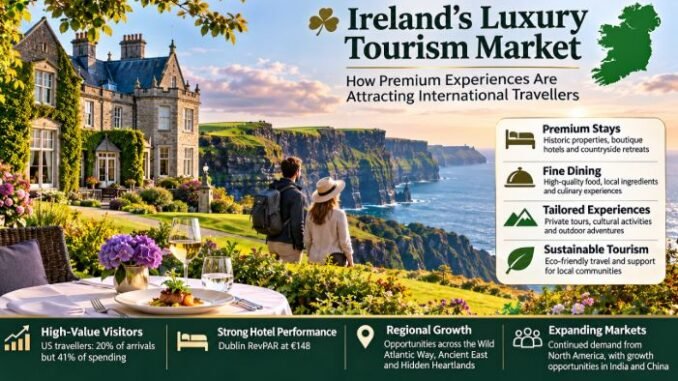
Ireland’s luxury tourism sector is gaining attention from international travellers seeking premium accommodation, personalised services and memorable experiences. From historic country estates and boutique hotels to fine dining, private tours and countryside retreats, the country is strengthening its position in the high-end travel market.
The growing interest in premium travel is creating opportunities for hotel operators, tourism businesses, restaurants and investors. With international visitors contributing significantly to tourism spending, the luxury segment is becoming an important area of potential growth for Ireland’s hospitality industry.
High-Spending International Visitors Drive Market Growth
The United States remains a particularly valuable market for Ireland’s tourism sector. Figures cited by Savills show that American visitors accounted for 20% of Ireland’s inbound visitor share but generated 41% of visitor spending. This highlights the importance of attracting travellers who spend more on accommodation, dining and tailored experiences.
Dublin continues to benefit from international visitor demand and its position as a major tourism gateway. Savills data also reported hotel revenue per available room (RevPAR) of €148 in the city, underlining the commercial potential of its hotel market.
For hospitality businesses, these trends point to opportunities to develop premium services and attract visitors looking for quality, comfort and personalised attention.
Premium Accommodation Creates Investment Opportunities
Ireland’s luxury accommodation sector is built around historic buildings, heritage estates, boutique hotels and high-end countryside retreats. These properties offer visitors a combination of comfort, local character and distinctive surroundings.
The growing demand for premium stays could encourage further investment in hotel upgrades, property restoration, boutique accommodation and luxury hospitality services. Investors and operators may also find opportunities in developing smaller, specialised properties that offer a more personal alternative to conventional hotels.
However, success in this market requires more than attractive accommodation. Service quality, experienced management, effective marketing and a clear identity are essential to building a competitive hospitality business.
Personalised Experiences Add Value to Tourism Businesses
Luxury travellers increasingly want experiences that go beyond a hotel stay. Private guided tours, customised itineraries, cultural activities and exclusive dining arrangements are becoming important parts of premium travel.
This trend creates opportunities for businesses across the tourism supply chain. Local guides, travel companies, restaurants, transport providers and cultural organisations can work with hotels and international travel agencies to offer tailored visitor packages.
Such partnerships can help smaller businesses reach higher-spending international customers while giving hotels additional services to offer their guests.
Fine Dining and Local Food Strengthen the Premium Travel Market
Food is another important part of Ireland’s luxury tourism offering. International visitors are showing interest in high-quality dining, regional ingredients and experiences that introduce them to local food traditions.
This creates opportunities for restaurants, independent food businesses, local producers and hospitality operators. Hotels can also build stronger visitor experiences by working with regional suppliers and offering dining options that reflect the character of their destinations.
These partnerships can generate additional business for local producers while making Ireland’s premium tourism offering more distinctive.
Regional Tourism Offers Scope for Expansion
Although Dublin remains a major entry point for international visitors, regional destinations are gaining attention as Ireland looks to spread tourism activity across the country.
The Wild Atlantic Way, Ireland’s Ancient East and Ireland’s Hidden Heartlands offer opportunities for boutique accommodation, countryside retreats, outdoor activities and heritage-based tourism services. Northern Ireland is also promoting its luxury tourism offering to international markets.
For investors and tourism businesses, regional expansion could create opportunities to develop new hospitality concepts, support local employment and attract visitors beyond the main urban centres.
International Markets Create Further Growth Potential
North America remains an important source of visitors for Ireland, particularly the United States and Canada. Tourism Ireland’s 2026 marketing strategy also identifies growth opportunities in markets such as India and China.
This wider international focus could benefit Irish hotels and tourism operators seeking to build relationships with overseas travel advisers, specialist agencies and premium tour companies.
Businesses looking to attract international travellers will need targeted marketing, strong distribution partnerships and services that reflect the expectations of different customer markets.
Sustainability Becomes Part of the Business Strategy
Sustainability is becoming an important consideration in the hospitality industry. Premium travellers are increasingly interested in businesses that support local communities, protect natural surroundings and work with regional suppliers.
Hotels and tourism operators can respond through responsible sourcing, energy-efficient operations, waste reduction and stronger partnerships with local businesses. These measures can support environmental goals while helping companies manage operating costs and strengthen their market position.
Business Outlook:
Ireland’s luxury tourism market is creating opportunities across accommodation, restaurants, travel services and experience-led businesses. Strong spending from international visitors, particularly from the United States, highlights the commercial value of attracting travellers who are willing to pay for quality and personalised services.
The opportunity extends beyond large hotel groups. Smaller tourism operators, local suppliers and regional businesses can also benefit by developing specialist services and working with established hospitality companies.
As Ireland continues to promote its premium tourism offering in established and emerging markets, businesses that combine quality service, local character and memorable visitor experiences could be well positioned to grow. The sector’s long-term potential will depend on its ability to attract high-value visitors while ensuring that tourism growth benefits businesses and communities across the country.
