
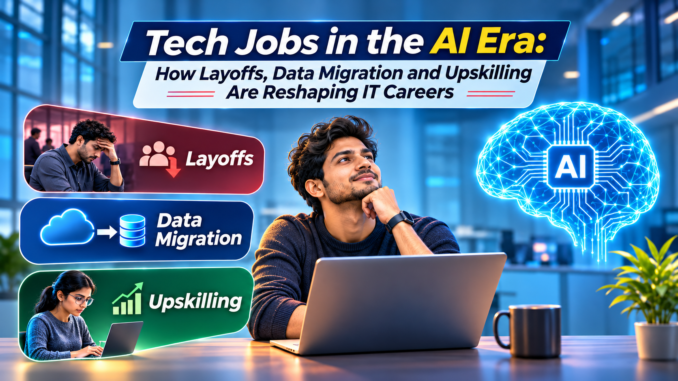
Nov 25: The technology industry is undergoing significant changes as artificial intelligence (AI), automation and cloud computing reshape business operations and workforce requirements. While layoffs and restructuring continue to create uncertainty among IT professionals, companies are investing in emerging technologies and seeking specialised talent to support their digital transformation initiatives.
From AI-assisted software development to cloud migration and data management, the evolving technology landscape is creating new employment opportunities while redefining existing roles. Professionals who previously focused on traditional software development, database administration and technical support are now expected to expand their knowledge of emerging technologies and strengthen their technical capabilities.
For India’s large IT workforce, this transition brings both challenges and opportunities. As businesses adopt intelligent systems, the ability to learn new technologies, manage complex data environments and work alongside AI-powered tools is becoming increasingly valuable.
Technology Layoffs Are Changing the IT Employment Landscape
Layoffs have become a major concern across the global technology industry. Companies are reviewing their workforce structures as they focus on operational efficiency, automation and changing business priorities.
However, artificial intelligence is not the only factor influencing workforce reductions. Slower business growth, cost optimisation, organisational restructuring and changing investment priorities are also contributing to employment uncertainty.
At the same time, automation is changing the responsibilities associated with traditional technology jobs. Repetitive activities involving software testing, basic coding, technical support and data processing are increasingly being supported by intelligent tools.
This does not mean that these professions will disappear entirely. Instead, employees may need to take on more specialised responsibilities involving system integration, problem-solving, technology management and AI-assisted workflows.
For IT professionals, the challenge is to keep their technical knowledge relevant as employers reassess the capabilities required to manage modern technology operations.
AI Is Creating New Opportunities While Redefining Existing Jobs
Artificial intelligence is becoming an integral part of business operations, influencing software development, customer service, financial management and enterprise decision-making.
Companies are increasingly integrating generative AI, machine learning and automation into their operations to improve productivity and reduce manual workloads.
The World Economic Forum’s Future of Jobs Report 2025 highlights the scale of this transformation. According to the report, global employment trends could result in 170 million new jobs being created and 92 million existing roles being displaced by 2030, representing a net increase of 78 million jobs.
The report also identifies AI and big data, networks and cybersecurity, and technological literacy among the fastest-growing skill categories.
These findings indicate that technological advancement is changing the composition of employment rather than simply eliminating job opportunities.
Some of the emerging technology roles include:
- Artificial intelligence and machine learning engineers
- Generative AI developers
- Data scientists and data engineers
- Cloud architects and cloud engineers
- Cybersecurity specialists
- AI governance and risk management professionals
- Automation and DevOps engineers
For professionals, understanding how to work with AI tools and integrate them into existing business processes can provide an important career advantage.
How AI Adoption Is Reshaping Technology Jobs in India
India’s technology industry is particularly exposed to these changes because of its strong presence in IT services, software development, business process management and global technology outsourcing.
Indian IT companies are increasingly exploring generative AI, automation, cloud platforms and data analytics to improve service delivery and develop new business capabilities.
This transition is influencing recruitment and employee development. While companies continue to require software engineers, cloud specialists and cybersecurity professionals, they are also looking for employees who can work with AI-powered development platforms and manage increasingly complex digital environments.
For fresh graduates, traditional programming knowledge needs to be complemented by practical exposure to AI applications, cloud computing and data management.
Experienced professionals also need to adapt. Employees working in application maintenance, software testing, infrastructure management and technical support can explore opportunities in automation, cloud operations, AI integration and cybersecurity.
India’s expanding digital economy is also creating opportunities for professionals supporting international businesses with technology modernisation, enterprise software integration and cloud migration.
The key takeaway is that technology employment is evolving. The skills required to secure and retain IT jobs are changing alongside the services businesses expect from technology companies.
Data Migration Is Emerging as an Important Technology Career Area
As businesses modernise their operations, many are moving away from legacy infrastructure towards cloud-based platforms and integrated digital systems. This transition is increasing the demand for data migration and enterprise technology modernisation.
Data migration involves transferring information from existing databases, applications and storage systems to new technology environments. However, the process requires more than simply moving information between platforms.
Businesses must ensure that data remains accurate, secure and accessible throughout the migration process. They must also consider system compatibility, regulatory requirements and business continuity.
This creates opportunities for professionals with expertise in:
- Cloud migration and infrastructure management
- Database administration
- Data engineering and analytics
- Enterprise application integration
- Data governance and management
- Cybersecurity and data protection
AI adoption adds another dimension to this requirement. Businesses need reliable, organised and accessible information to develop effective AI applications.
Consequently, professionals who combine database expertise with cloud computing, data engineering and security knowledge can explore opportunities in enterprise digital transformation.
Industry Reports Highlight the Growing Importance of Upskilling
The changing employment landscape is also influencing how companies approach recruitment and workforce development.
The Linux Foundation’s 2026 State of Tech Talent Report provides insights into this transition. Based on responses from 400 global participants involved in hiring, training and managing technical talent, the report examines how organisations are addressing technology skills gaps.
Its findings indicate that 57% of organisations prioritise upskilling and cross-skilling existing employees to address technical talent shortages, compared with 49% that prioritise hiring new technical staff.
The report also identifies AI as a net driver of technology hiring, with organisations anticipating a positive net hiring effect of 31% for 2026.
These findings suggest that businesses are increasingly looking to develop existing employees while recruiting professionals with specialised capabilities.
For technology workers, this reinforces the importance of continuous learning. Employees who understand their existing systems and acquire additional skills in AI, cloud computing and cybersecurity may qualify for new responsibilities within their organisations.
Which Technology Skills Will Be Valuable in the Coming Years?
The evolving employment landscape is making certain technical capabilities particularly relevant.
Artificial Intelligence and Generative AI: Knowledge of AI applications, machine learning fundamentals and AI integration can help professionals adapt to new development and business workflows.
Cloud Computing: Cloud architecture, infrastructure management and migration expertise are becoming important as organisations modernise their technology systems.
Data Engineering and Analytics: Businesses need professionals who can manage, process and interpret large volumes of information to support decision-making and AI applications.
Cybersecurity: As digital infrastructure expands, organisations require specialists who can protect systems, networks and sensitive information.
Automation and DevOps: Knowledge of automated testing, software deployment and infrastructure management can help businesses improve operational efficiency.
Data Governance: Understanding data quality, privacy, compliance and information management is becoming increasingly important as businesses expand their use of AI.
Alongside technical expertise, communication, analytical thinking and problem-solving remain essential. Employers increasingly value professionals who can understand business challenges and translate them into practical technology solutions.
How Companies Are Rethinking Technology Recruitment
Traditional IT recruitment often focused on educational qualifications, years of experience and familiarity with specific programming languages.
These factors continue to matter, but hiring requirements are evolving.
Companies are placing greater emphasis on practical experience with emerging technologies, the ability to manage complex projects and familiarity with AI-enabled workflows.
This shift also affects fresh graduates entering the job market. Basic coding knowledge may not be enough to stand out in an increasingly competitive recruitment environment. Candidates who combine programming fundamentals with cloud knowledge, AI tools and practical project experience may have an advantage.
For experienced professionals, the priority is to build on existing expertise while understanding how emerging technologies can improve their work.
Organisations must also balance workforce restructuring with investments in employee training. Developing internal talent can help companies address skills shortages while retaining valuable experience and institutional knowledge.
Preparing for the Future of Technology Jobs
The changing employment landscape requires professionals to take a more active approach to career development.
Rather than waiting for employers to introduce training programmes, employees can begin by identifying the skills most relevant to their current roles and future career interests.
Building practical experience through technology projects, learning cloud platforms, exploring AI applications and understanding data management can strengthen professional capabilities.
Certifications can demonstrate technical knowledge, but they are most valuable when supported by practical experience.
For employers, creating opportunities for internal mobility, reskilling and continuous learning can help employees adapt to changing business requirements.
The objective should not be to learn every new technology entering the market. Instead, professionals should understand which technologies are relevant to their roles and how they can apply them effectively.
The Future of IT Careers Will Depend on Continuous Learning
The technology industry is entering a period in which workforce requirements are changing alongside rapid digital transformation. Layoffs and restructuring remain important concerns, but they are taking place alongside growing demand for specialised skills in AI, cloud computing, cybersecurity and data migration.
Artificial intelligence may automate certain tasks, but businesses will continue to need professionals who can develop, manage, secure and improve technology systems.
For India’s IT workforce, the coming years will bring significant changes. Professionals who combine technical experience with AI literacy, data expertise and practical problem-solving will be better prepared to navigate evolving recruitment requirements.
Ultimately, the future of technology jobs will not be determined by AI alone. It will depend on how businesses adopt emerging technologies and how effectively professionals prepare themselves to work alongside them.
