
Oct 24: Dubai’s food industry offers opportunities for businesses that understand changing consumer preferences and can turn them into practical products. One area worth exploring is plant-based food, which includes dairy-free milk, meat alternatives, vegan snacks, ready-to-eat meals and plant-based ingredients for restaurants.
For entrepreneurs, food manufacturers and investors, the plant-based food business in Dubai offers several possible entry points. However, success depends on more than the growing interest in alternative foods. Businesses must understand customer demand, manage production and distribution costs, and offer products that people are willing to purchase regularly.
Dubai’s diverse population, international food culture and established hospitality sector make it an interesting market for companies considering plant-based products in 2026. The key is to identify the right opportunity rather than assuming that every plant-based food category will deliver the same results.
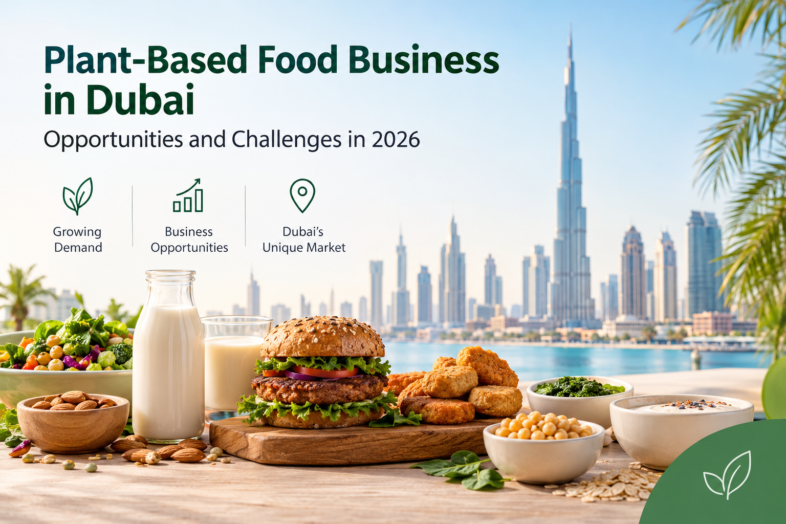
Plant-Based Food Market in the UAE: What the Numbers Show
The UAE’s plant-based food market provides useful insight into the commercial opportunities available in Dubai.
According to a sector analysis by Agriculture and Agri-Food Canada, retail sales of plant-based food and beverage products in the UAE increased from US$7.19 million in 2019 to US$14.94 million in 2023. The report recorded a compound annual growth rate (CAGR) of 20.1% during this period and projected the market to reach US$27.04 million by 2028.
Plant-based dairy alternatives accounted for a significant share of these sales. The category, which includes products such as plant-based milk and yoghurt, recorded sales of approximately US$11.03 million in 2023. The report projected this figure to reach US$19.05 million by 2028.
Plant-based snacks also showed promising historical growth, with retail sales increasing from US$0.51 million in 2019 to US$1.65 million in 2023.
These figures are based on historical data and forecasts, not confirmed 2026 sales. They also cover the UAE rather than Dubai alone. Nevertheless, they indicate that dairy alternatives, snacks and other convenient plant-based products are worth examining when assessing business opportunities.
Why Dubai Offers Opportunities for Plant-Based Food Businesses
Changing Consumer Preferences
Plant-based food is no longer limited to consumers who follow a vegan or vegetarian lifestyle. Some people are reducing their meat consumption, exploring dairy alternatives or simply looking for more variety in their everyday meals.
This creates opportunities for businesses that make plant-based products convenient, appealing and affordable. Dairy-free coffee, plant-based snacks, meat-free burgers and ready meals can attract customers who want alternatives without making significant changes to their eating habits.
For companies entering the market, taste, price and product quality are important considerations. A product that meets everyday needs may have greater repeat-purchase potential than one that relies entirely on lifestyle marketing.
Opportunities in Restaurants and Hospitality
Dubai’s international population and tourism sector create demand for varied dining experiences. Restaurants, cafés, hotels and catering companies can introduce plant-based options to serve customers with different dietary preferences.
A café might offer oat milk for coffee, while a hotel could expand its breakfast menu with dairy-free choices. Restaurants may also introduce plant-based versions of familiar dishes to appeal to flexitarian customers.
However, opening a dedicated vegan restaurant involves different risks from supplying plant-based ingredients to established foodservice businesses. Restaurant operators must account for rent, staffing, food costs, delivery commissions and customer demand. Testing a smaller menu or introducing plant-based dishes within an existing operation may be a more practical starting point.
Food Innovation and Product Development
Plant-based food innovation extends beyond meat substitutes. Businesses can explore products made from pulses, grains, nuts, seeds and other plant ingredients.
Potential areas include dairy-free desserts, protein-rich snacks, alternative protein ingredients, convenient meals and plant-based cooking products. There is also scope to develop products around regional tastes and familiar recipes.
Companies that solve specific problems, such as making a dairy alternative more affordable or offering a convenient plant-based lunch, may have a clearer commercial proposition than businesses launching products without a defined target customer.
Five Business Opportunities in Dubai’s Plant-Based Food Industry
1. Plant-Based Milk and Dairy Alternatives
Plant-based milk made from oats, almonds, soy and coconut is an established category with opportunities for product differentiation.
Entrepreneurs can explore dairy-free beverages, plant-based yoghurt, vegan desserts and products designed for cafés and restaurants. Barista-style alternatives, for example, can be supplied to coffee shops that want to expand their beverage menus.
Before entering this category, businesses should assess ingredient costs, shelf life, packaging, retail pricing and competition. They should also consider whether their product offers a meaningful advantage in taste, nutritional profile, convenience or price.
2. Plant-Based Meat and Alternative Proteins
Plant-based burgers, sausages, mince, nuggets and ready-to-cook products offer opportunities for manufacturers, importers and foodservice suppliers.
Restaurants can incorporate these ingredients into familiar dishes, while manufacturers can explore supplying supermarkets and catering businesses.
The commercial challenge is to produce food that meets expectations for flavour, texture and value. Businesses should test their products with potential buyers and establish realistic production costs before investing in large-scale manufacturing.
3. Plant-Based Snacks and Convenience Foods
Convenient foods can appeal to consumers looking for options that fit into busy workdays, travel schedules and everyday routines.
Potential products include roasted chickpeas, nut-based bars, energy bites, vegetable crisps and ready-to-eat meals. Depending on the product, businesses can target supermarkets, gyms, offices, cafés and online grocery platforms.
Pack size, ingredient transparency, shelf life and pricing should be considered during product development. For manufacturers, a focused product range may also make it easier to test demand before expanding into additional categories.
4. Vegan Cafés, Restaurants and Cloud Kitchens
Dubai offers opportunities for businesses interested in plant-based dining, from specialist cafés to restaurants with broader menus.
Possible concepts include plant-based Indian cuisine, vegan bakery products, healthy lunch bowls and dairy-free desserts. Cloud kitchens may allow entrepreneurs to test selected dishes through delivery channels before committing to a full-service restaurant.
However, the business model needs to be commercially viable. Entrepreneurs should evaluate customer demand, menu pricing, kitchen costs, delivery expenses and repeat orders. Plant-based positioning alone does not guarantee profitability.
5. Food Import, Distribution and Private-Label Products
Businesses do not necessarily need to establish a manufacturing facility to participate in the plant-based food industry.
Importers and distributors can supply products to restaurants, hotels, supermarkets and catering companies. Entrepreneurs may also explore private-label arrangements with established manufacturers and sell products under their own brands.
Dubai’s international trading connections can support distribution within the UAE and potentially into other markets. However, businesses must account for sourcing costs, import procedures, product registration, storage conditions and distribution margins.
For newcomers, starting with a small selection of products and a clearly defined customer base may be more manageable than building a broad distribution portfolio immediately.
Which Plant-Based Food Business Model Should Entrepreneurs Choose?
The most suitable model depends on the entrepreneur’s budget, experience, target customers and ability to manage operational risks.
| Business model | Potential opportunity | Main consideration |
|---|---|---|
| Packaged plant-based foods | Retail and online sales | Product differentiation and repeat purchases |
| Dairy alternatives | Retail, cafés and restaurants | Competition, pricing and shelf life |
| Food distribution | Supply to retailers and hospitality businesses | Buyer relationships and logistics |
| Vegan restaurant or café | Direct consumer sales | Rent, staffing and daily operating costs |
| Private-label products | Building a brand without owning a factory | Manufacturer selection and quality control |
There is no single best model for every business. A distributor with established restaurant contacts may be better positioned to supply foodservice customers, while an entrepreneur with product-development experience may prefer to create a packaged food brand.
The first step is to validate demand with actual customers rather than relying solely on industry growth forecasts.
How to Start a Plant-Based Food Business in Dubai
Step 1: Identify a Specific Market
Decide whether the business will target individual consumers, restaurants, hotels, retailers or food distributors. Each customer group has different purchasing priorities, price expectations and order volumes.
Step 2: Research Products and Competitors
Compare existing products, ingredients, pack sizes and prices. Customer reviews and retailer product listings can help identify gaps in the market, including opportunities to improve taste, convenience, packaging or affordability.
Step 3: Test Demand Before Scaling
Conduct product tastings, small pilot sales, restaurant trials or limited distribution runs. Feedback from prospective customers can help identify issues before substantial capital is committed.
Step 4: Understand Licensing and Food Regulations
Businesses must establish which commercial licence and food-related approvals apply to their activities. Depending on the model, requirements may include food import permissions, product registration, labelling compliance and food safety procedures.
Companies should confirm the applicable requirements with the relevant Dubai and UAE authorities before importing, manufacturing or selling products.
Step 5: Establish Reliable Supply and Distribution
Identify dependable suppliers, calculate landed costs and determine how products will be stored and delivered. For businesses selling to restaurants and retailers, consistent quality and reliable supply can be as important as the product itself.
Step 6: Develop a Digital Marketing Strategy
A professional website and well-optimised product pages can help customers discover a new food business through search engines. Social media can demonstrate how products are used, while direct outreach can help suppliers connect with restaurant owners, retailers and procurement teams.
Businesses should create content that answers real customer questions, explains product benefits accurately and provides clear information about availability and purchasing.
Challenges That Could Affect Business Growth
The plant-based food industry has potential, but businesses must consider several challenges before entering the market.
Price sensitivity: If an alternative product costs significantly more than a conventional option, some customers may not buy it regularly.
Taste and texture: Customers expect products to deliver a satisfying eating experience. Poor flavour or texture can affect repeat purchases.
Operating costs: Imported ingredients, packaging, refrigeration, storage and transportation can reduce margins.
Competition: New businesses may need to compete with established food brands as well as conventional products.
Regulatory compliance: Importing, manufacturing and selling food requires attention to applicable licensing, safety and labelling requirements.
Demand uncertainty: Consumer interest does not automatically translate into sufficient sales. Businesses should validate their target market and test pricing before expanding.
A practical approach is to begin with a defined customer segment, monitor sales and repeat orders, and expand only when the business model shows evidence of demand.
Sustainability and Food Security: A Wider Business Opportunity
Food security is an important consideration for the UAE, where food sourcing, supply-chain resilience and waste reduction are relevant to the wider food industry.
These priorities provide a context for businesses exploring more efficient production, responsible packaging, waste reduction and local sourcing where feasible.
Plant-based products can broaden food choices, but their environmental impact depends on how ingredients are grown, processed, packaged and transported. Companies should use credible evidence when making sustainability claims rather than assuming that every plant-based product has the same environmental benefits.
For businesses, transparency about ingredients, sourcing and production practices can help build trust with customers and commercial partners.
What Is the Future of the Plant-Based Food Industry in Dubai?
The outlook for the plant-based food industry in Dubai will depend on how successfully businesses make these products practical choices for everyday consumers.
Dairy alternatives, snacks, convenient meals and foodservice ingredients offer different opportunities. Historical UAE market data points to growth across several categories, although individual businesses will still need to establish demand and compete on price, quality and availability.
Startups can reduce risk by testing a focused product range before expanding. Established food companies may explore new product lines, partnerships with distributors or opportunities to supply hospitality businesses.
Dubai’s role as a trading and logistics centre may also create opportunities for suitable businesses to serve regional markets, subject to local regulations and commercial requirements.
In the long term, businesses that combine consumer-focused product development with reliable supply, competitive pricing and effective marketing may be better placed to establish themselves in the sector.
Conclusion
The plant-based food business in Dubai offers potential opportunities across packaged foods, dairy alternatives, snacks, distribution and foodservice. Historical UAE sales data suggests that several categories have expanded, but market growth alone does not guarantee commercial success.
Entrepreneurs and investors should focus on specific customer needs, validate demand, understand operating costs and ensure regulatory compliance before scaling their businesses.
With the right product, pricing and distribution strategy, plant-based food can be a worthwhile area to explore within Dubai’s evolving food market.
Shreyas Webmedia Solutions supports businesses through content development, digital marketing and media visibility, helping companies communicate their offerings and strengthen their online presence.
