
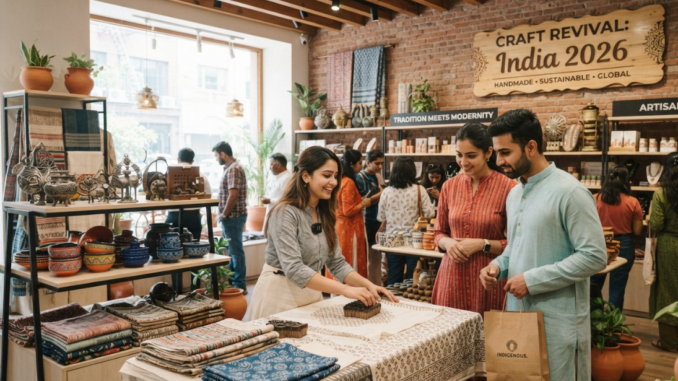
Oct 23: Traditional Indian crafts in 2026 are finding new opportunities in online retail, fashion, home décor and personalised gifting. From handwoven textiles and Madhubani paintings to terracotta pottery, wooden toys and handcrafted jewellery, Indian handicrafts are reaching customers who value distinctive designs, regional identity and products made by skilled artisans.
Social media, e-commerce platforms and changing shopping preferences are creating new ways for craft businesses to reach buyers across India and overseas. For artisans, entrepreneurs and retailers, this presents an opportunity to turn traditional skills into viable businesses while preserving India’s rich cultural heritage.
Why Traditional Indian Crafts Are Gaining Attention in 2026
1. Growing Interest in Handmade Products
Mass-produced products are widely available, but handmade items offer individuality. Variations in patterns, colours and finishing give each product a distinctive character, making handcrafted goods appealing to customers looking for something different.
Handmade pottery, embroidered accessories, handwoven textiles and carved wooden décor can attract buyers who want their purchases to reflect personal taste. Businesses can build on this interest by combining traditional techniques with contemporary designs and practical uses.
2. Sustainable and Responsible Shopping
Consumers are paying greater attention to materials, product quality and purchasing decisions. Crafts made from bamboo, cane, clay, wood and natural fibres may appeal to buyers seeking alternatives to mass-produced goods.
However, handmade products are not automatically environmentally friendly. Businesses should provide accurate information about material sourcing, durability and production methods rather than relying on broad sustainability claims.
3. Social Media Is Expanding Market Reach
Instagram, Pinterest and YouTube allow craft businesses to showcase their products through photographs, short videos and demonstrations. A pottery maker can share the process of shaping and painting a vessel, while a handloom business can explain how a textile is woven.
Such content helps customers understand the skill involved in making a product. It also gives smaller businesses an opportunity to build brand recognition without investing immediately in a physical retail store.
4. Personalised Gifts Are Creating New Opportunities
Customised handmade products are suitable for birthdays, weddings, festivals and corporate gifting. Personalised jewellery, painted keepsakes, embroidered accessories and decorative gift boxes can help sellers distinguish themselves from businesses offering standardised products.
Corporate buyers may also look for artisan-made gifts for employees, customers and business events. Sellers can serve this market by offering consistent quality, custom branding, bulk-order options and realistic delivery schedules.
5. Regional Crafts Are Finding New Audiences
India’s regional craft traditions provide opportunities to develop products with distinctive identities. Madhubani painting from Bihar, Pattachitra from Odisha, blue pottery associated with Jaipur, Channapatna wooden toys from Karnataka and Banarasi textiles from Uttar Pradesh are examples of established craft traditions.
Businesses can communicate the history, materials and techniques behind their products to help customers understand their value. Where applicable, verified Geographical Indication (GI) recognition can provide additional differentiation, subject to the relevant rules.
India’s Handicrafts Market: Research and Industry Outlook
India’s handicrafts industry has an established domestic market and a significant export presence. According to market estimates cited by the India Brand Equity Foundation (IBEF), the Indian handicrafts market was valued at approximately US$4.56 billion in 2024 and is projected to reach US$8.19 billion by 2033.
Export data also illustrates the sector’s commercial importance. According to the Export Promotion Council for Handicrafts (EPCH), India’s handicraft exports, excluding hand-knotted carpets, reached ₹33,122.79 crore in the financial year 2024–25, compared with ₹32,758.80 crore in 2023–24. This represented growth of approximately 1.11% in rupee terms.
These figures offer useful context for businesses considering the sector, but they do not mean every craft category is experiencing the same demand. Product quality, pricing, customer preferences and access to distribution channels can influence individual business performance.
Artisan livelihoods are another important part of the industry. A December 2025 Press Information Bureau release reported that more than 32 lakh artisans had been registered under the Pehchan Artisan Identification programme as of 2024, including nearly 20 lakh women. The figures highlight the importance of supporting craft communities and improving their access to markets.
Digital initiatives are also creating new routes to customers. Government-supported platforms such as Indiahandmade provide online channels for handloom and handicraft products. Alongside independent websites and social media, these channels can help businesses showcase regional crafts to wider audiences.
Overall, the industry data points to opportunities in product development, retail, exports and digital commerce. Commercial success, however, depends on identifying the right customers and building a reliable business model.
Top Traditional Indian Craft Trends in 2026
Handcrafted Home Décor
Terracotta planters, handwoven cushions, carved wooden accessories, cane furniture and hand-painted tableware can appeal to customers looking for distinctive home interiors.
Businesses can create collections around particular colours, room styles or functional needs. Durable construction, accurate dimensions and attractive product photography can help improve customer confidence.
Handloom Fashion and Accessories
Handwoven fabrics, embroidered garments, scarves, bags and handcrafted jewellery offer opportunities for independent designers and boutique retailers.
Combining traditional textiles with contemporary silhouettes can help brands reach younger consumers while maintaining the character of the original craft. Clear information about materials, sizing and garment care is essential for online sales.
Customised Handmade Products
Personalisation gives smaller businesses a way to differentiate their offerings. Name-engraved wooden products, custom-painted pottery, personalised jewellery and made-to-order gifts can serve customers seeking distinctive items.
Sellers should calculate the additional labour and material costs before setting prices. Clear customisation options and production timelines can help prevent delays and protect profit margins.
Artisan-Made Corporate and Festive Gifts
Businesses can develop curated gift collections for festivals, conferences, employee programmes and customer appreciation. Handmade stationery, textiles, pottery and decorative items can be combined into coordinated packages.
Corporate orders may provide larger sales opportunities, but they require consistent specifications, reliable production capacity and dependable delivery.
Regional Crafts for Tourism and Hospitality
Hotels, resorts, restaurants and tourism operators can collaborate with artisans to develop locally inspired products. Souvenirs, textiles, decorative objects and accessories can introduce visitors to the craft traditions of a destination.
Such partnerships can provide additional sales channels for artisans while helping hospitality businesses create more distinctive experiences.
Business Opportunities in Traditional Indian Crafts
1. Start an Online Handmade Products Business
Entrepreneurs can begin with a focused category, such as handcrafted jewellery, regional textiles, pottery or personalised gifts. A smaller initial range makes it easier to test demand, manage inventory and understand customer preferences.
Products can be sold through established marketplaces, social media storefronts or a dedicated e-commerce website. Clear descriptions, high-quality images, transparent pricing and reliable shipping are essential.
2. Build a Direct-to-Consumer Brand
A direct-to-consumer business allows sellers to develop their own brand identity and build relationships with customers.
Rather than competing solely on price, a craft brand can explain its design choices, production methods and product origins. Consistent presentation and reliable customer service can help encourage repeat purchases.
3. Partner With Artisans and Craft Clusters
Retailers and entrepreneurs can collaborate with artisan groups, cooperatives and self-help groups to develop products for specific markets.
These partnerships should include clear agreements on pricing, production quantities, payment schedules, quality standards and delivery. Fair compensation and transparent sourcing can support stronger long-term relationships.
4. Explore International Markets
Indian handicrafts have an established export market, creating opportunities for businesses selling textiles, home furnishings, decorative objects and accessories.
Before expanding overseas, sellers should research destination-market demand, shipping expenses, packaging requirements, customs procedures and applicable product regulations. Testing a limited product range can help assess demand before larger investments are made.
5. Provide Digital Marketing Services to Craft Businesses
Craft businesses often need support with online catalogues, product photography, websites, social media and search engine optimisation. This creates opportunities for digital marketing agencies and independent service providers.
For example, a business selling handmade pottery can improve its product pages with accurate descriptions, dimensions, material details and care instructions. A blog explaining regional pottery styles or offering a guide to choosing handmade tableware can attract relevant search traffic.
Digital marketing services can help craft businesses improve discoverability, communicate their value and reach customers beyond their existing networks.
How Small Craft Businesses Can Improve Online Sales
A strong product alone may not be enough to stand out in a competitive online market. Craft businesses should combine product quality with effective presentation and a clear sales strategy.
Choose a niche: Focus on a particular craft, product category or customer segment.
Use search-friendly product titles: Include relevant terms such as handmade pottery, Indian handloom bags or handcrafted home décor where appropriate.
Show the production process: Use photographs and videos to demonstrate genuine craftsmanship.
Provide complete product information: Include dimensions, materials, care instructions and accurate origin details.
Price products realistically: Account for labour, materials, packaging, shipping, platform fees and marketing expenses.
Offer dependable service: Set realistic delivery timelines and communicate return and custom-order policies clearly.
Measure performance: Track conversion rates, repeat purchases, returns and profit margins to identify products worth expanding.
For example, an artisan selling hand-painted ceramic planters could begin with three designs, photograph each product in a home setting and test sales through social media. Customer feedback could then guide decisions about new designs, pricing and inventory. This approach allows a small business to test demand before committing to large production volumes.
Challenges Facing India’s Handicrafts Industry
Despite its potential, the sector faces several challenges.
Competition from mass-produced goods: Factory-made products can be cheaper, putting pressure on artisan businesses to explain the value of their craftsmanship.
Limited production capacity: Handmade products require time and skilled labour, making large orders and tight deadlines difficult for some producers.
Digital skills gaps: Artisans may need support with photography, online listings, inventory management and digital promotion.
Authenticity concerns: Clear information about materials, origins and production techniques helps buyers distinguish genuine craftsmanship from misleading claims.
Profitability: Labour-intensive products must be priced carefully to cover costs while providing fair returns to artisans.
Addressing these challenges requires cooperation between producers, designers, retailers, online platforms and organisations supporting the craft sector.
The Future of Traditional Indian Crafts Beyond 2026
Traditional Indian crafts have opportunities to reach new customers as digital commerce, contemporary design and interest in regional products create additional routes to market.
Fashion brands, interior designers, tourism operators and corporate buyers can help introduce craft products to different audiences. Online marketplaces and social media can also help artisans showcase their skills beyond local markets.
However, long-term growth requires more than online visibility. Craft businesses need viable pricing, reliable supply chains, quality control and fair relationships with the people who make their products.
Brands that combine traditional craftsmanship with thoughtful design, accurate storytelling and dependable service can build stronger customer relationships while contributing to the preservation of India’s craft heritage.
Conclusion
Traditional Indian crafts in 2026 offer opportunities across home décor, fashion, personalised gifting, tourism and e-commerce. Industry estimates and export figures demonstrate the sector’s commercial significance, while digital platforms are creating new ways for artisans and businesses to reach wider audiences.
For entrepreneurs and retailers, the key is to identify the right market, develop distinctive products and maintain quality, fair pricing and reliable service. By connecting traditional skills with contemporary customer needs, Indian craft businesses can explore new commercial opportunities while helping preserve the cultural heritage behind their products.
