

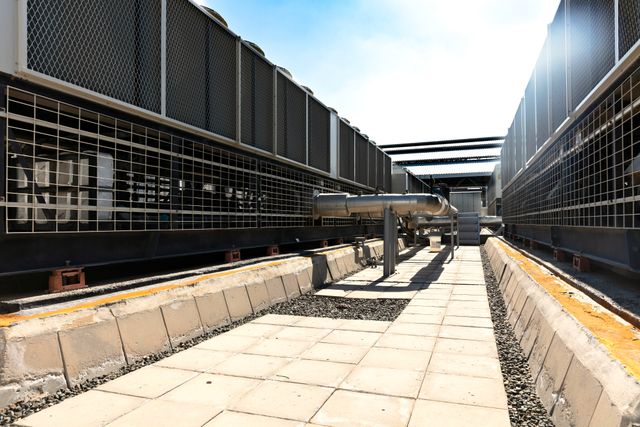
A commercial HVAC maintenance agreement helps businesses protect their heating and cooling systems, control service costs, and prevent unexpected breakdowns. Whether you’re managing aging equipment or maintaining systems after a new HVAC installation, understanding what a service contract includes is essential. This guide explains the key terms, maintenance requirements, costs, and exclusions to consider before choosing an agreement.
How A Commercial HVAC Maintenance Agreement Works
A commercial HVAC maintenance agreement is a service contract between a business or property owner and an HVAC contractor that establishes a scheduled program for inspecting, maintaining, and servicing heating, ventilation, and air conditioning equipment. Its purpose is to keep systems operating reliably, reduce preventable breakdowns, and make maintenance expenses more predictable.
Most agreements begin with an equipment assessment. The contractor identifies the systems requiring service, evaluates their condition, and develops a maintenance schedule based on factors such as equipment age, manufacturer specifications, operating hours, and building usage. The contractor should also document existing problems before routine service begins so they are distinguished from issues discovered during the contract.
The agreement typically identifies the specific rooftop units, air handlers, chillers, boilers, heat pumps, and other HVAC components covered, along with the number of service visits and tasks performed during each visit. It also defines the inspections, adjustments, cleaning, and minor maintenance activities included in the agreed price.
Repair provisions establish how additional repairs, replacement parts, emergency service calls, and coordination with an electrician when needed will be handled. The commercial HVAC service agreement also specifies pricing, payment schedules, renewal conditions, response times, and cancellation policies.
During each scheduled visit, technicians perform the specified maintenance tasks, document equipment conditions, and identify developing issues. If a problem requires repairs beyond the agreement’s coverage, the contractor generally provides a recommendation and separate estimate.
An important operational detail is how the contractor manages issues that remain unresolved after a visit. For example, if a technician discovers abnormal compressor operation but replacement is postponed, the condition should remain documented for follow-up during subsequent visits.
Over time, service records can reveal recurring equipment problems, increasing repair requirements, and performance changes that help building owners make informed repair and replacement decisions.
The agreement should also establish procedures for equipment additions and changes in building operations. If a property adds another rooftop unit or extends its operating hours, the maintenance scope may need to be revised.
Commercial HVAC Service Contract Benefits
A commercial HVAC service contract helps businesses protect equipment investments, manage operating expenses, and maintain dependable indoor conditions. The benefits extend beyond preventing inconvenient equipment failures, particularly in buildings where HVAC performance directly affects employees, customers, tenants, or business operations.
Routine inspections allow technicians to identify worn belts, loose electrical connections, drainage problems, and other developing issues before they cause major disruptions. Although maintenance cannot eliminate every failure, it can reduce failures associated with neglected equipment.
A commercial HVAC service contract establishes a recurring maintenance budget, making routine HVAC costs easier to forecast. Depending on the agreement, businesses may also receive preferred repair rates or reduced emergency service charges.
Dirty coils, restricted airflow, malfunctioning controls, and improperly maintained components can make HVAC equipment consume more energy than necessary. Regular servicing helps systems operate closer to their intended performance, potentially reducing unnecessary utility expenses.
Maintaining proper airflow, lubrication, electrical connections, and operating conditions can reduce avoidable wear. This helps businesses maximize the useful life of expensive HVAC equipment, although actual lifespan depends on many factors, including usage and environmental conditions.
Consistent temperatures, proper ventilation, and dependable humidity control contribute to a more stable indoor environment and better indoor air quality. This can be especially important for restaurants, medical offices, retail spaces, and facilities with temperature-sensitive operations.
Maintenance reports provide insight into equipment deterioration and recurring repair costs. Building owners can use this information to anticipate replacement needs, evaluate repair options, and schedule work around business operations rather than making major purchasing decisions during an emergency.
One particularly valuable benefit is the ability to identify patterns that may remain unnoticed when individual repairs are handled independently. For example, repeated condensate drainage problems in the same air handler could indicate an underlying installation, airflow, or drainage design issue. With an organized maintenance history, the contractor can recommend corrective action rather than repeatedly treating individual symptoms.
An additional advantage is clearer accountability. A documented service agreement establishes maintenance expectations and provides records of work performed, helping property managers oversee HVAC performance across one building or multiple locations.
Maintenance can also be scheduled around occupancy, production hours, tenant activities, and planned shutdowns. Recorded maintenance can help demonstrate compliance with applicable manufacturer servicing requirements.
For properties with multiple HVAC units, consistent documentation makes it easier to compare equipment reliability across locations and identify systems that consume a disproportionate share of maintenance resources.
What’s Included In A Commercial HVAC Maintenance Agreement
A comprehensive commercial HVAC maintenance agreement should specify the actual maintenance tasks performed, the equipment receiving service, and the frequency of each activity. A general promise to inspect or tune up equipment provides limited assurance unless the contract clearly defines what technicians will do.
A typical preventive maintenance program should address the following areas.
Air filter maintenance involves inspecting filters and replacing them according to condition, usage, and contract terms. Coil inspection and cleaning includes checking evaporator and condenser coils for dirt, debris, corrosion, and airflow restrictions.
Electrical system inspection involves examining wiring, connections, contactors, capacitors, and relevant electrical operating measurements. Mechanical component inspection includes checking fans, motors, bearings, belts, pulleys, and other moving components.
Refrigeration system checks involve evaluating refrigerant pressures, temperatures, and operating conditions to identify potential faults. Condensate drainage maintenance includes inspecting and clearing drain lines, pans, and associated components as needed.
Thermostat and control testing involves checking temperature controls, sensors, operating sequences, and system responses. Heating system inspection includes evaluating burners, heat exchangers, ignition systems, safety controls, and applicable combustion conditions.
Ventilation and airflow checks involve inspecting fans, dampers, outside-air controls, and airflow performance. Equipment performance documentation includes recording operating measurements, deficiencies, completed work, and recommended corrective actions.
Facilities with more complex systems may also require cooling tower maintenance, water treatment coordination, economizer testing, variable-frequency drive inspections, building automation system checks, or specialized chiller and boiler servicing. Equipment-specific procedures should be added rather than relying on a generic maintenance checklist.
The maintenance scope should also distinguish between checking equipment condition, performing preventive maintenance, and completing corrective repairs. For example, inspecting an evaporator coil for contamination is different from performing a thorough coil cleaning. Similarly, checking for abnormal motor operation does not necessarily include replacing the motor.
Facility managers should confirm which consumables, cleaning materials, and replacement components are included. Filter replacement, coil cleaning, and minor adjustments may be included in one agreement but billed separately under another.
The agreement should also establish a process for documenting and classifying deficiencies. Maintenance reports should distinguish immediate safety concerns, urgent operational problems, and conditions suitable for planned corrective work.
ASHRAE Standard 180 provides an established framework for developing commercial HVAC inspection and maintenance programs. Its guidance can help property owners evaluate whether a proposed scope addresses the equipment and operating conditions at their facility.
Maintenance Frequency In A Commercial HVAC Maintenance Contract
Most commercial HVAC systems benefit from professional maintenance at least twice per year, typically before the primary cooling and heating seasons. However, the appropriate schedule under a commercial HVAC maintenance contract depends on equipment type, operating conditions, manufacturer requirements, and the consequences of a system failure.
For many commercial properties, a practical schedule may include monthly filter and operating-condition checks, quarterly preventive maintenance for heavily used equipment, comprehensive seasonal heating and cooling inspections, and annual equipment-specific testing.
Certain components need attention more often than the overall system. For example, filters may require replacement several times between major maintenance visits, while some specialized equipment requires inspections based on operating hours or measured condition.
Building use matters as well. An HVAC system serving an office occupied during normal business hours may have different maintenance requirements from one supporting a 24-hour hotel, commercial kitchen, healthcare facility, or manufacturing operation. Equipment exposed to construction dust, coastal corrosion, or heavy airborne contaminants may also require more frequent attention.
Maintenance frequency should also reflect equipment criticality. For example, an HVAC unit serving a temperature-sensitive server room may justify closer monitoring and more frequent inspections than a similar unit serving a storage area.
ASHRAE’s maintenance guidance emphasizes that service intervals should reflect manufacturer recommendations and actual operating conditions, with adjustments based on inspection findings and equipment performance.
A useful contractual provision is a maintenance schedule that can be adjusted when equipment conditions warrant it. If filters consistently reach an unacceptable pressure drop before their scheduled replacement date, the interval should be shortened. If a particular system repeatedly develops belt wear or condensate problems, those components may warrant additional checks.
Key Terms Of A Commercial HVAC Service Agreement
A commercial HVAC maintenance contract should provide a clear explanation of how service will be delivered and which expenses remain the building owner’s responsibility. The strongest agreements make it possible to evaluate service quality and costs before problems occur.
Start with the equipment inventory and scope of work. The contract should identify covered systems by location, equipment type, and preferably model or asset number. This is particularly important for buildings with multiple rooftop units or equipment added during renovations.
Confirm how quickly the contractor commits to responding to routine requests, urgent problems, and after-hours emergencies. Determine whether these commitments apply to initial contact, technician dispatch, or arrival on-site.
Understand the hourly labor rates, overtime charges, material markups, trip fees, and any discounts available under the contract. The agreement should also establish who may authorize repairs, whether written estimates are required, and how emergency work is handled when the designated property manager is unavailable.
Require written service reports that identify completed tasks, equipment measurements, identified deficiencies, and recommended repairs. Establish how open maintenance recommendations will be tracked until they are addressed or the owner formally decides to defer the work.
The agreement should also define what constitutes a completed maintenance visit. If equipment access is restricted or a system cannot be shut down, unfinished work should be recorded, with clear procedures for scheduling return visits and determining additional charges.
Before signing a commercial HVAC service agreement, verify appropriate liability coverage, workers’ compensation coverage where required, licensing, and qualifications for the equipment being maintained.
Review the agreement’s duration, automatic renewal provisions, price adjustment terms, and cancellation conditions. Clarify how pricing and service obligations change when equipment is installed, replaced, or removed.
For facilities with multiple service providers or internal maintenance teams, the contract should also define responsibility for shared tasks. This reduces the possibility of essential maintenance being overlooked because each party assumes someone else is handling it.
The contract should also address how the contractor handles faults that reappear shortly after a repair and ensure the property owner can obtain maintenance histories and reports throughout and after the agreement.
Commercial HVAC Maintenance Contract Exclusions And Limitations
Commercial HVAC service agreements commonly exclude certain repairs, replacement components, specialized services, and costs associated with unexpected equipment failures. Understanding these exclusions is essential because a preventive maintenance contract does not automatically provide comprehensive repair coverage.
Major component replacements, including compressors, heat exchangers, motors, and refrigerant coils, may require separate authorization and payment. Refrigerant replacement, leak detection, and system leak repairs may also be billed separately.
A commercial HVAC service contract may provide priority emergency scheduling without including the labor costs associated with urgent service calls. A contractor may guarantee access to emergency service while charging separately for diagnostic labor, parts, travel, and repairs.
Building automation systems, software-related problems, and specialized control components may require separate service coverage. Crane rentals, roof repairs, access equipment, and modifications needed to reach HVAC components are also often excluded.
Defects identified before the agreement begins may be excluded until corrective work is completed. Contracts may also limit coverage for obsolete equipment, restrict the value of included replacement parts, or exclude systems operating outside manufacturer specifications.
Problems caused by flooding, storms, power surges, vandalism, misuse, or unauthorized modifications may fall outside standard maintenance coverage.
Diagnostic labor is another consideration. A contract may include routine inspections but charge separately for investigating an intermittent electrical fault. If the same fault reappears several times, the agreement may allow an additional diagnostic charge for each visit.
Temporary repairs present another potential complication. A technician may restore cooling by installing a temporary component or making an interim adjustment. The agreement should establish whether temporary repairs are permitted, how they are documented, and who is responsible for arranging permanent corrective work.
Some contracts also exclude repairs resulting from deferred maintenance. This can create disagreements when a previously recommended repair was postponed and eventually contributed to a larger failure. The contract should clarify how deferred corrective work affects service obligations and any applicable coverage.
A commercial HVAC service agreement should also address provisions concerning consequential damages, including lost revenue, spoiled inventory, or tenant claims resulting from equipment downtime. These losses are frequently subject to contractual limitations.
Before signing, request an itemized exclusion schedule and a written explanation of what happens after a problem is identified, including which diagnostic activities, temporary measures, follow-up visits, and permanent repairs are billable. Clear exclusions make budgeting more accurate and reduce the likelihood of disputes when an unexpected problem occurs.
Commercial HVAC Maintenance Agreement Costs
Commercial HVAC maintenance agreements can cost anywhere from several hundred dollars per year for an individual small commercial unit to tens of thousands of dollars annually for larger facilities with multiple systems or specialized equipment.
As a planning reference, a published 2026 commercial HVAC contractor pricing guide for the Maryland, Washington, D.C., and Northern Virginia market cites approximately 750 per rooftop unit annually for quarterly preventive maintenance. It also reports roughly 9,000 annually for certain small- to midsize facilities. These are regional contractor-reported examples, not standardized nationwide rates.
Actual pricing for a commercial HVAC maintenance contract depends on equipment quantity and complexity, age and condition, maintenance frequency, system accessibility, facility operating requirements, and included services and repairs.
A building with several standard rooftop units will generally have a different maintenance cost structure from a facility operating chillers, boilers, cooling towers, and integrated building controls. Older systems may require additional inspection time, specialized replacement components, or more frequent attention.
Rooftop access restrictions, lift requirements, confined mechanical spaces, and special safety procedures can increase service costs. Facilities requiring continuous environmental control may also need more extensive inspections and faster emergency response.
A basic preventive maintenance agreement generally costs less than a full-service contract that includes substantial repair labor, replacement parts, or emergency coverage.
An important pricing consideration is how the contractor calculates the work required for each service visit. Two contractors may propose the same number of visits while assigning substantially different amounts of technician time and maintenance tasks.
For example, consider two hypothetical proposals for a building with six rooftop units.
Proposal A has an annual contract price of $3,600, or $600 per unit, with four scheduled maintenance visits. Filters are billed separately, coil cleaning is separately quoted, emergency labor is charged at standard rates, and maintenance reporting consists of a basic checklist.
Proposal B costs $4,800 annually, or $800 per unit, and also includes four scheduled visits. However, filters are included subject to specified quantities, specified routine coil cleaning is covered, emergency labor is offered at discounted rates, and maintenance reporting includes detailed readings and deficiency tracking.
Proposal B has a higher fixed price, but its included services could reduce additional spending during the year. Whether it offers better overall value depends on filter costs, equipment condition, cleaning requirements, emergency usage, and the actual contract terms.
A more complete comparison uses the following formula:
Total annual HVAC service cost = Contract price + Excluded maintenance + Repair labor + Replacement parts + Emergency charges + Other applicable fees.
This calculation should use realistic spending assumptions based on previous maintenance and repair records where available.
Pricing can also change when equipment ages, operating hours increase, or new systems are added. Property owners should examine annual price escalation provisions and determine whether increases are fixed, indexed, or subject to renegotiation.
Choosing A Provider For A Commercial HVAC Service Contract
Choosing a commercial HVAC service provider requires evaluating technical expertise, service reliability, communication practices, and the contractor’s ability to support the property’s specific equipment and operating requirements.
Begin by confirming that the provider has meaningful experience with your type of facility and HVAC systems. A contractor experienced in maintaining small office rooftop units may not have the same capabilities required for large chilled-water plants, sophisticated building automation systems, or specialized industrial ventilation.
Ask whether the technicians assigned to your account regularly maintain the brands and equipment types installed at your property.
One important factor is technician continuity. When technicians regularly service the same building, they can become familiar with its equipment history, operational restrictions, recurring faults, and unusual system configurations. Ask how the provider manages technician assignments and transfers building-specific knowledge when personnel change.
Diagnostic capabilities are equally important. A contractor should be able to explain how its technicians investigate recurring faults rather than repeatedly replacing individual components without establishing the cause.
When evaluating a commercial HVAC service contract, determine whether the company offers genuine after-hours support, how emergency requests are prioritized, and whether technicians and common replacement components are available locally. Understand how it handles equipment with discontinued or difficult-to-source parts.
Request a sample preventive maintenance checklist and completed service report. These documents can reveal how thoroughly the contractor evaluates equipment and communicates findings. Find out whether the contractor provides periodic performance reviews.
Seek feedback from property managers overseeing buildings of similar size, complexity, and operating hours. Ask about schedule adherence, repeat repairs, communication, and unexpected charges.
One useful way to evaluate a prospective provider is to request a preliminary maintenance assessment. A knowledgeable contractor should be able to identify major equipment categories, discuss operational risks, and explain how the proposed maintenance plan addresses those conditions.
Pay attention to whether the contractor recognizes differences among your systems. A tailored maintenance proposal that accounts for equipment age, usage, and failure consequences demonstrates a more considered approach than a generic package applied to every building.
The right provider should also communicate which repairs deserve immediate attention, which can be scheduled, and which indicate that replacement planning may be appropriate. This is particularly valuable when property managers must explain maintenance spending or capital replacement requests to building owners.
What To Ask Before Signing A Commercial HVAC Service Agreement
Before signing a commercial HVAC service agreement, ask questions that clarify how the contractor handles real operating problems and circumstances that fall outside routine maintenance.
Ask how the contractor addresses recurring equipment failures and whether additional diagnostic charges apply. Clarify what happens when replacement parts are unavailable or recommended repairs are postponed, including any changes to contract obligations.
Determine whether maintenance is performed by the contractor’s technicians or subcontractors and how equipment knowledge is preserved during staffing changes.
Establish procedures for scheduling maintenance around building operations, restricted access, shutdowns, and unfinished work.
Ensure that service histories, inspection reports, and equipment documentation remain accessible if you change contractors.
An additional question worth asking is: “Can you show us what a successful first year under this agreement would look like?” The response should identify tangible deliverables, such as completed seasonal maintenance, documented deficiencies, resolved priority issues, and future repair needs.
Before signing, ensure that important commitments appear in the written commercial HVAC maintenance agreement. Documented terms provide a dependable basis for evaluating contractor performance, resolving disputes, and managing long-term HVAC expenses.
