

The Met Gala 2026, themed “Costume Art”, unfolded as a powerful celebration of fashion as cultural storytelling, with Indian designers and celebrities emerging as key highlights of the evening. The red carpet became a canvas where heritage crafts, classical art references, and modern couture techniques merged into highly detailed, symbolic ensembles.
Rather than treating tradition as inspiration alone, many looks placed Indian craftsmanship at the centre of design, turning textiles, embroidery, and handwork into the foundation of luxury fashion narratives.
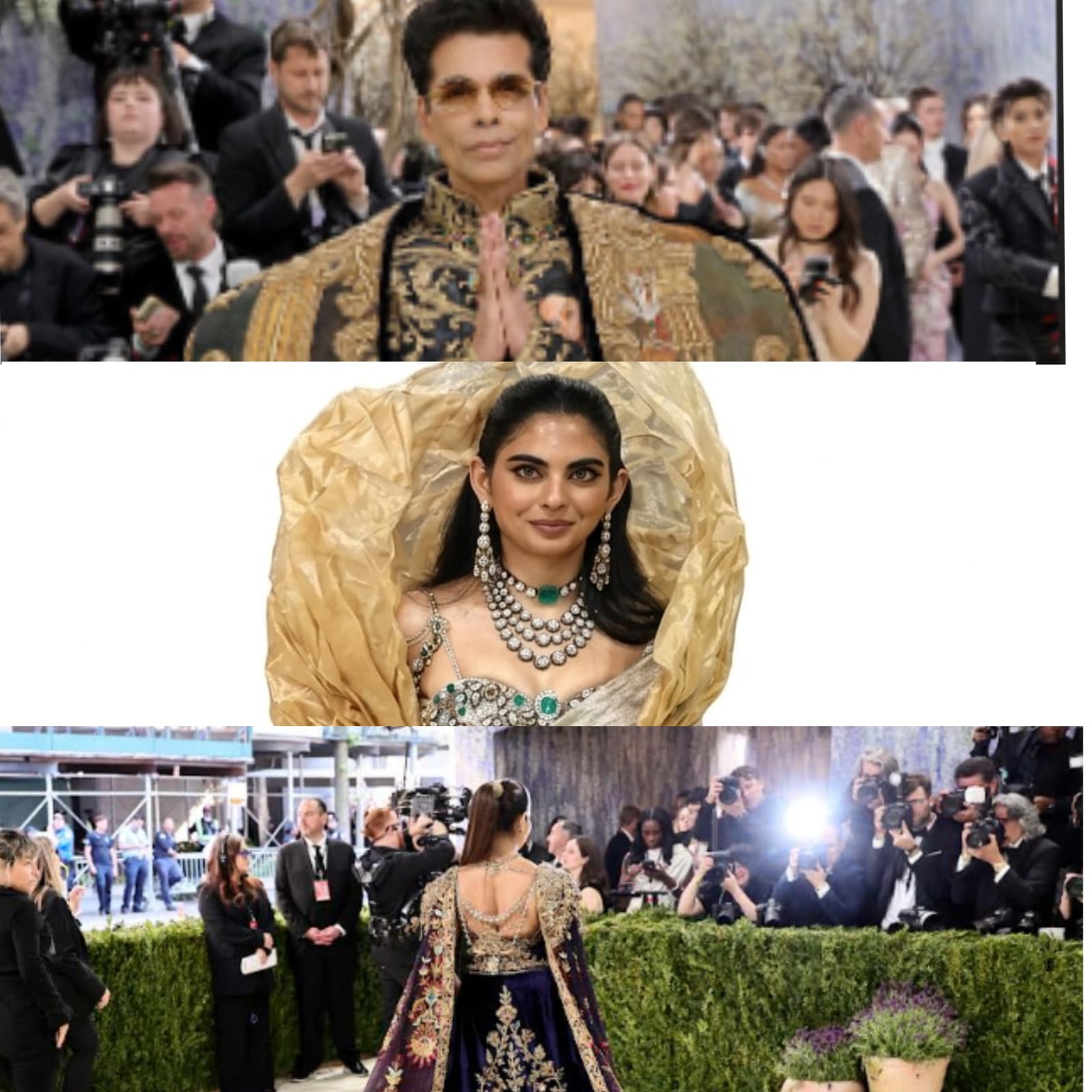
Isha Ambani’s Gold-Woven Saree Emerges as a Signature Moment
One of the most widely discussed appearances of the night was that of Isha Ambani, who wore a bespoke creation by designer Gaurav Gupta.
The ensemble featured a meticulously crafted gold-woven sari developed in collaboration with master artisans from Swadesh. The silhouette balanced traditional Indian draping aesthetics with contemporary sculptural structure, creating a blend of heritage and high fashion.
The design drew from multiple artistic traditions, including pichwai painting motifs and fresco-inspired visual storytelling. These references were translated into textile form through intricate surface detailing and layered embroidery work.
Techniques such as zardozi, aari embroidery, and relief embellishment added depth and texture to the ensemble. Reports suggest that more than 50 artisans contributed to the outfit, with craftsmanship spanning over 1,200 hours of detailed handwork.
A notable element was the styling of jewellery, reportedly sourced from Nita Ambani’s private collection, which added a personal and heirloom dimension to the overall presentation.
Karan Johar’s Couture Tribute to Raja Ravi Varma
Filmmaker Karan Johar delivered one of the most conceptually rich appearances of the night in a Manish Malhotra ensemble inspired by the works of Raja Ravi Varma.
The outfit was designed as a wearable artwork, featuring hand-painted visual elements and elaborate embroidery that reinterpreted classical Indian paintings into textile form. The creation process reportedly involved extensive artisan collaboration over several thousand hours, with a deliberate emphasis on avoiding digital shortcuts to preserve traditional methods.
The ensemble stood out for its narrative depth, merging cinematic storytelling with historical art references, effectively translating painted emotion into fabric and structure.
Manish Malhotra’s Mumbai Narrative in Couture Form
Designer Manish Malhotra presented a deeply personal interpretation of Mumbai through couture.
The ensemble incorporated embroidered depictions of iconic city landmarks such as the Gateway of India and Chhatrapati Shivaji Maharaj Terminus, transforming urban architecture into ornamental storytelling.
Traditional Indian embroidery techniques—including zardozi, chikankari, and kasab—were layered throughout the garment, adding richness and texture. A distinctive feature of the design was the inclusion of artisans’ signatures, subtly woven into the fabric, symbolising recognition of the hands behind the creation.
Diverse Interpretations of Heritage on the Red Carpet
Several other Indian personalities brought varied expressions of cultural heritage to the global stage:
- Diya Mehta Jatia wore a Mayyur Girotra ensemble combining Bengali Shola craft with South Indian Kanjivaram weaving, structured with contemporary European-inspired tailoring.
- Ananya Birla appeared in a futuristic couture look by Robert Wun, complemented by a sculptural face mask created in collaboration with artist Subodh Gupta.
- Sudha Reddy showcased a Manish Malhotra design inspired by the Kalamkari “Tree of Life” motif, emphasising narrative textile traditions.
- Sawai Padmanabh Singh represented royal Rajasthani aesthetics through a velvet ensemble enriched with Phulghar-inspired embroidery and traditional detailing.
Each look reflected a different facet of India’s diverse craft ecosystem, ranging from temple art traditions to royal textile heritage and contemporary experimental fashion.
Indian Craftsmanship as the Core of Design Language
A defining feature of the Met Gala 2026 was the central role of Indian craft techniques in shaping couture identities. Across collections, traditional methods were not used as decorative accents but as structural and conceptual foundations.
Techniques such as zardozi, aari embroidery, Kanjivaram weaving, Kalamkari painting, and Shola craft were reimagined through a modern lens. These methods, often requiring hundreds or thousands of hours of manual labour, highlighted the depth of skill within India’s artisan communities.
The emphasis on handcraft also reinforced a broader industry shift toward slow fashion, where time-intensive craftsmanship is valued as a marker of luxury rather than mass production.
A Global Fashion Moment Rooted in Heritage
The Met Gala 2026 ultimately underscored a significant evolution in global fashion discourse: the elevation of heritage craft from inspiration to foundation.
India’s presence this year reflected more than visual impact—it represented a storytelling approach where culture, history, and identity were embedded into every thread. Designers positioned craftsmanship as a living tradition, continuously evolving while staying rooted in generational knowledge.
From royal symbolism to folk artistry and contemporary experimentation, the Indian showcase demonstrated that fashion is increasingly becoming a dialogue between past and present.
In doing so, the Met Gala 2026 reaffirmed India’s growing influence in shaping the language of global couture—where craftsmanship is not just preserved, but reimagined as the future of luxury fashion.