
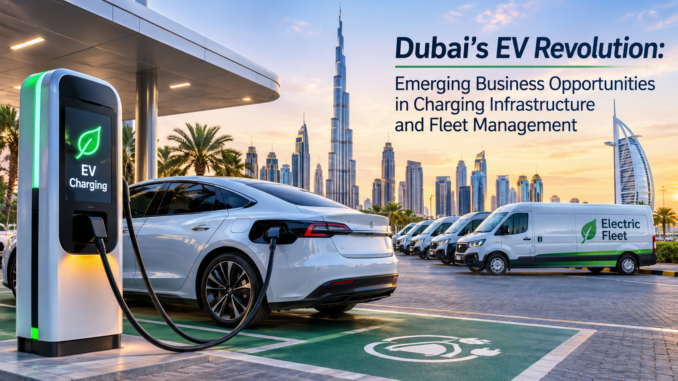
Dubai’s Electric Mobility Market: New Business Opportunities in EV Charging, Fleet Operations and Automotive Services
Dubai’s growing interest in electric vehicles is opening a new chapter for its automotive and transportation industries. What was once largely a vehicle-adoption initiative is now creating opportunities across charging infrastructure, commercial transportation, vehicle servicing and mobility technology.
For businesses, the development of electric mobility offers several entry points. Companies can participate by setting up charging facilities, providing electric vehicles on lease, developing fleet management software or offering specialised maintenance services. Property developers, logistics operators and automotive service providers also have opportunities to become part of this changing market.
With Dubai working towards its clean transportation goals, the commercial ecosystem supporting electric vehicles is becoming increasingly important. The focus is gradually shifting from vehicle availability to the infrastructure and services needed to make electric mobility practical for everyday users and businesses.
Dubai’s Electric Mobility Sector Enters a New Growth Phase
The expansion of electric mobility in Dubai is being supported by government initiatives, infrastructure development and increasing interest from consumers and businesses.
According to figures reported by the Emirates News Agency, Dubai had 2,826 electric vehicle charging points by the end of September 2026. The network includes charging facilities developed by DEWA and independent operators, reflecting the growing involvement of private companies in the sector.
The number of registered electric vehicles has also increased. DEWA recorded 47,944 electric vehicles in Dubai at the end of 2025, compared with 37,486 in the previous year. This represented annual growth of 27.9%.
These developments are significant for businesses because a larger electric vehicle population creates demand for services that extend beyond vehicle sales. Charging accessibility, battery performance, maintenance support and fleet operations will all influence how quickly the market develops.
Dubai’s Green Mobility Strategy 2030 and the UAE’s Net Zero 2050 ambitions provide a broader policy direction for this transition.
1. EV Charging Stations: An Opportunity for Infrastructure Businesses
The availability of charging facilities will be an important factor in determining how comfortably residents and businesses can adopt electric vehicles. This makes charging infrastructure one of the most commercially relevant segments of Dubai’s electric mobility industry.
Businesses can explore opportunities in locations such as residential communities, shopping centres, office complexes, hotels, parking facilities and transport hubs.
The market offers several possible business models.
Public charging networks: Companies can develop charging facilities at locations with regular vehicle movement, providing convenient access to electric vehicle owners.
High-speed charging facilities: Taxi operators, delivery companies and commercial fleets need charging solutions that minimise vehicle downtime. High-capacity charging stations can address this requirement.
Home charging installations: Residential customers may require professional installation, electrical upgrades and ongoing maintenance for private charging equipment.
Corporate charging infrastructure: Office buildings and business parks can introduce charging facilities for employees, visitors and company-owned vehicles.
Charging equipment maintenance: Businesses can provide inspection, repair, software updates and technical support to charging network operators.
DEWA’s framework for independent Charge Point Operators provides a route for private companies to participate in the public charging market. However, operators must secure the relevant approvals and licences and comply with applicable technical and regulatory requirements.
For investors, the commercial challenge is to identify locations where charging demand can justify the cost of equipment, installation, electricity infrastructure and maintenance.
2. Electric Fleet Management: A New Opportunity for Logistics Companies
The shift towards electric vehicles is particularly relevant for businesses that operate vehicles throughout the day.
Taxi services, food delivery platforms, logistics companies, rental operators and corporate transportation providers can explore electric fleets as part of their long-term operational strategies.
However, fleet electrification requires careful planning. Businesses need to consider vehicle range, charging availability, route distances, battery performance and the time vehicles spend off the road.
Dubai’s transportation sector is already providing examples of how commercial electric mobility can develop. Dubai Taxi Company’s electric vehicle initiatives include the deployment of 380 all-electric BYD SEAL taxis in partnership with Al-Futtaim Electric Mobility.
The company’s collaboration with DEWA to develop dedicated ultra-fast charging infrastructure further highlights the importance of charging facilities designed around commercial fleet requirements.
This creates opportunities for companies offering:
- Electric vehicle leasing and rental services.
- Fleet electrification planning.
- Charging depot installation and management.
- Commercial vehicle financing.
- Fleet tracking and route planning.
- Battery monitoring and maintenance support.
There is also an opportunity for service providers that help businesses evaluate whether electric vehicles are suitable for particular routes and transportation requirements.
Rather than simply supplying vehicles, companies that offer an integrated package covering procurement, charging and fleet management could build stronger relationships with commercial customers.
3. Electric Vehicle Maintenance: Opportunities for Automotive Workshops
The expansion of electric vehicles will gradually change the requirements of Dubai’s automotive service industry.
Electric vehicles have fewer conventional engine-related service requirements, but their electrical and electronic systems require specialised attention. Battery packs, power electronics, electric motors and high-voltage components cannot always be handled using conventional automotive servicing methods.
This creates an opportunity for existing garages to upgrade their facilities and for specialised EV service businesses to enter the market.
One area worth exploring is battery health assessment. Battery condition affects driving range, vehicle performance and resale value. Businesses offering independent battery testing and diagnostic reports could serve private owners, used-car dealers and commercial fleet operators.
Other opportunities include:
Specialised EV repair: Workshops can invest in suitable diagnostic equipment and technician training to service electric motors, electrical systems and high-voltage components.
Battery lifecycle services: Businesses can explore battery inspection, collection, recycling and material recovery through partnerships with qualified specialists.
EV component distribution: Suppliers can develop a market for charging connectors, electronic components, cooling systems and other specialised parts.
Used electric vehicle assessment: Independent inspection companies can introduce battery condition checks as part of pre-purchase vehicle evaluations.
For automotive businesses, the transition offers an opportunity to expand beyond traditional vehicle servicing and develop expertise in an emerging segment.
4. Smart Mobility Technology: The Role of AI and Digital Platforms
As electric vehicle fleets become larger, managing them efficiently will require better access to operational data.
Fleet operators need to understand vehicle availability, charging requirements, battery condition, route performance and energy consumption. Digital platforms can bring these functions together and help businesses make more informed decisions.
This creates opportunities for technology companies working in fleet management, connected mobility and energy management.
For example, AI-powered route planning can help delivery businesses allocate vehicles according to travel distances and battery availability. Predictive maintenance systems can identify potential vehicle problems before they cause major operational interruptions.
Charging applications can also improve the customer experience by helping drivers locate facilities, check charger availability and manage payments.
Potential areas for technology businesses include:
- Digital fleet monitoring platforms.
- AI-assisted route optimisation.
- Automated charging management.
- Battery performance analytics.
- Predictive maintenance software.
- Charging station discovery and payment applications.
The commercial opportunity lies in solving practical problems for fleet operators and electric vehicle owners. Technology providers that offer reliable, easy-to-use solutions could find demand as Dubai’s mobility infrastructure develops.
5. Real Estate and Hospitality Can Become Part of the EV Ecosystem
Electric mobility is also creating opportunities for businesses that do not directly operate in the automotive industry.
Property developers can incorporate charging infrastructure into new residential projects, while existing commercial buildings can explore partnerships with charging operators.
For hotels, providing charging facilities could become an additional service for guests who travel using electric vehicles. Shopping centres can use charging access to improve visitor convenience, while office complexes can support employees who prefer electric transportation.
These developments offer opportunities for electrical contractors, infrastructure consultants, property management companies and charging network operators.
For developers, planning EV-ready infrastructure during the construction stage may also be more practical than making extensive electrical modifications after a property becomes operational.
6. How Businesses Can Generate Revenue from Dubai’s EV Market
The electric mobility industry offers different commercial models depending on the company’s expertise, investment capacity and target customers.
| Business area | Potential revenue opportunity |
|---|---|
| EV charging operations | Permitted charging fees |
| Charging equipment installation | Installation and project contracts |
| Infrastructure maintenance | Recurring maintenance agreements |
| Fleet management | Commercial service contracts |
| EV leasing | Rental and leasing income |
| Battery diagnostics | Testing and inspection charges |
| Mobility software | Software development and service agreements |
| EV component supply | Equipment and spare-parts sales |
However, businesses must understand the regulatory conditions governing public charging operations. DEWA’s framework sets requirements for licensed operators, including rules relating to charging fees and infrastructure operation. Companies should assess the applicable regulations before finalising their revenue models.
For smaller businesses, providing installation, maintenance, diagnostic and technology services may offer an alternative to investing in an entire public charging network.
7. Challenges That Could Influence Market Growth
Although Dubai’s electric mobility sector offers several opportunities, businesses entering the industry will need to address some practical challenges.
Infrastructure costs: Charging stations involve equipment purchases, installation expenses, electrical connections and ongoing maintenance. The investment required will vary according to charger capacity and location.
Charging accessibility: The success of electric mobility depends not only on the total number of charging points but also on their availability and distribution across the city.
Technical skills: Specialised training is necessary for professionals working with electric vehicle batteries, high-voltage systems and advanced diagnostics.
Battery management: Safe battery handling, recycling and lifecycle assessment will become increasingly important as the vehicle population grows.
Commercial viability: Charging network operators must ensure that infrastructure investment is supported by sufficient usage and a sustainable operating model.
Regulatory requirements: Businesses involved in public charging infrastructure must understand licensing procedures, technical standards and applicable operating conditions.
These factors make market research and long-term planning important for companies considering investment in Dubai’s electric mobility industry.
Dubai’s Electric Mobility Market: Where Will the Next Business Opportunities Emerge?
Dubai’s electric mobility transition is creating a business landscape that extends across automotive services, energy infrastructure, logistics, real estate and technology.
The expansion of charging infrastructure and the increase in registered electric vehicles suggest that the market is developing beyond the early adoption stage. As commercial operators explore fleet electrification, the need for dedicated charging facilities, specialised servicing and digital management solutions is also likely to grow.
For investors, the opportunity is not restricted to developing charging stations or supplying electric vehicles. Businesses can also participate through battery diagnostics, vehicle leasing, fleet consultancy, component distribution and mobility software.
The companies best positioned to benefit may be those that address the practical challenges of electric vehicle ownership and commercial operations. Reliable charging access, efficient fleet management and specialised automotive support will be essential to building a stronger electric mobility ecosystem.
As Dubai continues to develop its sustainable transportation infrastructure, the sector offers opportunities for established companies as well as new businesses looking to enter the UAE’s evolving mobility market.
