
Agriculture remains a major pillar of India’s economy, supporting millions of livelihoods and contributing significantly to the country’s food security. However, farmers continue to face challenges such as unpredictable weather, rising input costs, water shortages, limited market access and fluctuating crop prices.
To address these challenges, India’s agricultural sector is increasingly embracing technology. The emergence of agritech, or agricultural technology, is changing traditional farming practices by introducing artificial intelligence (AI), Internet of Things (IoT), satellite monitoring, drones and digital marketplaces.
These innovations are helping farmers make informed decisions, improve resource utilisation and explore new business opportunities. As a result, India’s agritech ecosystem is becoming an important part of the country’s digital economy.
India’s Digital Agriculture Mission Gains Momentum
One of the biggest developments in India’s digital agriculture journey is the expansion of AgriStack, a government-backed digital infrastructure initiative.
In October 2026, India achieved a major milestone by creating 11 crore Farmer IDs, five months ahead of the March 2027 deadline. The achievement comes under the Digital Agriculture Mission, which was approved in September 2024 with a financial outlay of ₹2,817 crore.
The initiative aims to provide farmers with digital identities that can simplify access to government schemes, agricultural credit, crop insurance and other services.
AgriStack includes three major components: the Farmers’ Registry, Geo-referenced Village Maps and the Crop Sown Registry.
This digital infrastructure could also support private agritech companies by improving access to agricultural information and creating opportunities for digital advisory, financial services and supply-chain management.
However, effective implementation will require accurate records, data protection and the inclusion of eligible tenant farmers and actual cultivators.
How Artificial Intelligence Is Transforming Farming
Artificial intelligence is emerging as an important technology in modern agriculture. AI-powered platforms can analyse weather conditions, soil information, satellite images and crop health data to support better farming decisions.
For example, farmers can use digital advisory platforms to understand potential pest attacks, identify crop stress and plan irrigation schedules.
AI can also support crop yield estimation, agricultural risk assessment and predictive weather analysis.
India’s National Pest Surveillance System is an example of technology-assisted agricultural monitoring. It uses AI and machine learning to support pest identification and surveillance.
The growing adoption of AI in agriculture creates opportunities for startups developing intelligent farm advisory platforms, crop monitoring tools and predictive analytics solutions.
Agricultural Drones Create New Rural Business Opportunities
Agricultural drones are changing how certain farming activities are performed. They can support crop monitoring, field surveys and the spraying of approved agricultural inputs.
The government’s Namo Drone Didi initiative is encouraging women-led Self-Help Groups to provide drone-based agricultural services.
The programme was approved with an outlay of ₹1,261 crore to support 15,000 selected women-led SHGs during 2023–24 to 2025–26.
Instead of requiring every farmer to purchase expensive equipment, trained operators can offer drone services on a rental or pay-per-use basis.
This creates business opportunities in drone operations, equipment maintenance, pilot training and agricultural spraying services.
Precision Farming: Improving Productivity and Reducing Costs
Precision farming uses technology to ensure that agricultural inputs are applied according to the actual requirements of crops and soil.
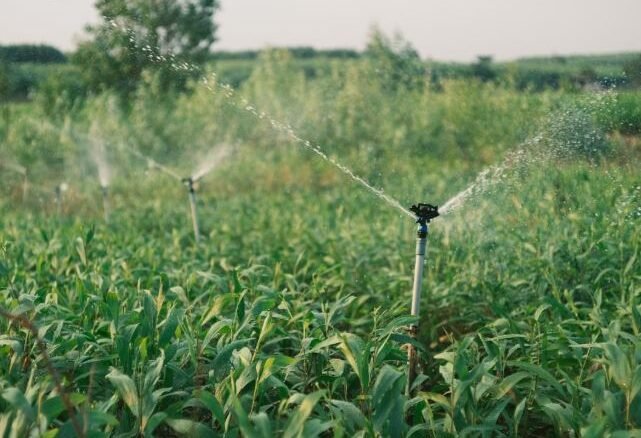
Tools such as soil moisture sensors, satellite imagery, GPS-enabled machinery and automated irrigation systems help farmers monitor field conditions more accurately.
For example, smart irrigation systems can help farmers schedule watering based on soil moisture levels, while satellite monitoring can identify areas experiencing crop stress.
These technologies can support more efficient water usage, reduce unnecessary input expenditure and improve farm management.
For agritech startups, precision agriculture also offers revenue opportunities through equipment sales, subscription-based services and farm management solutions.
Agritech Startups and Emerging Business Opportunities
India’s agritech ecosystem is creating opportunities across the agricultural value chain.
Some of the most promising business segments include:
- Digital marketplaces: Connecting farmers directly with buyers, retailers and food processors.
- Agri-fintech: Improving access to agricultural loans, insurance and digital financial services.
- Farm equipment rentals: Providing affordable access to tractors, harvesters and modern machinery.
- Smart irrigation: Developing technology-based water management solutions.
- Supply-chain technology: Improving agricultural storage, transportation and inventory management.
- AI-based advisory: Offering personalised crop recommendations and weather information.
The government’s Innovation and Agri-Entrepreneurship Development programme under the Rashtriya Krishi Vikas Yojana (RKVY) has supported 2,096 agritech startups, with ₹168.14 crore in grant-in-aid released during FY 2019–20 to FY 2025–26, according to government information published in February 2026.
These developments indicate growing institutional support for agricultural innovation.
Recent Developments Strengthening India’s Agritech Sector
Recent developments also highlight the economic importance of smarter agricultural management.
In November 2026, the Union Cabinet approved ₹62,370 crore in fertiliser subsidies for the October 2026–March 2027 winter crop season. The decision reflects the importance of managing agricultural input costs amid international supply-chain pressures.
Meanwhile, Madhya Pradesh’s e-Vikas initiative reportedly reduced fertiliser consumption by 11% during the 2026 Kharif season through digitally managed fertiliser distribution linked to land records and crop requirements.
Such developments highlight how digital systems can support better resource allocation and improve transparency in agricultural services.
Challenges Facing India’s Agritech Ecosystem
Despite its growth potential, agritech adoption faces several challenges.
Small and fragmented landholdings can make expensive technology difficult to afford. Limited digital literacy, inadequate rural infrastructure and unreliable internet connectivity can also restrict adoption.
Another major concern is data privacy. Digital agricultural platforms must ensure that farmers’ personal and land-related information is collected and used responsibly.
Agritech startups also need commercially sustainable business models. Technology must deliver measurable benefits, such as lower cultivation costs, improved productivity or better market access, to encourage long-term farmer adoption.
The Future of Smart Farming in India
India’s agritech ecosystem is moving towards a more connected and data-driven agricultural model. The integration of AI, drones, digital identities, satellite monitoring and online marketplaces could improve agricultural decision-making and strengthen rural businesses.
Odisha and other agricultural states also have opportunities to adopt technology in paddy cultivation, horticulture, fisheries, irrigation and post-harvest management.
However, the success of this transformation will depend on affordability, accessibility, reliable infrastructure and farmer participation.
The future of Indian agriculture will not simply depend on producing more crops. It will depend on farming smarter, reducing costs, improving market access and ensuring that technology translates into better incomes and sustainable livelihoods for farmers.
