

By Staff Correspondent
For millions of Indians, English has long been more than just a language. It has been a gatekeeper of opportunity—often determining who gets access to better education, higher-paying jobs, and greater social mobility.
While urban, English-medium graduates frequently find themselves at an advantage in the job market, countless talented young people from rural and underprivileged backgrounds continue to struggle with a barrier that has little to do with intelligence and everything to do with access.
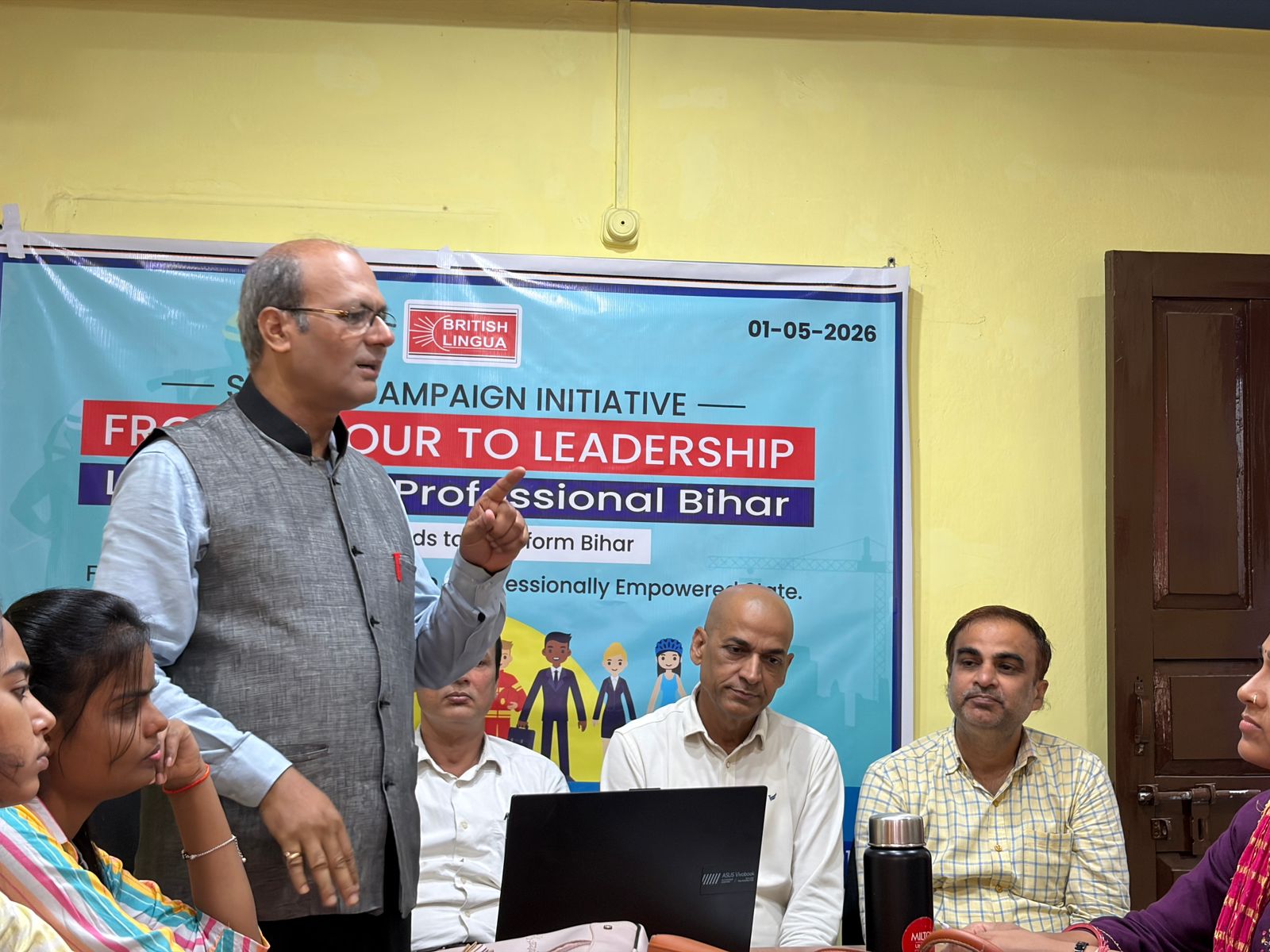
Few individuals have worked as persistently to challenge this divide as Dr. Birbal Jha.
Over the past three decades, the Bihar-born linguist, social entrepreneur, and founder of British Lingua has built a movement around a simple but powerful idea: English should be accessible to everyone, not just the privileged few.
His mission, popularly known as “English for All,” has helped thousands of learners acquire communication skills that have translated into employment opportunities, greater confidence, and social empowerment.
A Mission Born from a Social Reality
When Dr. Jha founded British Lingua in 1993, India was undergoing rapid economic transformation. English proficiency was increasingly becoming a prerequisite for professional success. Yet quality English education remained largely concentrated in elite institutions.
Dr. Jha saw a troubling pattern. Bright students from modest backgrounds were being left behind—not because they lacked talent, but because they lacked exposure to English communication.
“Dr Birbal Jha understood early that language inequality often leads to opportunity inequality,” says a former associate familiar with his work.
Determined to bridge this gap, Dr. Jha developed the Structural-cum-Interactive Method (SIM), a training model that moved away from traditional grammar-heavy teaching.
Rather than asking learners to memorize complex rules, the method focuses on practical communication, interactive learning, and real-life application. The objective is to make English a living language rather than an academic subject.
“Language is acquired through use and interaction,” Dr. Jha has often emphasized. “People learn to communicate by communicating.”
Reaching Those Who Need It Most
What distinguishes Dr. Jha’s work is its consistent focus on communities that have historically remained on the margins of opportunity.
One of the most notable examples was the Spoken English Programme for Mahadalit youth, implemented with the support of the Government of Bihar.
The initiative sought to equip young men and women from some of the state’s most disadvantaged communities with communication skills, confidence-building techniques, and workplace readiness.
For many participants, the programme represented far more than language training. It provided access to opportunities that had previously seemed beyond reach.
Observers of the project noted that participants not only improved their communication abilities but also developed greater self-confidence and employability skills.
From Villages to the Commonwealth Games
Dr. Jha’s expertise has also been sought by government institutions.
Ahead of the 2010 Commonwealth Games in Delhi, authorities engaged him to train Delhi Home Guards in spoken English and behavioural skills. The objective was to help frontline personnel interact more effectively with visitors from across India and abroad.
The initiative highlighted a broader philosophy underpinning his work: communication skills are not merely academic tools; they are practical competencies that can improve professional performance across sectors.
Strengthening the Education System
Recognizing that sustainable change requires institutional intervention, Dr. Jha has also focused extensively on teacher training.
Over the years, he has led programmes aimed at enhancing the communication and teaching capabilities of government school teachers. By empowering educators, he sought to create a multiplier effect that would benefit thousands of students, particularly in rural and semi-urban regions.
Education experts often point out that improving teacher capacity remains one of the most effective ways to improve learning outcomes. Dr. Jha’s initiatives have attempted to address precisely this challenge.
Beyond Language Training
Dr. Jha’s contribution extends beyond the teaching of English.
Through books, seminars, workshops, and training programmes, he has consistently promoted the integration of communication skills with employability, personality development, leadership, and professional ethics.
Dr Jha’s bibliography includes more than thirty books, among them Celebrate Your Life and the widely circulated Spoken English Kit, both of which have reached readers across India.
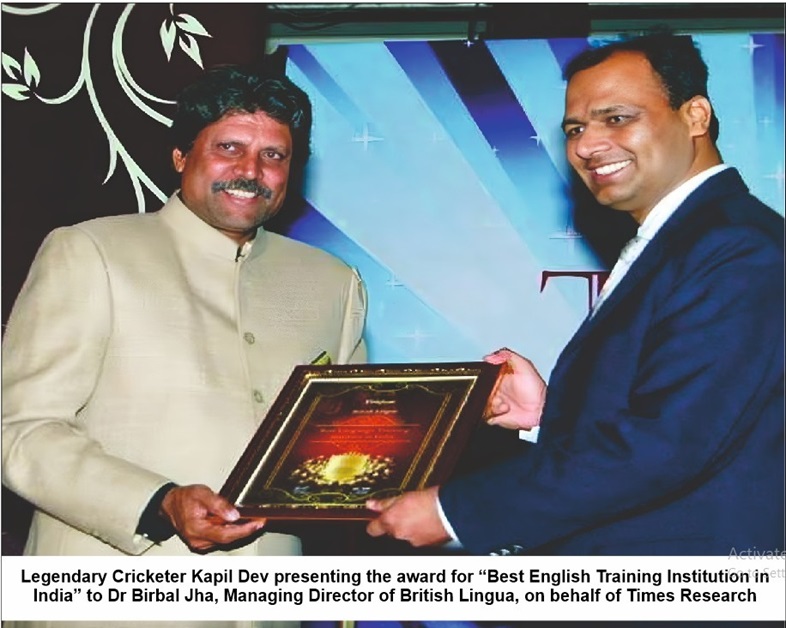
His efforts have earned numerous recognitions, including being celebrated as the “Youngest Living Legend of Mithila” and receiving the English Literary Gem Award for his contributions to language education.
The Larger Impact
At a time when English continues to influence access to education and employment, Dr. Birbal Jha’s work raises an important question: Should language be a barrier or a bridge?
For more than thirty years, his answer has remained unchanged.
Dr Jha has argued that English should serve as a means of empowerment rather than exclusion, enabling individuals from every social and economic background to participate fully in modern India and the global economy.
In classrooms, training centres, government programmes, and communities across the country, that philosophy continues to resonate.
For thousands of learners whose lives have been transformed through communication skills and confidence-building, Dr. Jha’s legacy is not merely about teaching English.
It is about expanding opportunity, restoring confidence, and ensuring that talent is not limited by circumstance.