
Sri Sri Holistic Hospitals — Department of Pulmonology & Sleep Medicine
Winter brings a drop in temperature and a sharp rise in respiratory issues. Many people brush off a winter cough as a simple seasonal annoyance that will eventually go away with warm teas and time. However, for people dealing with seasonal respiratory infections or underlying conditions like Asthma and Chronic Obstructive Pulmonary Disease (COPD), a simple winter cough can be a warning sign of a much larger and more dangerous problem.
Understanding the Progression from a Simple Cough to Severe Flare-Ups
When cold, dry winter air enters the lungs, it naturally irritates the airways and causes them to narrow. For someone with a healthy respiratory system, this might just trigger a mild, dry cough. But for those with asthma or COPD, cold air and winter viruses (like the flu or common cold) can trigger intense inflammation.
The airways become swollen, and thick mucus begins to build up, trapping bacteria and viruses deep inside the lungs. What starts as a mild tickle in the throat can quickly turn into breathless wheezing, severe chest tightness, and a dangerous drop in oxygen levels. Without early intervention, a routine winter cold can easily progress into a severe asthma attack, a COPD exacerbation, or pneumonia.
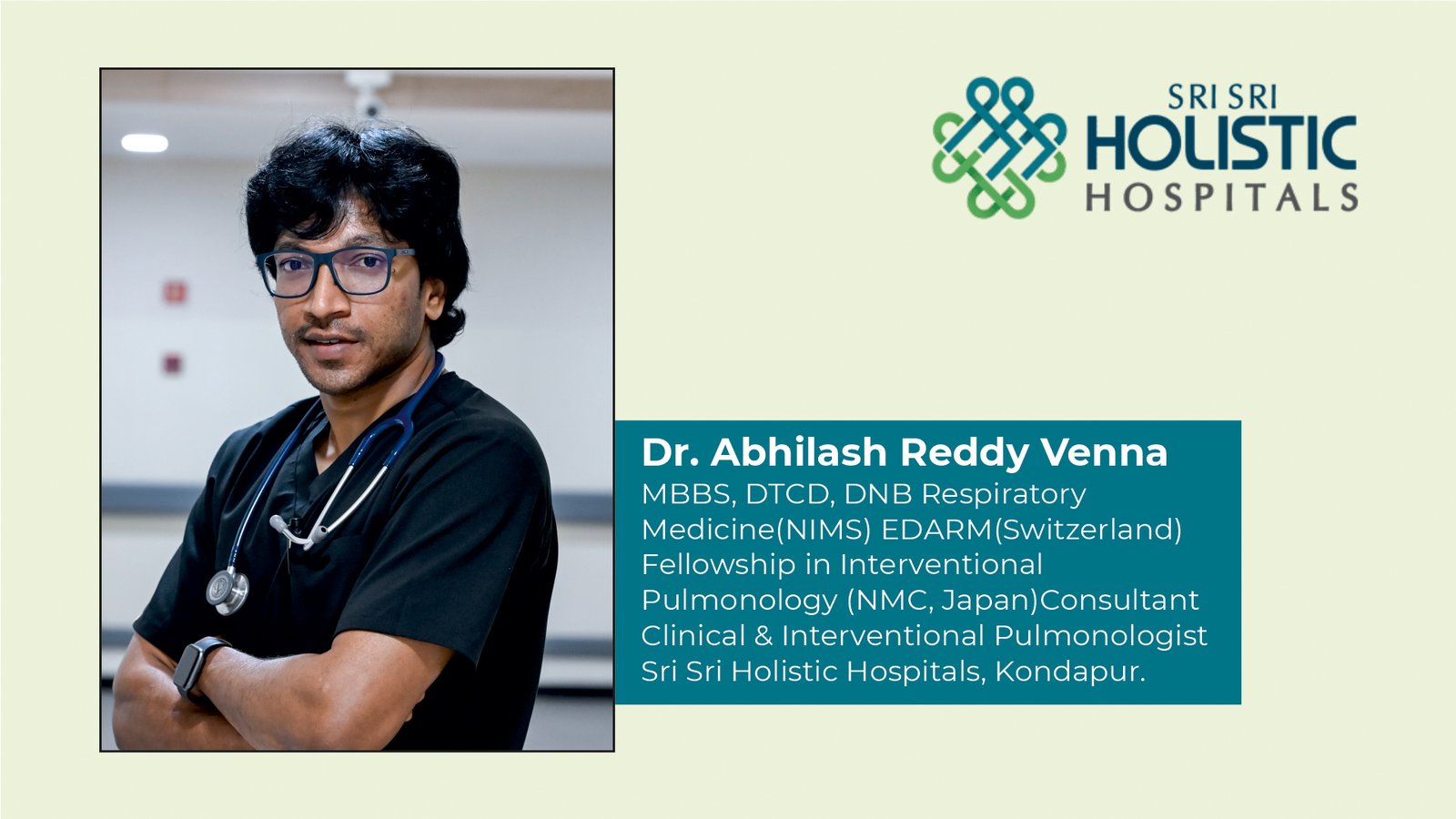
Meet Our Specialist
Dr. Abhilash Reddy Venna
Critical Warning Signs You Must Never Ignore
- Persistent Coughing: A cough that lasts longer than three weeks, keeps you awake at night, or worsens as the days go by.
- Wheezing or Whistling Sounds: A high-pitched squeaking or whistling sound when you breathe in or out, signaling that your airways are dangerously narrowed.
- Colored or Bloody Mucus: Coughing up thick yellow, green, or blood-tinged phlegm, which strongly indicates a deep bacterial infection like pneumonia.
- Severe Shortness of Breath: Feeling like you cannot get enough air, getting winded doing simple daily tasks (like walking to the bathroom), or feeling a heavy tightness in the chest.
- Unexplained Fatigue and Fever: A fever accompanied by body aches and extreme tiredness along with your cough, pointing to a severe systemic infection.
Safe Home Management and Everyday Precautions
- Keep the Airways Moist: Use a room humidifier and drink plenty of warm fluids like clear soups and herbal teas to help thin out thick chest mucus so it is easier to cough up.
- Stick strictly to Your Inhaler Routine: For asthma and COPD patients, winter is not the time to skip controller medications. Always take your daily preventer inhalers and keep your rescue inhalers close by.
- Avoid Lung Irritants: Stay away from indoor smoke, harsh cleaning chemicals, and outdoor winter smog. Exposure to these irritants heavily damages sensitive winter lungs.
- Wear a Mask and Scarf: When stepping out into the cold, loosely wrap a scarf around your nose and mouth to warm and humidify the air before it hits your lungs.
Pulmonology Diagnostic Precision and Advanced Interventions
When home remedies are not enough, specialized pulmonology steps in. Our respiratory experts use advanced diagnostic tools like Pulmonary Function Tests (PFTs), high-resolution chest imaging, and blood oxygen analysis to see exactly how compromised your airways are.
Treatments at dedicated interventional centers include targeted nebulizer therapy to rapidly open up the lungs, medications to reduce inflammation, and oxygen therapy or non-invasive ventilation (BiPAP/CPAP) for severe COPD and asthma flare-ups to ensure you can breathe easily again.
When Should You Consult a Doctor?
Do not wait if you or a loved one experience sudden, severe difficulty breathing, wheezing, severe chest pain, and chest tightness. These are medical emergencies that require immediate hospital care to restore healthy oxygen levels.
A Message to Patients
“Never underestimate a persistent winter cough, especially if you have a history of asthma or COPD. Early intervention can stop an infection in its tracks, prevent emergency flare-ups, and keep your lungs breathing easy all season long,” advises Dr. Abhilash Reddy Venna, Consultant Clinical & Interventional Pulmonologist at Sri Sri Holistic Hospitals.
