
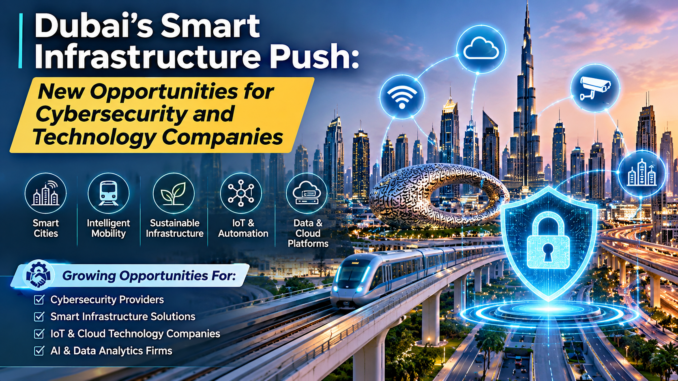
Nov 16: Dubai’s investment in smart infrastructure is creating new opportunities for businesses working in cybersecurity, artificial intelligence (AI), cloud computing and digital technology. As the emirate modernises its electricity and water networks, demand is growing for solutions that can improve operational efficiency, protect critical systems and support increasingly connected services.
A major development in this direction is the collaboration between the Dubai Electricity and Water Authority (DEWA) and Dell Technologies. Their agreement focuses on exploring advanced technologies for smart grid modernisation, cyber resilience, edge computing and data management.
For technology companies, this development offers a useful indication of where demand could emerge in Dubai’s evolving digital infrastructure market.
DEWA’s Collaboration with Dell Technologies: What Businesses Should Know
On 8 November 2026, DEWA announced that it had signed a memorandum of understanding (MoU) with Dell Technologies to explore cooperation on strengthening the resilience and modernisation of Dubai’s critical infrastructure.
The collaboration covers several areas, including cybersecurity, business continuity, smart grid and substation modernisation, artificial intelligence, edge computing and data management.
One of the key areas involves exploring reference designs and pilot projects for upgrading smart grid infrastructure and substations. These initiatives aim to improve monitoring and control, strengthen operational recovery capabilities and maintain compatibility with existing technology platforms.
The two organisations are also exploring advanced edge computing solutions that could support centralised management of remote and field locations.
The agreement was signed by Hussain Lootah, Executive Vice President of Transmission Power at DEWA, and Walid Yehia, Managing Director for the South Gulf at Dell Technologies.
The MoU is a framework for exploring potential cooperation. It does not mean that all proposed projects have already been implemented or that contracts have been awarded to other technology providers. Nevertheless, it highlights the importance of partnerships between utility operators and global technology companies in developing more resilient infrastructure.
Dubai’s AED 7 Billion Smart Grid Investment Creates a Larger Technology Market
The DEWA-Dell collaboration is part of a wider programme to modernise Dubai’s electricity and water infrastructure.
According to DEWA’s Smart Grid Report 2025, the authority is implementing its Smart Grid Programme with a total investment of AED 7 billion. Its updated strategy, introduced in 2021, covers six themes and 19 smart grid capabilities, including grid automation, smart water systems, AI and smart energy solutions.
The scale of this infrastructure is also reflected in DEWA’s operational data.
Its 2025 Integrated Report recorded more than 1.26 million smart electricity meters and approximately 1.16 million smart water meters deployed across Dubai by December 2025. The report also confirmed that all DEWA customers were using smart meters.
For technology businesses, these figures demonstrate the scale of the digital environment supporting Dubai’s essential services.
The growing use of connected devices, monitoring platforms and automated systems creates demand for reliable networks, secure data management, system integration and ongoing technical support.
Why Cybersecurity Is Becoming a Priority for Dubai’s Infrastructure
As electricity and water networks become more digitally connected, protecting them against cyber threats is becoming increasingly important.
Modern utilities depend on interconnected systems that manage everything from equipment monitoring and network communication to operational control. A disruption affecting these systems could create challenges for service continuity and infrastructure management.
This is why organisations are paying greater attention to operational technology (OT) security alongside conventional information technology (IT) protection.
Dubai’s updated Cyber Security Strategy, introduced in 2023, identifies four major pillars: a cyber-secure society, an incubator city for innovation, a resilient cyber city and active cyber collaboration. The strategy aims to strengthen digital infrastructure, support innovation and improve the emirate’s ability to respond to cyber risks.
For cybersecurity companies, this creates potential opportunities in several areas:
-
Industrial cybersecurity and operational technology protection.
-
Network monitoring and threat detection.
-
Identity and access management.
-
Data encryption and information security.
-
Vulnerability assessments and security testing.
-
Incident response and business continuity planning.
Companies with experience in protecting industrial control systems, utility networks and large enterprise environments could be well positioned to explore this market.
AI and Edge Computing Could Open New Business Opportunities
Artificial intelligence and edge computing are becoming important tools for managing modern infrastructure.
Electricity networks and substations generate large volumes of operational data. Processing this information efficiently can help utility operators monitor equipment, identify unusual activity and make better-informed decisions.
Edge computing allows certain information to be processed closer to where it is generated rather than relying entirely on centralised data centres. This can support faster responses, particularly in environments where real-time monitoring is important.
AI can further improve these capabilities by analysing operational patterns, forecasting electricity demand and identifying equipment that may require maintenance.
For technology companies, potential business opportunities include:
-
AI-powered predictive maintenance systems.
-
Industrial Internet of Things (IIoT) platforms.
-
Edge computing hardware and software.
-
Real-time monitoring and analytics.
-
Smart asset management solutions.
-
Infrastructure automation technologies.
However, deploying these solutions in critical infrastructure requires more than technical innovation. Reliability, data accuracy, cybersecurity and compatibility with existing systems are equally important.
Cloud Computing and Data Management Demand Could Expand
The expansion of smart infrastructure also increases the need for secure and efficient data management.
Smart meters, connected devices, substations and monitoring platforms continuously generate information. Utilities need reliable systems to store, process and analyse this data while ensuring that sensitive operational information remains protected.
This could create opportunities for companies specialising in cloud infrastructure, enterprise storage, hybrid IT environments, data backup and information management.
The DEWA-Dell collaboration specifically identifies advanced data management and edge computing among its areas of exploration. This reflects the growing need for technology platforms that can support large-scale infrastructure operations.
For businesses, the opportunity may extend beyond supplying hardware or software. Companies capable of integrating cloud services, cybersecurity, analytics and ongoing technical support could address more complex infrastructure requirements.
Opportunities for Technology Startups and Service Providers in Dubai
Dubai’s smart infrastructure development could benefit both established technology vendors and smaller businesses offering specialised solutions.
Startups may find opportunities by focusing on specific challenges faced by utility operators and infrastructure organisations.
Cybersecurity startups: Businesses developing industrial threat detection, network protection and security automation tools could address the growing need to protect connected infrastructure.
AI and analytics companies: Startups working on predictive maintenance, demand forecasting and intelligent monitoring could develop solutions for utility operations.
Cloud and data management providers: Businesses offering secure storage, data integration, backup and hybrid infrastructure solutions could support organisations modernising their digital systems.
Technology integration companies: Firms with experience connecting older infrastructure with modern digital platforms could help organisations manage complex technology upgrades.
Cybersecurity consulting firms: Specialist providers could explore opportunities in security assessments, compliance support, operational technology protection and incident response planning.
However, entering the critical infrastructure market requires strong technical capabilities, security credentials and an understanding of industry standards. These opportunities should be viewed as potential areas of demand rather than confirmed business contracts resulting from the DEWA-Dell agreement.
How Dubai’s Digital Strategy Supports Technology Sector Growth
Dubai’s infrastructure modernisation is connected to its broader ambition to strengthen its position as a global digital economy.
Digital Dubai identifies digital infrastructure, cybersecurity, data and digital competitiveness among the key pillars supporting the emirate’s digital development. Its strategy also emphasises the importance of building a trusted digital ecosystem that supports businesses and society.
digitaldubai.ae
At the same time, the Dubai Supreme Council of Energy’s Demand Side Management Strategy 2050 aims to achieve savings of at least 30% by 2030 and 50% by 2050 in electricity, water and transport fuel consumption compared with business as usual. The strategy includes programmes involving DEWA and other public-sector organisations.
dubaisce.gov.ae
These initiatives demonstrate that smart infrastructure is not limited to technology upgrades. It is also linked to energy efficiency, sustainability, operational resilience and long-term economic development.
For technology businesses, this creates a broader environment in which digital solutions can support several interconnected priorities.
What Technology Companies Should Consider Before Entering Dubai
While the market offers potential, companies looking to work with infrastructure operators need to understand the requirements of this sector.
Critical infrastructure projects often involve extensive technical evaluations, cybersecurity standards, integration requirements and long-term service commitments.
Technology providers should consider:
-
Developing solutions that meet recognised cybersecurity and operational technology standards.
-
Building partnerships with established technology integrators and infrastructure providers.
-
Demonstrating experience in enterprise and industrial environments.
-
Offering reliable after-sales support and system maintenance.
-
Understanding local regulatory, procurement and data protection requirements.
Businesses that can demonstrate practical experience and provide measurable improvements in security, reliability or efficiency may be better positioned to explore opportunities in Dubai.
The Road Ahead
Dubai’s smart infrastructure development is creating a growing market for technologies that can make essential services more secure, efficient and reliable.
The AED 7 billion Smart Grid Programme, the emirate’s cybersecurity strategy and the recent DEWA-Dell Technologies collaboration all point towards the increasing importance of digital infrastructure in the region.
For cybersecurity providers, AI developers, cloud specialists and technology startups, the opportunity lies in addressing the practical challenges that come with modernising connected infrastructure.
As Dubai continues to invest in smarter electricity and water networks, businesses with strong capabilities in cybersecurity, data management, automation and intelligent technology could find new opportunities in the emirate’s expanding digital economy.
