
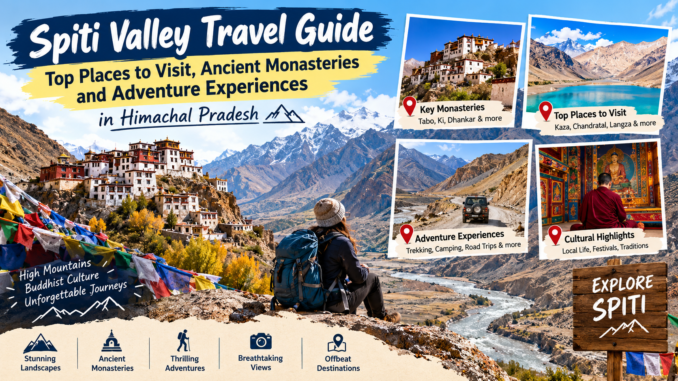
Spiti Valley: Discovering the Himalayan Desert
Located in the northeastern part of Himachal Pradesh, Spiti Valley is a destination where dramatic mountain landscapes meet centuries-old cultural traditions. Often described as a cold desert, the region is known for its barren mountains, deep valleys, ancient Buddhist monasteries and remote villages. Unlike the greener Himalayan destinations, Spiti has a rugged landscape that gives visitors a very different experience of mountain travel.
For travellers looking beyond conventional holidays, Spiti offers an opportunity to explore a quieter side of the Himalayas. Visitors can drive along challenging mountain roads, discover historic monasteries, walk through traditional villages, experience local food and observe wildlife in its natural habitat.
The region is also attracting interest from adventure travellers, photographers and people seeking cultural experiences. Its growing appeal reflects a wider interest in destinations that offer more than sightseeing, with opportunities to connect with local communities and understand their way of life.
From the administrative town of Kaza to the high-altitude villages of Kibber, Langza, Hikkim and Komic, Spiti offers several experiences that make a journey through this part of Himachal Pradesh memorable.
Top Places to Visit in Spiti Valley
Spiti has several attractions spread across its remote settlements and mountain landscape. Kaza is the main base for exploring the region, while nearby villages and monasteries offer a closer look at its history, architecture and culture.
1. Kaza: The Gateway to Spiti Valley
Kaza is the main administrative and commercial centre of Spiti Valley. Situated along the Spiti River, the town serves as a convenient base for travellers exploring the surrounding villages, monasteries and mountain attractions.
Its local markets, cafés, accommodation options and transport services make it one of the most practical places to stay during a Spiti trip. Visitors can also explore local shops selling woollen products, handicrafts and other regional items.
Kaza is particularly useful for planning day trips to Key Monastery, Kibber, Langza, Hikkim and Komic.
2. Key Monastery: A Centre of Buddhist Heritage
Key Monastery, also known as Ki or Kye Monastery, is one of the most recognisable landmarks in Spiti Valley. Built on a hill overlooking the surrounding landscape, it is an important centre of Tibetan Buddhist learning and religious activity.
The monastery is known for its traditional architecture, prayer halls, murals, manuscripts and collection of religious objects. Its location offers sweeping views of the valley, making it a popular stop for visitors interested in both culture and photography.
Located approximately 12 km from Kaza, Key Monastery can be included in a half-day sightseeing trip along with nearby Kibber.
3. Tabo Monastery: Exploring More Than a Thousand Years of History
Founded in 996 AD, Tabo Monastery is one of the oldest continuously functioning Buddhist monastic institutions in the Himalayan region. Its historical importance, murals and traditional architecture make it a major attraction for cultural and heritage tourism.
The monastery complex includes nine temples, chortens, monks’ and nuns’ chambers, and remarkable wall paintings and sculptures. Its artistic heritage has earned it the popular description of the Ajanta of the Himalayas.
Situated approximately 48–50 km from Kaza, Tabo is worth including in a longer Spiti itinerary. The village also offers a glimpse into traditional life in the cold desert.
4. Dhankar Monastery: A Historic Monastery on a Rocky Cliff
Dhankar Monastery is dramatically positioned on a rocky hillside overlooking the Spiti River valley. Its strategic location reflects its historical role as a religious centre and former administrative stronghold.
The monastery contains Buddhist scriptures and traditional architectural features that reflect the region’s heritage. The surrounding landscape is equally striking, with mountain slopes and river valleys providing excellent views.
Dhankar Lake is another attraction for visitors interested in trekking. The walk involves high-altitude terrain, so travellers should allow enough time to acclimatise before attempting it.
5. Kibber Village: High-Altitude Living and Wildlife Experiences
Kibber is one of Spiti’s best-known high-altitude villages. Located around 16–18 km from Kaza, it is recognised for its traditional houses, cultivated fields and striking mountain surroundings.
The village is also an important starting point for exploring the nearby Kibber Wildlife Sanctuary. The wider landscape provides habitat for Himalayan wildlife, including blue sheep, ibex and the elusive snow leopard.
Wildlife enthusiasts visit this area hoping to observe animals in their natural environment. Snow leopard sightings are never guaranteed, but the region is an important destination for conservation-focused tourism and guided wildlife experiences.
Visitors can also explore Chicham Bridge, which connects remote settlements across a deep gorge and offers impressive views of the surrounding mountains.
6. Langza, Hikkim and Komic: Discovering Spiti’s High-Altitude Villages
The villages of Langza, Hikkim and Komic offer some of the most distinctive experiences in Spiti Valley.
Langza is known for its large Buddha statue, fossil-rich landscape and views of the surrounding mountains. Visitors can explore the village, learn about its traditional way of life and discover locally produced handicrafts.
Hikkim attracts travellers for its post office, situated in a remote high-altitude settlement. Sending a postcard from here has become a popular experience for visitors.
Komic is known for its high-altitude setting, traditional homes and the Tangyud Monastery. The journey through these villages offers a glimpse into how communities have adapted to life in a challenging mountain environment.
7. Pin Valley National Park: A Cold Desert Wildlife Habitat
Pin Valley National Park is one of the most important natural attractions in the Spiti region. The park was declared a national park in 1987 and protects a distinctive cold desert ecosystem.
Its landscape includes rugged mountains, river valleys and sparse vegetation. The area provides habitat for wildlife such as snow leopards, Himalayan ibex, blue sheep and several bird species.
Visitors interested in nature and wildlife can explore the region through responsible guided experiences. However, the terrain is remote, and access to different parts of the park can require trekking and careful planning.
Wildlife tourism should always prioritise conservation. Travellers should maintain a safe distance from animals, avoid disturbing their habitats and follow local forest department guidelines.
Things to Do in Spiti Valley
Spiti is particularly attractive to people who enjoy outdoor activities and exploring destinations at their own pace. Its mountain roads, high-altitude trails and remote villages create opportunities for several experiences.
Mountain road trips: Driving through Spiti is an experience in itself. The routes offer views of dramatic cliffs, river valleys, mountain passes and small settlements. Travellers should be prepared for rough road conditions and changing weather.
Trekking: Trails around Dhankar, Kibber and Pin Valley attract visitors looking for challenging outdoor experiences. Some routes are suitable for shorter walks, while longer treks require preparation and local guidance.
Wildlife observation: The Kibber region and Pin Valley offer opportunities to learn about Himalayan wildlife and conservation. Guided experiences can help visitors understand the ecosystem without disturbing animals.
Photography: Spiti’s monasteries, traditional villages, mountain formations and open landscapes make it an attractive destination for photographers. The changing light across the valley creates different photographic opportunities throughout the day.
Camping: Selected areas around the wider Spiti and Lahaul region offer seasonal camping opportunities. Travellers should use authorised campsites and follow local environmental guidelines.
Cultural experiences: Visiting monasteries, interacting with local residents and staying in family-run homestays allow travellers to understand the region beyond its scenery.
Chandratal Lake, located in the wider Lahaul region, is another popular attraction for travellers exploring the area. Its clear water and mountain surroundings make it a memorable stop, although access is seasonal and depends on road conditions.
Spiti Valley Travel Guide: Distances from Kaza
Kaza is a useful base for exploring many of Spiti’s major attractions. The following approximate road distances can help travellers plan their visits.
| Destination | Approximate distance from Kaza |
|---|---|
| Key Monastery | 12 km |
| Kibber Village | 16–18 km |
| Langza | 16 km |
| Hikkim | 17 km |
| Komic | 18 km |
| Tabo Monastery | 48–50 km |
| Dhankar | Around 32–40 km, depending on the route and starting point |
| Kunzum Pass | Around 75 km |
| Chandratal Lake | Around 98 km |
Distances are approximate and may vary according to the route taken. Actual journey times can be longer because of road conditions, altitude, traffic and weather. Travellers should check local updates before setting out.
Suggested 7-Day Spiti Valley Itinerary
A week in Spiti can provide a good introduction to its major attractions, although the journey should be planned with enough time for acclimatisation and unexpected road delays.
Day 1: Arrive in Kaza
Reach Kaza, settle into your accommodation and spend the day resting. Explore the local market only if you feel comfortable after the journey. Allow time to acclimatise.
Day 2: Key Monastery and Kibber
Visit Key Monastery and continue towards Kibber Village. Explore the settlement and enjoy the mountain scenery. Wildlife observation should be arranged responsibly with local guidance.
Day 3: Langza, Hikkim and Komic
Explore the high-altitude villages, see the Buddha statue at Langza, visit the post office at Hikkim and discover Komic and its monastery.
Day 4: Dhankar Monastery
Travel to Dhankar, explore the historic monastery and enjoy the surrounding views. A visit to Dhankar Lake can be considered if you are properly acclimatised and conditions permit.
Day 5: Tabo Monastery
Visit Tabo and explore its historic monastic complex, murals and surrounding village. Spend time learning about the area’s Buddhist heritage.
Day 6: Pin Valley
Explore the Pin Valley region, including its villages and natural surroundings. Arrange local transport or a guided experience in advance, depending on access and weather.
Day 7: Local Experiences and Departure
Enjoy a relaxed morning in Kaza, visit local shops or spend time at a homestay before beginning the onward journey.
This itinerary is a suggested outline rather than a fixed schedule. It should be adjusted according to the entry route, weather, road conditions and individual acclimatisation. Chandratal is better treated as an additional excursion when the seasonal route is open and sufficient time is available.
Best Time to Visit Spiti Valley
The best time to visit Spiti depends on the type of experience travellers want and the accessibility of different routes. The valley experiences severe winters, and road conditions can change considerably across the year.
April and May: The early travel season can offer quieter surroundings, but some routes and tourist facilities may still be affected by winter conditions.
June and July: These months generally offer better access to many parts of the valley. They are popular for road trips, sightseeing and village visits.
August: Summer conditions continue, but monsoon-related disruptions in surrounding regions can affect road journeys. Travellers should monitor local weather and road advisories.
September and October: Cooler temperatures and clearer skies can make this a rewarding period for photography and sightseeing. Nights become colder, so warm clothing is essential.
November to March: Winter brings severe cold, snowfall and difficult travel conditions. Several roads and facilities may become inaccessible or operate with limited services.
April to October is generally considered a favourable travel window, but conditions vary from year to year. Checking current local advisories before departure is essential.
How to Reach Spiti Valley
Reaching Spiti is part of the travel experience. The region is connected by mountain roads, and journeys can take considerable time because of the terrain and changing weather.
Via Shimla and Kinnaur
The Shimla–Kinnaur route passes through mountain settlements before reaching the Spiti region. It is commonly considered for journeys when the Manali route is closed or inaccessible.
This route also allows travellers to experience the changing landscape from the greener areas of Kinnaur to the cold desert surroundings of Spiti.
Via Manali and Kunzum Pass
The Manali route offers a scenic approach through the mountains and Kunzum Pass. However, it is seasonal and can remain closed during winter because of snow and difficult road conditions.
By Air and Rail
Bhuntar and Shimla are among the nearest airport options, while Chandigarh and Kalka are important rail connections for travellers approaching the region. The remaining journey to Spiti must be completed by road.
Buses and taxis operate on the main routes during suitable seasons, while private vehicles offer greater flexibility. However, travellers should be comfortable with mountain driving and should check road conditions before starting the journey.
Local Culture, Food and Homestay Experiences
Spiti’s cultural identity is closely connected to Tibetan Buddhist traditions, local customs and life in a high-altitude environment. Monasteries remain important centres of religious and community life, while festivals and traditional gatherings offer opportunities to experience local heritage.
Food is another part of the journey. Visitors can try dishes such as thukpa, momos, butter tea, tsampa and preparations made using locally available barley. These dishes reflect the region’s food traditions and the need to make the most of ingredients available in a challenging climate.
Homestays are particularly valuable for travellers who want to understand the region more closely. Staying with local families can provide insight into traditional food, architecture, daily routines and the challenges of living in remote mountain settlements.
Choosing locally operated accommodation, guides and transport services can also help ensure that tourism benefits the communities that make the destination special.
Sustainable Tourism: Protecting Spiti’s Fragile Environment
Spiti’s natural beauty is closely linked to its fragile cold desert ecosystem. Water resources are limited, vegetation is sparse and waste management can be challenging in remote settlements.
As visitor numbers increase, responsible tourism becomes increasingly important. Travellers can contribute by carrying reusable bottles, avoiding single-use plastics, disposing of waste properly and respecting local customs.
Wildlife habitats and sensitive natural areas should be treated with care. Visitors should avoid disturbing animals, damaging vegetation or leaving litter along trekking routes and roads.
Supporting homestays, local restaurants, guides and small businesses can also help distribute tourism income within the community. A sustainable approach can create economic opportunities while protecting the environmental and cultural features that attract visitors.
Spiti Valley and Its Growing Tourism Economy
Spiti’s tourism potential extends beyond sightseeing. The region offers opportunities for homestay operators, local guides, transport providers, restaurants, adventure tourism businesses and handicraft producers.
The growing interest in experiential travel is creating space for destinations that offer something different from conventional tourism. Travellers increasingly look for cultural interaction, nature-based activities, outdoor adventures and opportunities to explore less-commercialised locations.
For Spiti, this creates possibilities for community-led tourism. Local entrepreneurs can develop guided village experiences, trekking services, traditional food experiences and cultural programmes while retaining a strong connection with local traditions.
However, tourism growth needs to be balanced with infrastructure development, environmental protection and the needs of residents. Better waste management, responsible road development and improved visitor awareness will be important to the region’s long-term tourism prospects.
Essential Travel Tips for Visiting Spiti Valley
A trip to Spiti requires more preparation than a typical holiday because of its altitude, remote location and changing weather conditions.
-
Allow time for acclimatisation: Spiti is a high-altitude destination. Avoid strenuous activity immediately after arriving and follow appropriate medical advice.
-
Pack for changing temperatures: Carry warm clothing, comfortable shoes, sunglasses and sun protection, even during summer.
-
Check road conditions: Mountain routes can be affected by snowfall, landslides and other weather-related disruptions.
-
Plan fuel and supplies: Petrol stations, shops and other facilities are limited in some stretches. Plan refuelling before travelling into remote areas.
-
Carry essential medicines: Medical facilities may be far away, so prepare for basic health and emergency needs.
-
Expect limited connectivity: Mobile networks and internet access can be inconsistent, particularly outside larger settlements.
-
Respect local traditions: Follow monastery guidelines, seek permission before photographing people and dress appropriately when visiting religious sites.
-
Keep your itinerary flexible: Weather and road conditions can change, so avoid plans that depend on reaching every destination at a fixed time.
Conclusion
Spiti Valley offers a distinctive combination of Himalayan landscapes, ancient monasteries, remote villages and adventure tourism. From exploring Key and Tabo monasteries to visiting high-altitude settlements such as Kibber, Langza, Hikkim and Komic, the region provides experiences that go well beyond conventional sightseeing.
Its appeal also reflects the growing interest in cultural and nature-based travel. As more visitors discover the valley, opportunities are emerging for local businesses, homestays, adventure operators and community-led tourism.
The future of Spiti’s tourism economy will depend on maintaining a balance between visitor growth and environmental responsibility. By travelling thoughtfully, supporting local communities and respecting the region’s traditions, visitors can help preserve what makes Spiti Valley one of Himachal Pradesh’s most remarkable destinations.
