
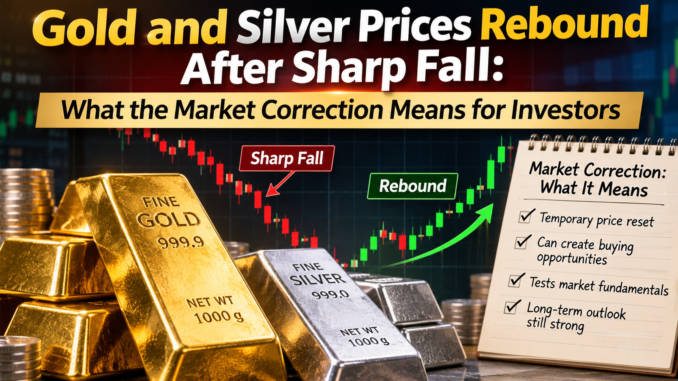
Nov 23: Gold and silver prices staged a recovery on November 23, 2026, following a sharp sell-off that pushed both precious metals to significantly lower levels last week. The rebound has brought renewed attention to the factors influencing bullion prices and the risks investors should consider before making fresh investments.
Spot gold rose approximately 2.4% to $3,616.51 per ounce on Monday after declining around 9% during the previous week. Silver also recovered, gaining around 3% to $42.41 per ounce. The earlier decline marked gold’s steepest weekly fall since March and took it to a 14-month low.
The recovery followed changing expectations about US monetary policy, movements in financial markets and renewed buying interest after the sell-off. However, the latest gains do not necessarily indicate that the correction has ended. Investors are also watching upcoming US inflation data for further indications of the Federal Reserve’s interest-rate direction.
Why Did Gold and Silver Prices Fall?
The recent decline in precious metals was influenced by a combination of global economic and market factors.
Changing US interest-rate expectations: Expectations that the Federal Reserve could maintain or increase interest rates made interest-bearing assets more attractive relative to gold, which does not generate regular income. Higher interest rates can therefore put pressure on bullion prices.
A stronger US dollar and higher bond yields: Gold is internationally priced in dollars. A stronger dollar can make the metal more expensive for buyers using other currencies, potentially reducing demand. Rising bond yields can also reduce the appeal of non-yielding assets.
Profit-booking after a strong rally: Investors who had benefited from earlier price increases may have chosen to secure profits. When large numbers of investors sell simultaneously, prices can fall quickly, particularly in volatile markets.
Financial market uncertainty: Concerns surrounding technology stocks and artificial intelligence-related investment spending contributed to wider market volatility. These developments also influenced expectations about economic growth and future interest-rate decisions.
The combination of these factors contributed to the sharp weekly correction in gold and silver.
Why Are Gold and Silver Prices Recovering?
The November 23 recovery reflects changing market expectations and renewed buying interest following the steep decline.
Investors reassessed the likelihood of further Federal Reserve rate increases as concerns about market conditions and the economic impact of tighter monetary policy gained attention. Lower expectations of immediate rate tightening can support gold because the opportunity cost of holding a non-interest-bearing asset becomes relatively less attractive.
Short covering and bargain buying also contributed to the recovery. After a sharp decline, some traders may close existing short positions while others enter the market at lower prices.
However, the recovery remains vulnerable to fresh economic data and changes in investor sentiment. Market participants are awaiting the US Personal Consumption Expenditures inflation report, an important measure monitored by the Federal Reserve.
For investors, this means that a short-term price rebound should not automatically be interpreted as confirmation of a sustained upward trend.
Did the Prime Minister’s Appeal Affect India’s Gold Demand?
India’s domestic gold market has also experienced changes in purchasing patterns in 2026.
On May 10, 2026, Prime Minister Narendra Modi appealed to citizens during a public meeting in Hyderabad to avoid non-essential gold purchases for one year, alongside measures intended to conserve foreign exchange. The appeal formed part of a broader message encouraging people to reduce certain non-essential imports and foreign-currency expenditure.
The subsequent decline in India’s gold imports has brought renewed attention to the appeal. According to the Ministry of Commerce and Industry’s October 2026 quick estimates, India’s gold import bill declined by approximately 39.9% to $24.78 billion during April–October 2026, compared with $41.24 billion in the corresponding period of 2025. October imports alone fell 62.57% year-on-year to $5.51 billion. The October figures are provisional.
Trade representatives have attributed part of the decline to the Prime Minister’s appeal. However, the reduction should not be linked to a single factor. The government also increased the import duty on gold and silver from 6% to 15% in May, while elevated prices and changes in consumer purchasing patterns have influenced demand.
These developments are relevant to India’s domestic gold market and foreign-exchange position. They should, however, be viewed separately from the global factors driving international gold and silver prices.
What Does the Correction Mean for Gold Investors?
The recent volatility highlights why investors should assess gold as part of a broader financial strategy rather than respond to every price movement.
Gold is often considered a portfolio diversifier and a potential hedge during periods of economic uncertainty. Nevertheless, its market value can fluctuate significantly in response to interest-rate expectations, currency movements, geopolitical developments and investment demand.
Investors considering gold should evaluate:
- Investment objectives: Decide whether gold is intended for diversification, long-term wealth preservation or a specific financial goal.
- Investment horizon: Short-term price movements can be unpredictable. Investors should avoid making decisions solely on the basis of a few sessions of gains or losses.
- Allocation: Gold should be considered within the context of an overall portfolio, rather than as a replacement for other asset classes.
- Investment options: Physical gold, gold exchange-traded funds and other regulated investment products have different costs, liquidity considerations and risks.
- Making charges and taxes: Physical jewellery and coins may involve additional costs that affect the effective purchase and resale value.
A phased investment approach may help reduce the risk of committing a large amount at an unfavourable price, although it does not eliminate market risk.
Why Silver Requires Additional Attention
Silver has both investment and industrial uses, making its price movements different from those of gold.
Demand from sectors such as electronics, solar energy and other industrial applications can influence silver prices. This dual role may create additional opportunities, but it can also expose silver to fluctuations in industrial activity and global economic growth.
The recent decline and subsequent recovery demonstrate how quickly silver can move during periods of market uncertainty. Investors should therefore consider their risk tolerance and investment horizon before increasing exposure to the metal.
What Should Investors Watch Next?
The direction of gold and silver prices will depend on several developments over the coming weeks.
US inflation data and Federal Reserve policy signals will remain important because they can influence the dollar, bond yields and investor demand for precious metals. Global equity-market movements, geopolitical developments and central-bank purchasing activity may also affect bullion prices.
In India, domestic demand, import policy, the rupee’s movement against the US dollar and seasonal jewellery purchases will remain relevant to local prices.
The November 23 recovery offers some relief after the steep weekly correction, but investors should remain cautious about assuming that prices have established a firm bottom. Further volatility is possible as markets respond to economic data and changing expectations.
A Balanced Approach to Precious Metal Investments
The recent movement in gold and silver prices reinforces an important investment principle: market corrections and recoveries are both part of investing. While lower prices may attract buyers, they do not guarantee immediate gains or remove the possibility of further declines.
Investors should assess their financial objectives, understand the risks associated with each investment option and avoid making decisions based entirely on short-term market sentiment. A diversified portfolio and a disciplined investment approach remain important during uncertain market conditions.
