

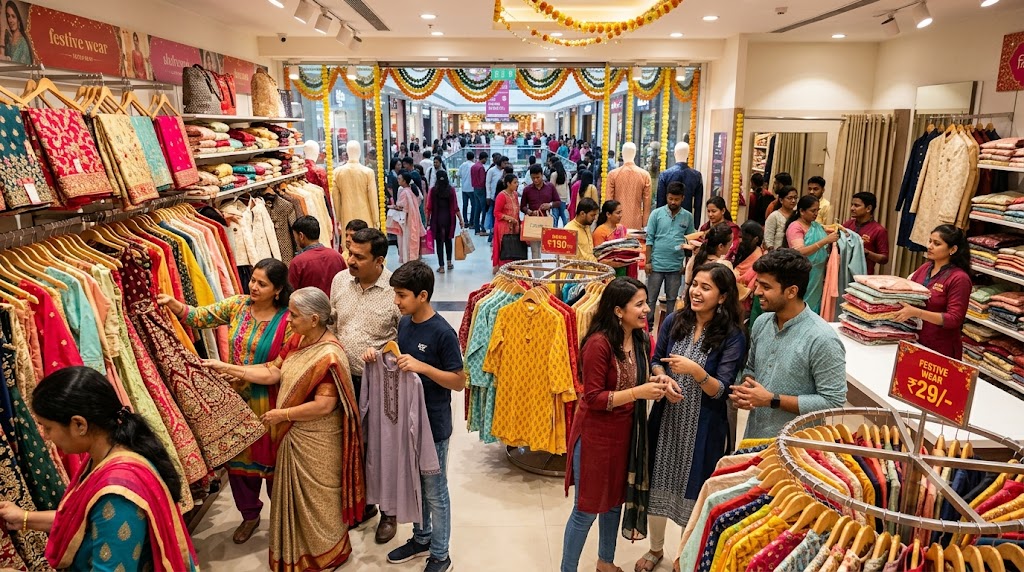
The festive season has a way of changing the rhythm of everyday life. Shopping streets become busier, clothing stores fill up, mall corridors turn lively and trial rooms remain occupied for hours. For retailers, this is one of the most important periods of the year. For consumers, it is a time when shopping becomes more than a purchase — it becomes part of the celebration.
Across clothing stores and shopping malls, the festive rush reflects a broader shift in how Indians shop, dress and spend. While online shopping has become an important part of the retail landscape, physical stores continue to hold a special place during the festive season.
Festive fashion brings shoppers back to stores
Clothing remains at the centre of festive shopping. New outfits are closely associated with celebrations, family gatherings, religious occasions, weddings and social events.
Shoppers are no longer looking only for traditional clothing. The festive wardrobe is becoming increasingly diverse, combining ethnic silhouettes with contemporary designs. Sarees, kurtas, lehengas and traditional sets share space with fusion wear, modern dresses, coordinated separates and occasionwear.
This changing preference has encouraged retailers to offer collections that can move easily between tradition and modern fashion.
For shoppers, the experience is also important. They want to see colours in natural light, feel fabrics, check the fit and try different styles before making a decision. These are areas where physical stores continue to have an advantage.
Crowded malls signal more than higher sales
A busy mall during the festive season is not simply a sign of increased shopping. It also reflects the social side of modern consumption.
Families often visit malls together, friends meet while shopping and younger consumers turn the experience into a social outing. Food courts, entertainment zones and lifestyle stores add to the attraction.
Shopping has therefore evolved into an experience rather than a purely transactional activity.
For retailers, this creates both an opportunity and a challenge. More visitors can translate into stronger sales, but crowded stores also test every part of the retail operation — from inventory management and staff availability to billing, trial rooms and customer service.
Consumers are spending, but they are also thinking
The festive shopping boom does not necessarily mean that consumers are spending without hesitation.
Today’s shopper is often better informed. Customers compare prices online, check multiple brands, look for promotional offers and consider whether a product can be worn beyond a single occasion.
This has made value for money an important part of festive shopping.
Even consumers who are willing to spend on premium clothing are increasingly looking for quality, comfort, design and versatility. A festive outfit that can also work for weddings, office celebrations or other social occasions can appear more attractive than something designed for only one event.
This shift is pushing fashion retailers to think beyond discounts and focus on the overall value of their products.
Online discovery, offline shopping
The relationship between online and offline retail is also changing.
Many consumers discover trends, brands and new collections through social media and e-commerce platforms before visiting a physical store. They may already know what colour, design or style they want when they walk into a mall.
At the same time, the final purchase can still happen offline because customers want to try the garment, assess the fabric and get the product immediately.
This creates a powerful online-to-offline shopping journey, where digital platforms influence demand while physical stores complete the experience.
Retailers that connect both channels effectively can offer shoppers greater convenience without losing the personal touch of a store visit.
Retailers prepare for the biggest test of the year
For clothing retailers, the festive season is also a test of planning.
Popular sizes and designs can disappear quickly, while slow-moving inventory can become expensive. Stores need enough staff to handle crowds, efficient billing systems to reduce waiting time and well-organised displays that make it easier for shoppers to navigate large collections.
Customer experience becomes particularly important when stores are crowded.
A shopper may forgive a longer queue if the staff is helpful, the store is organised and the product selection feels worthwhile. But a poor experience can quickly turn a potential purchase into a lost sale.
This is why festive retail is increasingly about experience management as much as inventory management.
The new festive shopper wants choice and convenience
Today’s consumer is also more open to experimenting with fashion.
Younger shoppers, in particular, are blending cultural influences with contemporary styling. Traditional outfits may be paired with modern accessories, while western silhouettes are increasingly adapted for festive occasions.
This has created space for retailers to offer greater variety without abandoning cultural identity.
At the same time, shoppers expect convenience. Easy exchanges, digital payments, multiple size options, quick billing and seamless online-offline services can influence where they choose to shop.
A stronger season for physical retail
The festive shopping rush offers an important reminder about the resilience of physical retail.
E-commerce may provide convenience, but stores provide something that technology cannot completely replace: the ability to touch, try, compare and experience a product in real time.
During festivals, that experience becomes even more meaningful because shopping itself becomes part of the celebration.
For retailers, the opportunity goes beyond selling more clothes. It is about understanding what consumers want, creating a welcoming environment and turning a crowded store into a memorable shopping experience.
The festive season is ultimately more than a sales opportunity. It is a window into changing consumer behaviour — where tradition meets modern fashion, digital discovery meets physical shopping, and buying a new outfit becomes part of the emotional experience of celebration.