

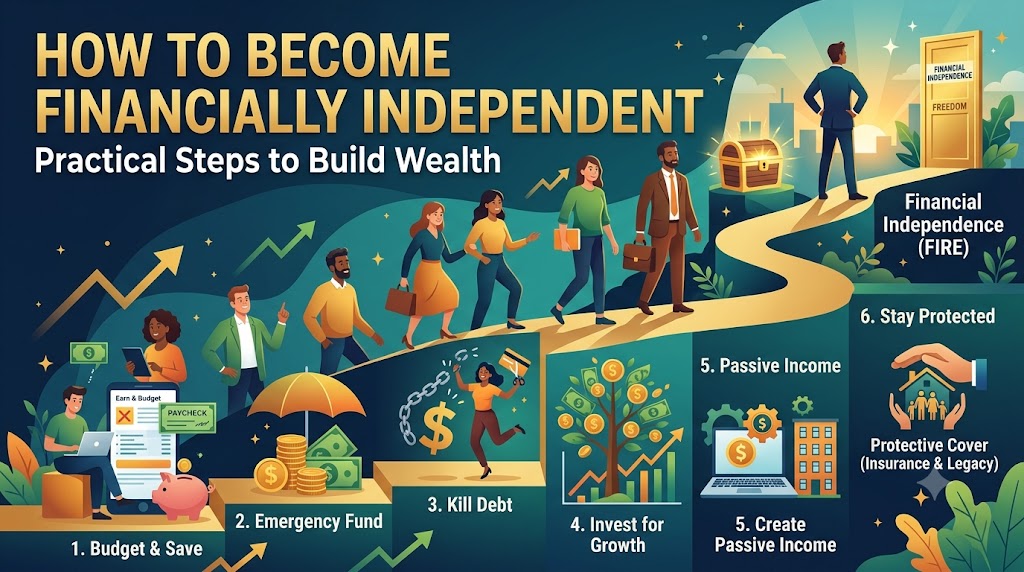
Financial independence is not simply about becoming wealthy. It is about reaching a stage in life where your savings, investments and other income sources can support your lifestyle without requiring you to depend entirely on a regular salary. For some, it means retiring early; for others, it means having the freedom to change careers, start a business, spend more time with family or manage unexpected expenses without constant financial pressure.
Although the journey may appear challenging, financial independence does not necessarily require a high income or a sudden financial breakthrough. It is more often the result of consistent decisions, sensible money management and a clear understanding of long-term goals. Building wealth takes time, but a structured approach can make the process more manageable.
Start With a Clear Picture of Your Finances
The first step towards financial independence is understanding where you stand today. This means calculating your net worth by subtracting outstanding liabilities, such as loans and credit card balances, from your assets, including savings, investments and property.
It is equally important to understand your monthly cash flow. Track how much you earn, how much you spend and how much remains available for saving and investing. Regular expenses, discretionary purchases and debt repayments should all be included.
This financial assessment helps identify spending patterns and areas where improvements are possible. It also provides a realistic starting point for setting achievable goals rather than relying on assumptions about future wealth.
Set Financial Goals That Match Your Life
Financial independence means different things to different people. Someone in their twenties may want to build an investment portfolio, while a family may prioritise home ownership, children’s education and retirement planning.
Begin by identifying your major financial objectives and estimating the amount required to achieve them. Divide these into short-term, medium-term and long-term goals. Short-term priorities might include clearing a loan or building an emergency fund, while long-term plans may focus on retirement or generating sufficient investment income to cover living expenses.
Clear targets make it easier to measure progress and decide how much money should be saved or invested regularly. These goals should also be reviewed as income, responsibilities and personal circumstances change.
Control Spending and Eliminate Expensive Debt
A growing income does not automatically lead to greater wealth. If spending increases at the same pace as earnings, the amount available for investment may remain limited. Developing a realistic budget helps ensure that essential expenses, savings and personal spending remain balanced.
The 50/30/20 rule can serve as a starting point: approximately 50% of after-tax income for needs, 30% for wants and 20% for savings and debt repayment. These proportions are guidelines rather than strict requirements and can be adjusted to suit individual circumstances.
High-interest debt deserves particular attention because it can consume money that could otherwise support long-term financial goals. Credit card balances and expensive personal loans should generally be prioritised. The debt avalanche method focuses on clearing the highest-interest debt first, while the debt snowball method begins with the smallest balance to create a sense of progress.
As debts are repaid, the money previously used for monthly instalments can gradually be redirected towards savings and investments.
Build an Emergency Fund Before Taking Bigger Risks
Unexpected expenses can disrupt even a well-planned financial strategy. Medical bills, job loss, urgent repairs or a temporary reduction in income may force people to borrow money or sell investments at an unfavourable time.
An emergency fund covering three to six months of essential living expenses is a useful starting point, although people with irregular earnings or greater financial responsibilities may need a larger reserve. The money should remain accessible and be kept separate from investments intended for long-term growth.
Insurance is another important part of financial protection. Appropriate health, life and disability coverage, depending on individual needs, can help prevent a major setback from undermining years of saving.
Make Saving and Investing Consistent Habits
Saving becomes easier when it is treated as a priority rather than whatever remains at the end of the month. Setting up automatic transfers after receiving income can help build consistency and reduce the temptation to spend money earmarked for future goals.
Once immediate financial priorities are addressed, investing can help savings grow over time. Depending on an individual’s goals, investment horizon and tolerance for risk, options may include mutual funds, diversified equity investments, bonds and other suitable financial instruments.
The power of compounding allows investment returns to generate additional returns over time. However, growth is not guaranteed, and market-linked investments can lose value. Starting early and investing regularly can provide more time for long-term growth, but the investment strategy should match the investor’s financial circumstances.
Tax-efficient savings and investment options may also support wealth creation. In India, individuals should understand the eligibility requirements, withdrawal conditions and tax treatment of available instruments before committing money.
Develop Multiple Sources of Income
Relying on a single income source can make financial progress vulnerable to job changes, business difficulties or economic uncertainty. Increasing earning capacity can therefore play an important role in achieving independence.
Professionals can work towards better-paying roles by developing relevant skills, pursuing additional qualifications or negotiating compensation when justified by their performance. Others may explore freelancing, consulting or a small business alongside their primary employment.
Income-producing assets can provide another avenue for diversification. Depending on the investment and associated risks, these may include rental property, interest-bearing instruments or dividend-paying investments. However, passive income is rarely entirely effortless. Rental properties require maintenance, businesses demand oversight, and investment returns can fluctuate.
The objective is not to pursue every available opportunity but to develop sustainable income sources that fit one’s skills, available time and financial resources.
Avoid Lifestyle Inflation and Protect Long-Term Progress
As earnings increase, it can be tempting to upgrade a home, vehicle or spending habits immediately. While enjoying the benefits of higher income is reasonable, allowing every pay rise to translate into higher expenses can slow wealth creation.
Maintaining a gap between income and spending gives more money room to grow. Regularly reviewing investments, maintaining adequate insurance and keeping emergency savings separate from long-term assets can further strengthen financial resilience.
It is also important to remain cautious about schemes promising unusually high or guaranteed returns. Financial independence is built through informed decisions and risk management, not shortcuts that put hard-earned savings at unnecessary risk.
Review Your Progress and Stay Patient
Financial independence is a long-term objective rather than a fixed deadline. Changes in inflation, family responsibilities, income and investment performance may require adjustments to a financial plan.
Review your budget, net worth, savings rate and investment allocation periodically. As major life events occur, revisit your goals and determine whether your current approach remains appropriate. Professional financial advice can be useful when decisions involve complex investments, taxation, retirement planning or substantial assets.
Ultimately, financial freedom comes from building a financial foundation that offers greater choice and security. By managing debt, saving consistently, investing thoughtfully and expanding income opportunities, individuals can steadily reduce their dependence on a single paycheque.
The real measure of financial independence is not simply the size of a bank balance. It is having the resources and flexibility to make important life decisions with greater confidence, without allowing money to dictate every choice.
