

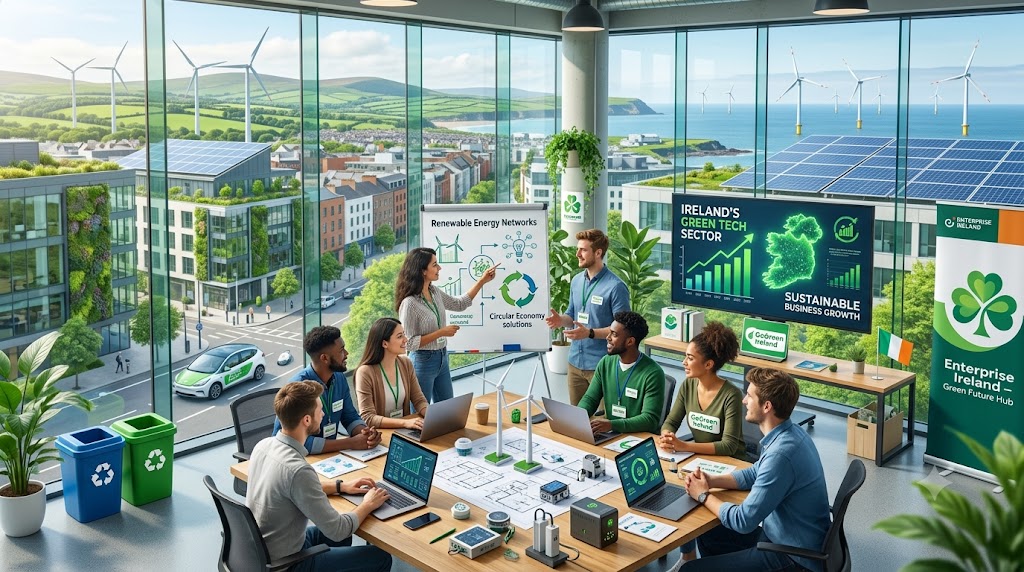
Ireland is strengthening its position as an emerging hub for green technology innovation, with startups, research institutions and business support organisations exploring solutions to some of the most pressing environmental challenges. From carbon capture and renewable energy to sustainable packaging and agricultural technology, the country’s clean-tech ecosystem is creating opportunities for businesses to combine environmental responsibility with commercial growth.
Growing interest in decarbonisation, resource efficiency and the circular economy is encouraging entrepreneurs to develop technologies that can help industries reduce emissions, minimise waste and improve energy use. Government-backed climate initiatives, university research and startup acceleration programmes are also supporting the development of innovative solutions.
For businesses and investors, Ireland’s green technology sector presents opportunities across industrial manufacturing, energy infrastructure, agriculture, construction and waste management. The next phase of growth will depend on the ability of startups to scale their technologies, attract investment and demonstrate their commercial value.
Carbon Capture and Clean Energy Lead Innovation
Carbon capture is emerging as an important area of opportunity for Irish clean-tech businesses. Technologies designed to capture carbon dioxide from industrial processes or directly from the atmosphere could help emissions-intensive sectors advance their decarbonisation efforts.
Startups such as NEG8 Carbon and Nuada illustrate the range of approaches being explored in carbon capture technology. The commercial opportunity extends beyond developing new equipment to include industrial integration, energy-efficient operations and solutions that make carbon management more practical for businesses.
Renewable energy and smart-grid technologies are also attracting attention. As energy systems evolve, businesses need more effective ways to manage electricity demand, integrate renewable generation and support electric vehicle charging.
Innovations in battery storage, second-life electric vehicle batteries and marine energy could create opportunities for technology developers, infrastructure providers and industrial partners. Companies working in these areas will need to demonstrate reliability, cost competitiveness and the ability to operate at commercial scale.
Circular Economy Creates Opportunities for Green Businesses
The circular economy is another promising area for Ireland’s sustainability sector. Businesses are increasingly exploring ways to reduce waste, extend product lifecycles and recover materials that would otherwise be discarded.
Sustainable packaging is part of this transition, with entrepreneurs developing alternatives to conventional materials, including compostable products and mycelium-based packaging. Such innovations could help manufacturers and retailers explore lower-waste packaging solutions, provided the materials meet performance, cost and end-of-life requirements.
Opportunities are also emerging in plastic recovery, textile recycling and waste traceability. Digital technologies can help businesses monitor materials, improve recycling processes and gain greater visibility into resource use.
For small and medium-sized enterprises, these developments offer potential routes to reduce waste-related costs and develop more sustainable products. For technology startups, they create opportunities to serve manufacturers, retailers and supply chains seeking practical circular-economy solutions.
Agri-Tech and Sustainable Food Systems Gain Momentum
Ireland’s agricultural sector provides another important market for green technology innovation. Businesses are exploring technologies that can improve resource efficiency, reduce food waste and support more sustainable production.
Artificial intelligence, satellite imagery and drone-based monitoring can help farmers assess crop conditions, identify potential problems and make more informed decisions about the use of water, fertilisers and other inputs.
Food-waste management also offers commercial opportunities. Solutions such as anaerobic digestion can convert suitable organic waste into biogas and other useful outputs, helping businesses explore alternatives to conventional waste disposal.
MyGug is among the Irish businesses associated with food-waste processing technology. Meanwhile, innovations in aquaculture and marine technology could support efforts to improve monitoring and resource management across food production systems.
The commercial success of these solutions will depend on affordability, ease of adoption and their ability to deliver measurable benefits for farmers, food producers and other businesses.
Regional Innovation Hubs Support Startup Growth
Ireland’s green technology ecosystem extends beyond its largest cities. Dublin and Cork provide important centres for business development, research and corporate innovation, while regional initiatives are helping entrepreneurs access networks and support.
GreenTech HQ in Enniscorthy, County Wexford, offers a collaborative environment for businesses working on sustainability-related solutions. Such centres can help early-stage companies connect with mentors, exchange expertise and prepare their products for commercial expansion.
Accelerator programmes also play a role in helping green businesses move from early development towards market adoption. Bord na Móna’s Accelerate Green programme is one example of an initiative focused on supporting enterprises working towards climate-positive outcomes.
For startups, these networks can provide valuable access to business expertise, industry contacts and opportunities to develop partnerships. For established companies, collaboration with emerging technology businesses can create pathways to test new solutions and strengthen sustainability strategies.
Funding Support Could Accelerate Green Investment
Access to finance remains essential for clean-tech businesses, particularly those developing technologies that require extensive testing, specialised equipment or infrastructure investment before generating substantial revenue.
Ireland’s Growth and Sustainability Loan Scheme has received a significant funding boost, with a partnership involving the European Investment Bank Group, the Irish Government and the Strategic Banking Corporation of Ireland making up to €1 billion available to support business and agricultural investment. The scheme is intended to provide long-term financing for eligible businesses pursuing growth and sustainability-related projects through June 2029.
Such financing can help qualifying businesses invest in energy efficiency, resource management and other sustainability improvements. For green-tech startups, the wider availability of finance may also strengthen the commercial environment in which emerging technologies seek customers and industrial partners.
However, funding availability does not remove the challenges of scaling new technology. Businesses still need credible business plans, evidence of market demand and clear pathways to revenue generation.
Turning Green Innovation into Commercial Growth
Despite the opportunities, Ireland’s clean-tech startups face challenges that extend beyond research and development. Many technologies require substantial capital, lengthy testing periods and close cooperation with industrial customers before they can achieve widespread adoption.
Companies must demonstrate that their solutions are not only environmentally beneficial but also reliable, affordable and commercially viable. Regulatory requirements, supply-chain constraints and competition from established technologies can also influence adoption.
Partnerships between startups, universities, manufacturers, investors and public-sector organisations will therefore remain important. They can help innovators validate products, access specialist expertise and identify practical routes to market.
Businesses adopting green technologies must also assess the full cost of implementation, including installation, maintenance, staff training and integration with existing systems.
Ireland’s Green Tech Sector Offers Long-Term Business Potential
Ireland’s expanding clean-tech ecosystem reflects a broader shift towards business models that place sustainability alongside productivity, competitiveness and long-term investment.
Carbon capture, renewable energy, circular-economy solutions, agricultural technology and sustainable manufacturing are creating opportunities for entrepreneurs and established businesses alike. Research networks, regional innovation hubs and financing initiatives can help support this development, although commercial success will depend on execution and market demand.
For Ireland, the opportunity lies in turning technical innovation into scalable products and services that address real environmental and industrial needs. For businesses, the priority is to identify solutions that deliver measurable benefits while strengthening operational efficiency and resilience.
As investment in the green economy continues to evolve, Ireland’s ability to connect research, entrepreneurship and commercial adoption could help establish a stronger position in the global clean-technology market.
