
Small apparel producers are under pressure to offer more design variety without committing to the setup and inventory associated with every large run. Direct-to-film printing has become one option for smaller batches and personalized orders, particularly where detailed graphics must be applied to different garment colours. A3-class systems sit in an interesting position: compact enough for some small workshops, yet capable of handling many common shirt graphics. The value depends on usable print area, production workflow and the number of finished garments a team can deliver reliably, not the machine’s footprint alone.
Why small-batch demand changes equipment decisions
A supplier serving local clubs, emerging clothing labels and corporate events may process several short jobs in a single day. Each can have different artwork, shirt sizes and delivery dates. The production challenge is frequent changeover without compromising the accuracy of finished products.
Traditional methods remain valuable. Screen printing can serve high-volume repeated designs efficiently, while embroidery provides a distinct finish for logos. However, production managers need flexibility when an order contains many colours or different artwork versions. DTF transfers provide another route by moving full-colour designs from printed film onto suitable textiles with heat.
The process can help consolidate complex graphic elements into one transfer instead of layering many cut vinyl colours. But it does not eliminate artwork approval, adhesive handling or garment pressing. Those stages must be assessed when calculating output and staffing.
What A3 actually means for garment production
A3 refers to a standardized sheet size, while individual DTF machines may be marketed as A3, A3+ or approximately 13-inch systems. These descriptions are not identical to guaranteed usable print area. Buyers must check the true printable width and the film formats that the device supports.
For many ordinary chest graphics, pocket designs, sleeve patches and tote logos, an A3-class system may provide suitable dimensions. Oversized full-back artwork can exceed the available width. A shop should measure the planned decoration and account for margins, film positioning and any layout restrictions before promising that a particular design fits. It can be helpful to create physical templates for common placements rather than repeatedly resizing from a screen preview. A print that fits A3 media may still look wrong if the design is not scaled appropriately for different garment sizes.
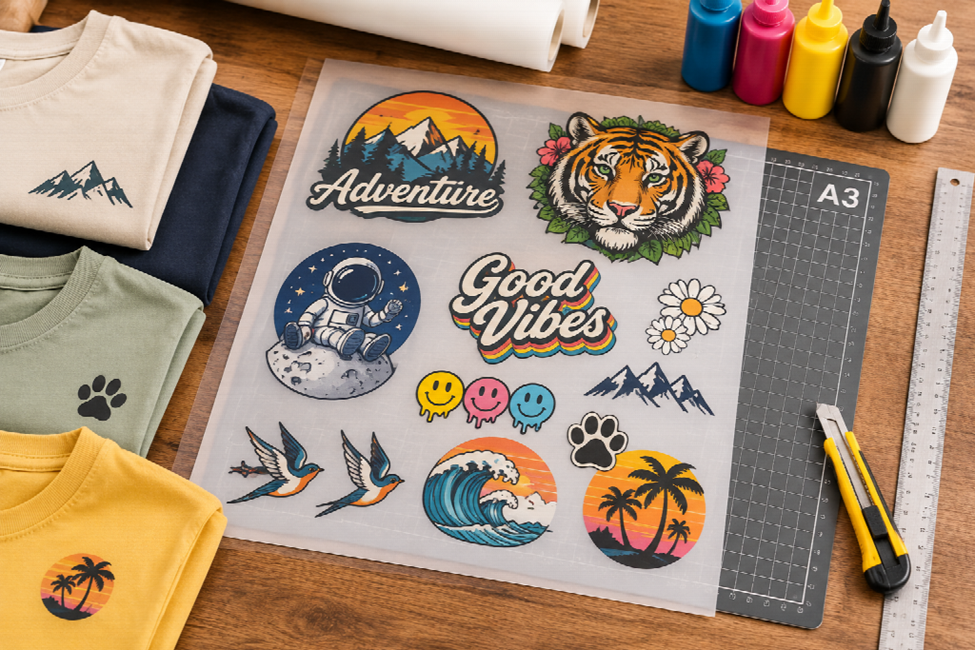
Using gang sheets can improve media utilization by arranging several transfers in a shared print area. This requires careful labels, spacing and cutting after curing. The best layout groups compatible jobs without creating confusion over order ownership or sizes.
Understand the complete transfer workflow
The workflow begins with an approved design file and RIP configuration, followed by printing ink onto film, applying hot-melt adhesive powder, curing the transfer, pressing onto the garment and inspecting the result. Each stage can introduce a defect if material and process settings are not matched.
When reviewing DTF printing machines, buyers should examine feed handling, software, white-ink circulation or cleaning, printhead accessibility and manufacturer support. White pigment management is particularly important because prolonged idle time may require specific maintenance routines. Automated functions reduce some operator tasks but do not make the machine maintenance-free.
Powder application and curing deserve equal attention. A small producer can use suitable curing equipment for moderate output or consider automated shaker-dryer equipment if volume justifies it. Both require documented operating conditions and appropriate safety measures for heat and material handling.
Where A3 systems fit an apparel shop
Small fashion labels
A new clothing label may produce a limited number of designs across several fabric colours. An A3 DTF printer can be relevant where those graphics fit the real printable dimensions and orders do not justify larger equipment. A3 transfer printing can support short-run graphics where the decoration fits the machine’s usable area. Keeping approved artwork and placement specifications helps the brand maintain consistency between restocks.
Corporate and local-event orders
A local decorator handling uniforms or event shirts may need a range of sizes and colour variants with a common logo. Grouping transfers can make preparation efficient, while pressing and sorting remain substantial tasks. A mistake in size allocation can be more expensive than a small saving in film consumption.
Independent transfer suppliers
A business selling ready-to-press transfers must focus on reliable curing, accurate order identification and packing films so customers receive the correct artwork. It should also provide clear pressing guidance and avoid promises about compatibility with every fabric.
Why capacity is a system-level measure
Advertised print speed measures only part of production. A shirt also needs a blank garment, transferred adhesive properly cured, an operator to position and press it, cooling or peeling as required, quality inspection and packing. The bottleneck may be the heat press or artwork approval rather than the printer.
Time a representative batch from approved file to accepted finished shirt. Record the number of good units, reprints, operator hours and total elapsed time. A faster machine is valuable only if the production line can use the additional output without creating a backlog at another station.
Consider a hypothetical order of sixty shirts in two designs. If printing the transfers takes an hour but pressing and inspection require three hours, increasing printer capacity alone will not double completed output. The numbers illustrate a process problem, not a tested result for any specific product.
Compare A3 printer options on practical specifications
An A3 DTF printer should be assessed for real print width, available media, software compatibility, white-ink maintenance, accessory requirements, service arrangements and expected operating environment. Buyers should confirm which inks and films are specified by the vendor and how the printer behaves during idle periods.
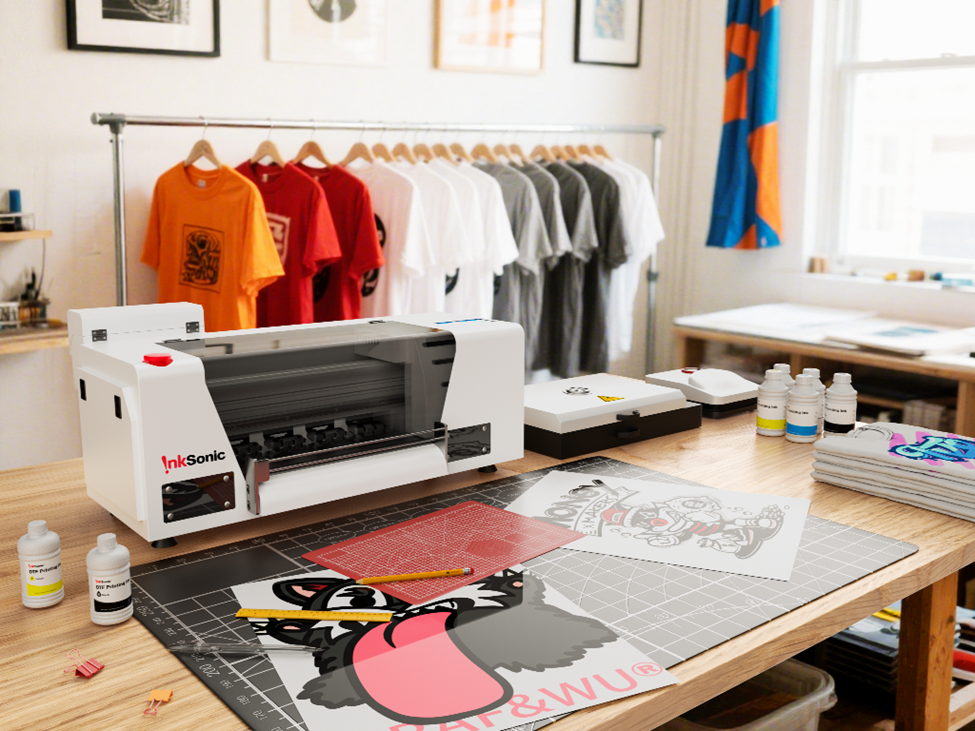
Price comparisons should include curing equipment, heat press, film, inks, adhesive, workspace safety requirements and software. A low-cost printer that needs substantial unlisted accessories may not be less expensive as a working system. Conversely, a large automated production line may exceed a small shop’s needs.
Examine whether the printer accepts sheets, rolls or both, as appropriate to the selected model. The choice affects layout flexibility, handling and how unused media is managed. Do not assume that a feature shown on one model is present across every machine in a collection.
Quality risks for multi-fabric orders
Cotton, polyester and blended garments can require different pressing conditions and may produce different tactile results. A production manager should test representative blanks and document approved combinations. Unfamiliar coatings, unusual stretch or heat-sensitive materials can require specialist guidance.
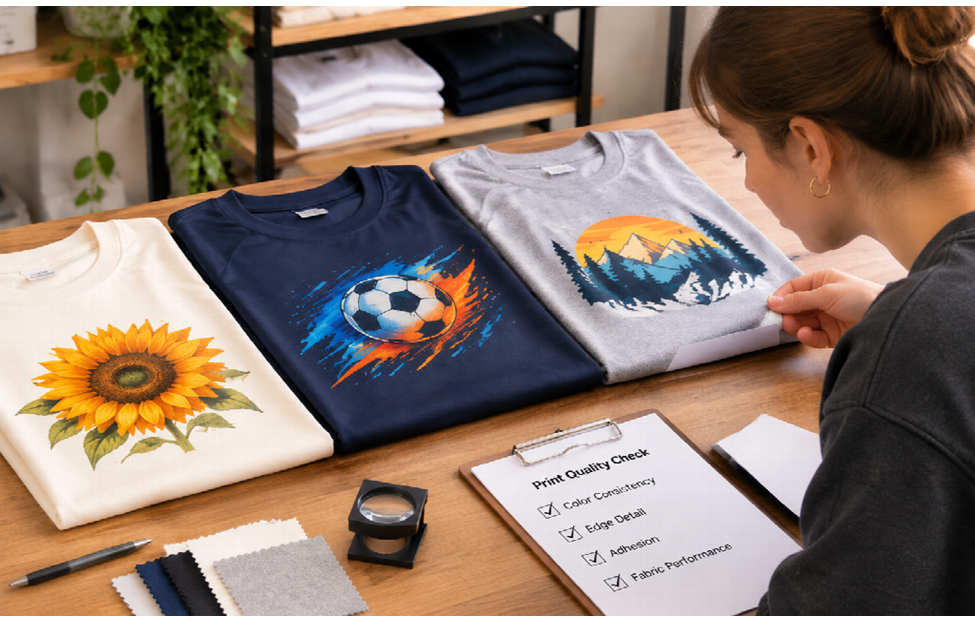
Colour management deserves its own inspection step. A graphic approved on a monitor may not reproduce identically on every garment colour. Produce physical samples and agree on acceptable quality with the customer when colour matching is sensitive. Rework consumes labor and materials even if the printer itself is operating correctly.
Prepare the workspace for reliable flow
Organize artwork approval, printing, powder handling, curing, cutting, pressing and packing so material moves logically. Keep clean garments separated from adhesives and inks. Store consumables according to supplier directions and maintain appropriate ventilation and protective practices.
For small teams, a batch ticket can be more important than sophisticated automation. Include customer, artwork version, quantities by size, film batch, press settings and operator sign-off. A clear record protects repeat orders and helps isolate errors. Managers can also note rejected transfers and downtime by cause, so that maintenance is prioritized where it produces a measurable reduction in rework. A simple paper ticket may be sufficient for a small team; a larger operation can later transfer the same fields into production software.
A measured path to expansion
Start with a narrow product offering and a few tested transfer-and-garment combinations. Monitor order frequency, accepted output, reprint rate and missed deadlines. Only add faster printheads, automated drying or extra presses when the workload supports that investment.
A shop receiving irregular large orders may be better served by outsourcing overflow while keeping regular short jobs in-house. The appropriate arrangement can change with seasonality. Financial decisions should account for equipment utilization over the year, not simply performance during the busiest week.
Frequently Asked Questions
Is A3 large enough for full-size T-shirt designs?
It fits many common chest and smaller graphics, but the usable width may be insufficient for oversized back designs. Check actual print dimensions before accepting a job.
Can A3 DTF printers print on fabric directly?
The DTF process normally prints onto transfer film, which is then cured and heat-pressed onto suitable textiles. It is not the same process as printing ink directly onto the garment.
Do small apparel shops need a shaker and dryer?
Not always. The curing method should suit volume, safety and workflow. Automated powder handling can become useful as repeated output increases.
Can one setup serve cotton and polyester orders?
DTF can be used with many common garment fabrics, subject to the transfer and pressing requirements. Each new fabric should be tested.
How should production managers compare machines?
Evaluate usable print area, complete system cost, maintenance, accepted output, service access and fit with the current order mix.
Conclusion
A3-class DTF systems can provide a flexible entry point for small apparel manufacturers handling varied short runs. Their business value comes from correct workflow design, operator training and consistent garment quality. Measure the entire process before expanding capacity, and choose equipment for orders the shop is actually equipped to deliver.
