

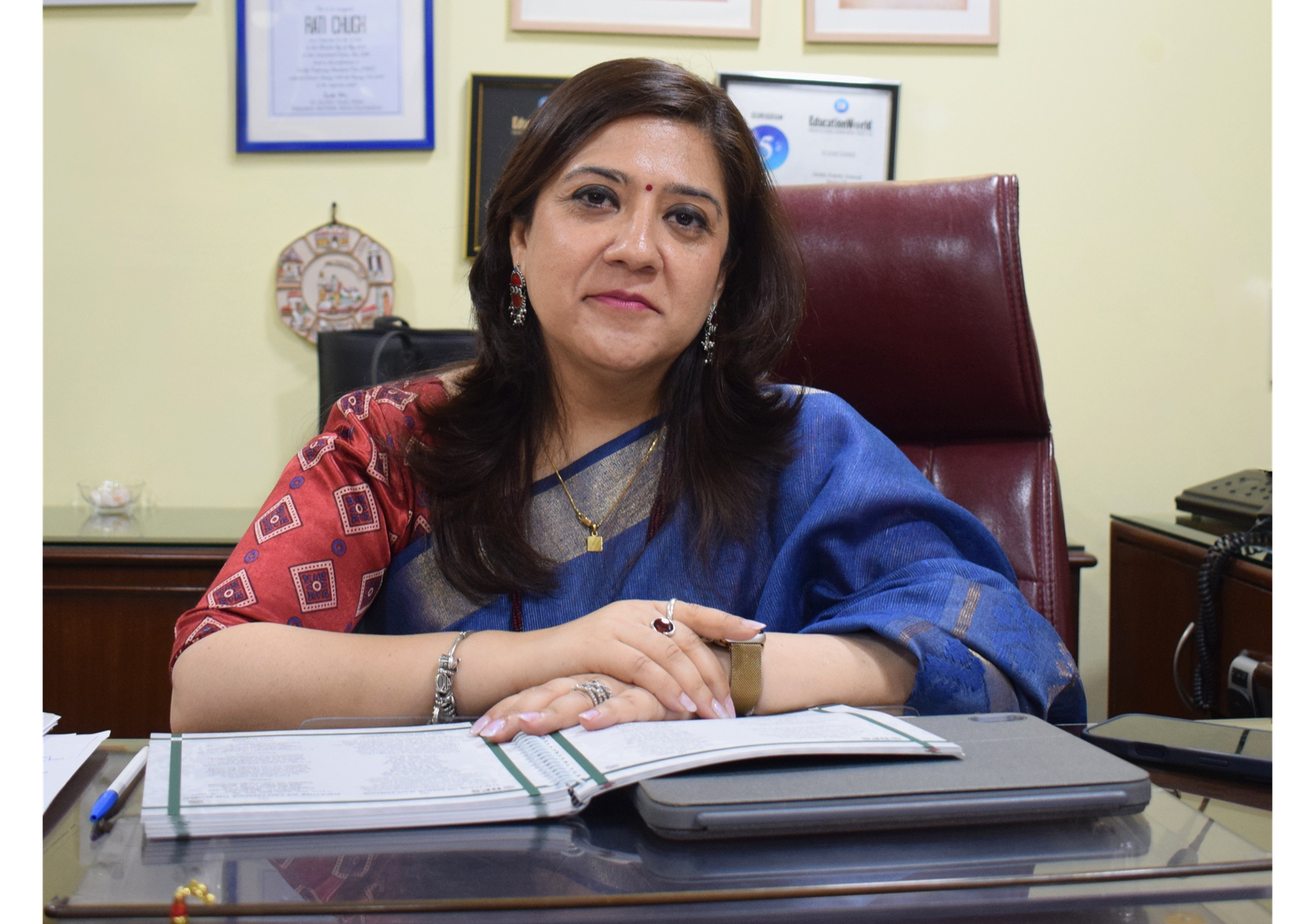
By:- Rati Chugh, Principal, DPS Sector 45 Gurugram
The CBSE’s curriculum changes for the 2026–27 academic session represents a considered shift in the direction of school education in India. Rather than introducing isolated updates, the revised framework reflects a broader attempt to align classroom learning with evolving academic and professional expectations. While examinations and subject knowledge remain central, there is a clear effort to expand the focus towards skills, application, and long-term preparedness.
One of the clearest signs of this is in how assessments are expected to evolve. Board exams will gradually include a proportion of competency-based questions that include case studies, source-based questions, and problem-solving questions. This might appear like just another technical aspect of the education system; however, its influence on students’ learning strategies and processes is significant. The memorization of responses will cease to be as effective as before. In order to learn, students will have to comprehend the rationale behind the concepts taught.
In addition, the classroom teaching method may shift from explanations and repetition to discussion and interpretation of concepts learned. At the same time, the curriculum is making a more deliberate effort to include skills within the formal learning structure. Vocational exposure and hands-on learning are being introduced more clearly, especially from the middle and secondary school levels. This does not replace academic content, but it does expand the purpose of learning.
What makes this relevant is that many of these skills, communication, teamwork, basic financial awareness, problem-solving, are often expected from students later on, but are not always taught directly. By bringing them into the curriculum, the system is attempting to make this process more structured rather than incidental.
There is also a shift in how different areas of learning are being positioned. Subjects like art, physical education, and wellbeing are being treated less as add-ons and more as part of overall development. This may seem like a subtle change, but it has implications for how students experience school on a daily basis. It creates space for different strengths, not just academic ones.
The introduction of Artificial Intelligence and Computational Thinking has received significant attention, although the actual rollout is expected to be gradual. In the early years, this will likely involve simple exercises that build logical thinking, such as identifying patterns or solving structured problems. As students move into higher classes, the concepts become more defined, eventually leading to elective options at the secondary level.
What stands out here is the intent. The goal does not appear to be early specialization, but early familiarity. Understanding becomes more integrated into everyday life, having a basic understanding of how it works, and how to engage with it responsibly, is becoming increasingly relevant.
Another area where the curriculum reflects a shift is flexibility. The traditional separation between streams is beginning to ease, allowing students to choose subject combinations with more freedom. Alongside this, subjects like Mathematics and Science will offer different levels from Class 9 onwards.
This is a practical adjustment. Not all students approach subjects in the same way, and not all require the same depth of engagement. Providing different levels would enable students to get the right knowledge without unnecessary pressure, and yet the required learning outcomes would continue to be achieved.
The one thing that all the aforementioned changes have in common is the general change in the approach itself. The main focus of educational institutions is gradually shifting from just completing the syllabus to creating something that is more practical. However, marks and exams continue to remain essential.
Practicalities come into play, of course, and there will no doubt be differences in implementation among different institutions, and perhaps some time required for the updates to be implemented. Teachers will have to make adjustments, as will their students in adapting to a new way of thinking and working.
Overall, however, the reform has shifted gears in its approach by focusing much more closely on the requirements of the changing world in which education occurs. Rather than simply providing a means to advance within the educational system, the curriculum emphasizes knowledge, skills, and adaptability.