
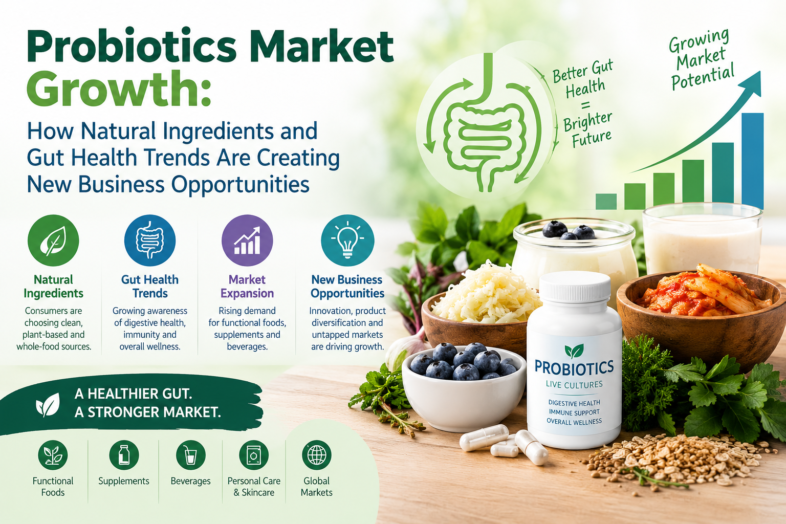
Nov 18: The growing interest in gut health is changing the way people think about food and nutrition. From traditional curd and yoghurt to kombucha, fermented vegetables and plant-based beverages, products associated with beneficial microorganisms are finding a larger place in everyday diets. This shift is also creating new opportunities for food manufacturers, biotechnology companies and wellness brands looking to develop products that combine nutrition, convenience and innovation.
Probiotics are no longer limited to dietary supplements and specialised health products. Food companies are exploring new ways to incorporate selected microbial cultures into familiar food and beverage formats, while startups are looking at fermentation technology and alternative ingredients to develop differentiated products.
For marketers, the opportunity is equally interesting. As consumers become more curious about digestive health, brands have an opportunity to build awareness through educational content, product innovation and more transparent communication.
Global Probiotics Market: Growth and Industry Opportunities
The global probiotics market is expanding alongside demand for functional foods, dietary supplements and products associated with digestive wellness.
According to Grand View Research’s 2026 market analysis, the global probiotics market was valued at approximately $114 billion in 2025. It is estimated to reach $130 billion in 2026 and is projected to grow to $301.2 billion by 2033, at a compound annual growth rate of 12.8%.
An important development is the growing contribution of food and beverages. This category accounted for 57.9% of global market revenue in 2025, indicating that consumers are increasingly encountering probiotic products through everyday food choices rather than supplements alone.
India is another market attracting attention. According to Ken Research’s India Probiotics Market analysis, the country’s probiotics market was valued at approximately $8.31 billion in 2025, with a projected annual growth rate of 14.6%.
Ken Research also identifies probiotic food and beverages as the largest product category in India, accounting for 71.6% of market revenue in 2025.
These figures point to opportunities for manufacturers developing functional dairy products, fermented beverages, nutritional supplements and other probiotic-based offerings. The market estimates use different research scopes and methodologies, so global and Indian figures should be treated as separate market assessments rather than directly comparable measurements.
What Are Probiotics and Why Are They Gaining Attention?
Probiotics are live microorganisms that provide a health benefit when administered in adequate amounts. Certain strains of bacteria, including Lactobacillus and Bifidobacterium, are commonly used in commercial probiotic products.
According to the National Institutes of Health (NIH), probiotics are found in some fermented foods, are added to certain food products and are also available as dietary supplements.
Their growing popularity is closely connected to interest in the gut microbiome, the community of microorganisms living in the digestive system. Depending on the strain and supporting scientific evidence, probiotics may help support digestive health and maintain microbial balance.
However, it is important to distinguish between fermented foods and scientifically established probiotic products. Not every fermented food contains microorganisms that meet the definition of probiotics or have demonstrated health benefits. This distinction is highlighted by the International Scientific Association for Probiotics and Prebiotics (ISAPP).
Natural Sources of Probiotics: From Traditional Foods to Modern Innovation
Fermentation has been part of food preparation for generations. Long before probiotic products became a commercial category, communities used microorganisms to transform ingredients, preserve food and develop distinctive flavours.
Today, manufacturers are exploring traditional fermentation practices alongside modern food science to develop new products.
1. Curd and Yoghurt
Curd and yoghurt are among the most familiar fermented dairy products. They are produced when selected bacterial cultures convert lactose in milk into lactic acid.
Manufacturers are developing different formulations, flavours and live-culture products to appeal to consumers interested in digestive wellness. The commercial opportunity lies in combining familiar food habits with scientifically validated cultures and clear product information.
2. Fermented Vegetables
Fermented vegetables such as sauerkraut and kimchi are attracting interest among food companies exploring plant-based fermentation.
Lactic acid bacteria play an important role in many vegetable fermentation processes, contributing to their distinctive flavour and texture. However, the presence and survival of live microorganisms depend on how the products are prepared, processed and stored.
3. Traditional Indian Fermented Foods
India offers a wide variety of traditional fermented foods, including idli and dosa batter, fermented rice preparations and several regional food products.
These foods provide an interesting area for research into microbial diversity and fermentation techniques. Food scientists can study naturally occurring microorganisms to identify strains that may have potential applications in commercial food production.
However, traditional fermentation does not automatically make a food a probiotic product. Specific strains must be identified and their health benefits established.
4. Kefir
Kefir is a fermented beverage traditionally prepared using kefir grains containing a combination of bacteria and yeasts.
Its diverse microbial composition has attracted attention from food researchers and manufacturers interested in developing new fermented dairy products. It also offers opportunities for brands looking to introduce alternatives to conventional yoghurt-based beverages.
5. Kombucha
Kombucha is a fermented tea beverage made using a symbiotic culture of bacteria and yeasts.
Its popularity has encouraged beverage companies to experiment with flavours, packaging and new product formats. While kombucha is a fermented beverage, its microorganisms should not automatically be described as proven probiotics without appropriate scientific evidence.
How Probiotics Are Developed from Natural Sources
Developing a commercial probiotic product involves considerably more than collecting microorganisms from fermented foods.
Food scientists and biotechnology companies use controlled processes to identify, evaluate and cultivate suitable microbial strains.
The process generally includes:
-
Identification: Researchers examine fermented foods and other natural sources to identify potentially useful microorganisms.
-
Isolation: Selected microorganisms are separated for laboratory investigation.
-
Strain evaluation: Scientists assess their safety, characteristics and potential health benefits.
-
Cultivation: Suitable strains are grown under controlled conditions to produce the quantities required for commercial applications.
-
Product formulation: The cultures are incorporated into suitable foods, beverages or supplements.
-
Quality testing: Manufacturers evaluate microbial viability, stability and product quality throughout the intended shelf life.
This process creates opportunities for biotechnology companies specialising in microbial research, fermentation technology and food ingredient development.
It also explains why strain identification and scientific validation are important when businesses introduce products under the probiotic category.
How Brands Are Marketing and Selling Probiotic Products
As interest in gut health grows, brands are changing how they position probiotic products. Instead of focusing exclusively on supplements, companies are exploring formats that fit naturally into consumers’ daily routines.
Several marketing approaches are helping businesses reach new audiences.
Positioning Gut Health as Everyday Wellness
Brands are increasingly connecting gut health with everyday nutrition. Rather than presenting probiotics as specialised products, companies are introducing them through familiar categories such as yoghurt, drinks and functional foods.
This approach can make products more accessible to consumers who are beginning to explore digestive wellness.
Highlighting Natural Ingredients
Traditional fermentation and plant-based ingredients are becoming important elements of product positioning.
Brands are using ingredient stories, production methods and product origins to differentiate their offerings. However, natural ingredients should not be presented as proof of probiotic effectiveness.
Developing Convenient Functional Beverages
Ready-to-drink probiotic beverages are giving manufacturers another way to reach consumers.
Single-serving bottles, flavoured fermented drinks and convenient packaging can help brands appeal to people looking for products that fit into busy lifestyles.
Using Influencer and Digital Marketing
Social media, nutrition-focused content and influencer collaborations are becoming useful marketing channels for probiotic brands.
Short videos, product demonstrations and educational posts can explain fermentation, microbial cultures and ingredient choices in language that consumers can understand.
For marketers, this category also offers opportunities to create content around food innovation, gut health awareness and the science behind functional nutrition.
Building Trust Through Product Transparency
Consumers are becoming more interested in knowing what they are purchasing. Information about microbial strains, live culture counts, ingredients, storage requirements and supporting scientific evidence can help brands establish credibility.
Businesses that avoid exaggerated health claims and communicate product information clearly are better positioned to build long-term consumer trust.
Business Opportunities in the Probiotic Industry
The growth of the probiotics market is creating opportunities across several interconnected industries.
Food and Beverage Manufacturing: Companies can explore fermented dairy products, plant-based drinks, functional beverages and probiotic-enriched foods.
Biotechnology and Research: Businesses specialising in microbial strain identification, fermentation technology and formulation development can support manufacturers entering this segment.
Agriculture and Natural Ingredients: Plant-based fermentation and the development of suitable raw materials offer opportunities for agricultural producers and food ingredient suppliers.
Nutritional Supplements: Probiotic capsules, powders and specialised formulations provide opportunities for supplement manufacturers targeting different consumer requirements.
Packaging and Cold-Chain Logistics: Maintaining microbial viability during storage and transportation creates demand for suitable packaging, temperature management and quality-control systems.
Digital Commerce and Marketing: Online platforms allow brands to reach consumers through educational campaigns, product subscriptions and direct-to-consumer sales.
For startups, the opportunity lies in identifying specific consumer requirements and developing products that offer a clear difference rather than entering an already crowded category with generic claims.
Why Plant-Based Probiotics Are Attracting Manufacturers
Plant-based alternatives are opening another area of development for probiotic manufacturers. Fermented soy, coconut-based preparations and plant-based beverages are being explored as alternatives to conventional dairy formulations.
This development is particularly relevant to companies targeting consumers who prefer dairy-free products or want to explore different sources of nutrition.
However, developing plant-based probiotic products involves technical challenges. Manufacturers must ensure that selected microorganisms can survive in the formulation, remain viable during storage and deliver the intended benefits.
Advances in fermentation technology and food science could help businesses address these challenges and introduce more diverse product options.
Challenges Facing Probiotic Manufacturers
Despite the market’s growth potential, commercialising probiotic products is not without challenges.
One of the biggest concerns is maintaining the viability of live microorganisms. Temperature, moisture, oxygen exposure and processing conditions can affect the number of live cultures in a product. Manufacturers must therefore invest in suitable production methods, packaging and storage systems.
Scientific validation is another important consideration. Consumers may find it difficult to distinguish between fermented foods, products containing live cultures and scientifically established probiotics.
Regulatory compliance also matters. In India, manufacturers must follow applicable Food Safety and Standards Authority of India (FSSAI) requirements concerning product formulation, labelling and health claims.
For businesses, building credibility will require more than attractive packaging and marketing campaigns. Product quality, transparent communication and scientifically supported claims will play an important role in developing consumer confidence.
What Lies Ahead for the Probiotic Industry?
The probiotic industry is moving towards a more diverse product landscape, with opportunities emerging across functional foods, beverages, biotechnology and specialised nutrition.
Research into microbial strains, plant-based fermentation and personalised nutrition could influence the next generation of probiotic products. At the same time, manufacturers will need to balance innovation with scientific evidence, quality standards and changing consumer expectations.
For businesses, the opportunity extends well beyond selling probiotic supplements. Traditional fermented foods, functional beverages, microbial ingredients and new food formulations offer multiple avenues for growth.
As gut health becomes a more familiar part of everyday nutrition, companies that combine credible science, accessible products and responsible marketing could gain a competitive advantage.
The next phase of the probiotics market will not simply be about introducing more products. It will be about helping consumers understand what they are buying, why particular ingredients are used and what benefits are supported by scientific research.
