

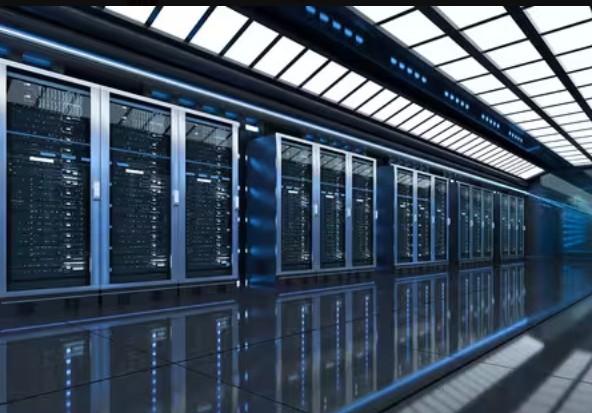
India’s digital economy is creating a business opportunity that extends far beyond smartphones, online shopping and digital payments. Behind the growing use of artificial intelligence (AI), cloud computing and online services lies a vast network of data centres that store, process and transfer information. As demand for computing power rises, India’s data centre boom is attracting technology companies, infrastructure developers, equipment manufacturers and institutional investors.
The expansion is becoming increasingly important as businesses use more digital tools to manage operations, analyse information and serve customers. AI applications are adding another layer of demand, requiring powerful processors, reliable electricity and sophisticated cooling systems.
India’s operational data centre capacity was estimated at around 2.2 gigawatts in 2025. One industry forecast projects that capacity could reach 12 GW by 2030, highlighting the scale of expected expansion. This remains a forecast rather than a guaranteed outcome, with future growth dependent on investment execution, customer demand and infrastructure availability.
For businesses, the opportunity lies not only in constructing data centres but also in supplying the essential services and equipment needed to keep them running. The biggest beneficiaries may include companies operating behind the scenes, from electrical equipment manufacturers to network infrastructure providers.
Technology Giants Are Driving India’s Data Centre Expansion
Global technology companies are among the principal drivers of demand. Their cloud platforms, AI applications and enterprise services require substantial computing capacity to operate efficiently and serve growing numbers of customers.
Google’s planned AI infrastructure hub in Visakhapatnam, announced as part of an investment programme worth approximately $15 billion over five years, illustrates the scale of interest in India. The proposed development is expected to combine data centre infrastructure with supporting power and connectivity investments.
Amazon Web Services and Microsoft Azure also operate in a market where dependable computing infrastructure is essential for serving businesses and consumers. As Indian companies move more workloads to cloud platforms, demand for data processing and storage capacity is likely to increase.
For these technology providers, investing in infrastructure helps secure the computing resources needed to expand their services. For India, the opportunity is to attract capital, strengthen digital capabilities and create an environment in which domestic businesses can develop new technology-driven products.
However, technology giants are only one part of the investment story. Their expansion creates business for contractors, electrical equipment suppliers, telecommunications companies and specialist engineering firms.
Data Centre Operators and Investors Find Long-Term Growth Potential
Data centres require substantial upfront investment. Developers must secure suitable land, establish reliable power connections, install backup systems and cooling equipment, and provide high-speed network connectivity.
Once operational, these facilities can generate revenue by leasing computing space, power capacity and related services to technology companies and enterprises. Long-term customer agreements can provide greater revenue visibility, although profitability depends on occupancy, pricing, financing costs and operating efficiency.
Infrastructure funds and institutional investors are increasingly interested in the sector because digital services are becoming essential to business operations. Yet the investment risks are significant. Projects can face construction delays, rising costs, power shortages or slower-than-expected customer demand.
The distinction between announced investments and completed projects is therefore important. A large investment commitment does not necessarily translate into immediate revenue or a functioning facility.
For investors, the strongest opportunities may lie with operators that can secure reliable customers, complete projects on schedule and manage energy consumption without compromising service quality.
Power Equipment Manufacturers Could Become Major Beneficiaries
While data centre operators attract attention, the companies supplying the electrical infrastructure may also benefit significantly.
Every facility needs transformers, switchgear, cables, power distribution systems, backup generators and uninterruptible power supply equipment. These systems protect sensitive computing equipment and help maintain operations when the electricity supply is disrupted.
The expansion also creates demand for fibre-optic cables, telecommunications equipment and network connectivity. As facilities become larger and more sophisticated, operators require dependable systems capable of transferring large volumes of information quickly.
Cooling technology is another important growth area. AI computing equipment can generate substantial heat, making effective temperature management essential. Advanced air cooling and liquid cooling systems are becoming increasingly relevant as operators seek to manage high-density computing workloads.
Indian manufacturers and engineering companies can participate in this market without directly owning data centres. Their commercial success, however, will depend on securing orders, maintaining quality standards, managing production costs and delivering equipment on time.
The growth of the overall industry does not guarantee that every supplier will enjoy higher profits, making individual company performance an important consideration for investors.
Real Estate and Construction Businesses Gain From New Projects
Location is a critical factor in data centre development. Operators need suitable land, reliable electricity, strong telecommunications connectivity and access to technical expertise.
Mumbai and Navi Mumbai remain important data centre markets, while Chennai, Hyderabad, Bengaluru and Delhi-NCR are also attracting investment. Emerging locations may gain attention where developers can access suitable infrastructure and establish reliable power connections.
The expansion creates opportunities for commercial property developers, landowners, construction contractors and businesses offering facility management, security and maintenance services.
Local economies may also benefit from demand for equipment transportation, installation, logistics and specialised construction work. However, the employment impact should be viewed realistically. Building a data centre can support substantial temporary activity, but its day-to-day operations generally require a smaller, technically skilled workforce than labour-intensive manufacturing facilities.
The wider economic benefit will depend on whether local businesses can secure contracts and whether workers can develop the specialised skills required by the industry.
AI and Cloud Computing Are Expanding Business Opportunities
The data centre boom is closely connected to the growing use of AI and cloud computing across the Indian economy.
Businesses increasingly rely on digital systems to manage inventory, analyse customer behaviour, improve logistics and automate administrative work. AI applications can support activities such as document processing, customer service and forecasting, but they require computing resources to operate.
India’s national AI infrastructure initiatives are intended to improve access to such resources. Government figures released in March 2026 reported that 38,231 GPUs had been onboarded through 14 empanelled service providers and data centres under the national AI compute framework. Eligible users were being offered access at a subsidised average rate of ₹65 per hour.
This matters because startups, researchers and smaller enterprises may not have the financial resources to purchase and maintain their own high-performance computing equipment. More accessible infrastructure can help them experiment with AI applications and develop new products.
Over time, wider access to computing power could create opportunities across healthcare, education, agriculture, manufacturing and financial services. The value of data centres will therefore depend not only on how much capacity is built but also on how effectively businesses use that capacity to improve productivity and create new sources of revenue.
Electricity and Water Are Becoming Critical Business Challenges
India’s data centre expansion also brings practical challenges. These facilities need reliable electricity throughout the day and night, while AI-focused operations can require particularly high levels of power.
The availability of electricity and transmission infrastructure can influence where projects are built and how quickly they become operational. Rising energy costs can also affect profitability, making efficient power systems and reliable electricity arrangements important considerations for investors.
Cooling presents another challenge. Some systems consume substantial quantities of water, although requirements vary according to cooling technology, climate and facility design. Poorly planned expansion could place additional pressure on local resources.
These constraints make energy efficiency, responsible water management and infrastructure planning central to the industry’s long-term prospects.
Developers that can secure dependable power, manage cooling costs and meet environmental requirements may be better positioned to attract customers. At the same time, policymakers must balance investment incentives with the need to protect local resources and ensure that new projects deliver broader economic benefits.
What India’s Data Centre Boom Means for Businesses
The expansion creates opportunities across several layers of the economy. Technology companies gain access to computing capacity, infrastructure operators can earn revenue from facilities, equipment manufacturers receive new orders and real estate businesses may benefit from development activity.
Domestic suppliers could gain further opportunities if they can meet technical requirements and compete effectively with international manufacturers. Training providers and technical institutions may also find scope to develop skills in electrical engineering, cooling systems, cybersecurity and data centre operations.
Nevertheless, the investment story has risks. Construction delays, high borrowing costs, inadequate power supply and slower customer adoption can affect returns. Investors should distinguish between projected industry growth and the financial performance of individual businesses.
For smaller companies, the opportunity may be less about building large facilities and more about providing specialised products and services. Engineering support, equipment maintenance, network security and energy management can all become important parts of the growing ecosystem.
Conclusion: The Real Opportunity Lies Beyond the Servers
India’s data centre boom is creating a new chapter in the country’s digital infrastructure development. Global technology companies are driving demand, while infrastructure operators, domestic conglomerates, power equipment manufacturers, real estate developers and investors are competing for opportunities across the value chain.
The sector could strengthen India’s position in cloud computing and AI while creating new business for domestic suppliers and service providers. More accessible computing capacity may also help startups and established enterprises develop technology-driven products.
However, the long-term success of the industry will depend on more than investment announcements. Projects must become operational, customers must generate sustainable demand, and electricity and water resources must be managed responsibly.
For India, the larger opportunity is to build an ecosystem that combines advanced digital infrastructure with domestic manufacturing, skilled employment and innovation. If these elements develop together, data centres could become an important foundation for sustainable economic growth rather than simply another race to build larger facilities.
