
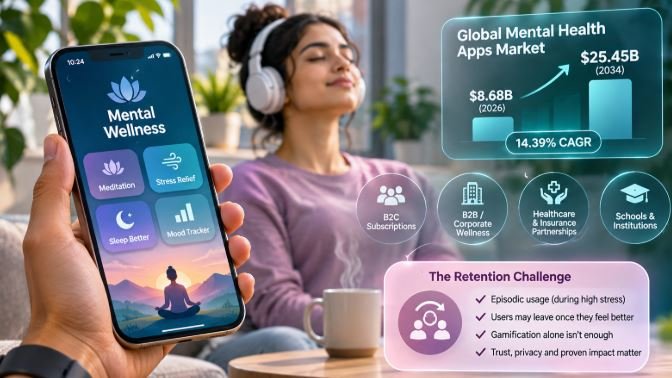
The growing pressure of modern life has created a new market for digital mental wellness. From meditation and sleep apps to online counselling and AI-powered chat services, people are increasingly turning to their phones for support with stress, anxiety and emotional well-being.
For businesses, this demand represents a significant opportunity. The global mental health apps market is projected to grow from $8.68 billion in 2026 to $25.45 billion by 2034, reflecting an estimated compound annual growth rate of 14.39%. Rising stress levels, limited access to mental health professionals and the wider acceptance of digital healthcare are helping drive this expansion.
However, attracting users is only one part of the challenge. The bigger question for companies is how to keep people engaged over time, particularly when the purpose of the app is to help them feel better.
A Growing Market With a Retention Problem
Mental wellness apps often attract users during difficult periods in their lives. Someone dealing with work pressure, poor sleep, anxiety or burnout may download an app looking for quick and convenient support.
But downloading an app does not necessarily mean using it regularly. Many people explore a few exercises, try a meditation session or follow a short programme before gradually losing interest.
This creates a difficult business situation. Companies spend money on marketing, product development and customer acquisition, but may struggle to turn initial interest into long-term subscriptions.
The challenge is partly linked to the nature of mental wellness itself. Unlike entertainment or social media platforms, these apps are not always designed to hold people’s attention indefinitely. A user may need regular support for a few weeks or months, then return only when another stressful period arises.
For businesses built around monthly subscriptions and daily activity, this pattern can make revenue less predictable.
When Better Results Mean Fewer App Visits
One of the most unusual challenges in this sector is that a successful product may actually reduce its own usage.
If a user learns to manage stress, improves sleep or develops healthier habits, they may no longer feel the need to open the app every day. From a mental health perspective, this can be a positive outcome. From a business perspective, however, it may lead to cancellations and lower engagement figures.
This is the effectiveness paradox facing many wellness platforms: the goal is to improve users’ lives, but the commercial model often depends on keeping them subscribed.
Companies therefore need to rethink how they measure success. Daily active users and subscription renewals may show commercial performance, but they do not necessarily reveal whether a product is improving someone’s well-being.
Long-term trust, user progress and meaningful outcomes may be more valuable measures of a platform’s real impact.
Why Users Lose Interest
The first experience with a mental wellness app can be appealing. A simple interface, guided exercises and personalised recommendations may encourage users to explore its features.
Over time, however, the novelty can wear off. Repeating the same activities, receiving too many notifications or struggling to fit sessions into a busy routine can make the app feel like another daily responsibility.
Gamification features such as streaks, points and badges may encourage people to return, but they are not always enough to build lasting habits. Users are more likely to stay when the service feels relevant to their changing needs.
Trust is another important factor. People sharing information about their emotional well-being expect their personal data to be handled responsibly. Unclear privacy policies, exaggerated health claims or limited evidence of effectiveness can weaken confidence in a platform.
For companies, retaining users is therefore not simply a matter of sending more reminders. It requires building a service that people find useful, safe and easy to access.
Moving Beyond the Subscription Model
As competition increases, mental wellness businesses are exploring different ways to generate revenue.
Direct-to-consumer subscriptions remain an important model, offering premium meditation programmes, personalised plans and additional features. However, companies are also looking beyond individual users.
Business-to-business partnerships are becoming an important part of the market. Employers, schools, insurers and healthcare organisations can provide access to wellness services for larger groups of people.
For employers, these platforms may form part of wider workplace well-being programmes. For insurers and healthcare providers, digital tools can offer another way to connect people with support.
This approach can provide companies with more predictable revenue than relying entirely on individual subscriptions. It can also introduce services to users who may not otherwise pay for a standalone app.
However, institutional buyers increasingly want evidence that a product delivers value. They may look beyond download numbers and ask whether the service improves access to support, helps users manage stress or encourages people to seek professional care when needed.
The Opportunity in India’s Digital Wellness Market
India offers considerable potential for mental wellness platforms. A large smartphone user base, growing awareness of mental health and demand for more accessible services are creating opportunities for digital providers.
But the market is not without challenges. Affordability, language diversity and differences in digital access influence whether people can use these services consistently.
A platform designed mainly for English-speaking urban users may not meet the needs of people in smaller cities or regional communities. Local-language content, simple interfaces and pricing suited to different income groups could help companies reach a wider audience.
There is also an opportunity to connect self-guided digital tools with professional support. Meditation and mood-tracking features may help with everyday well-being, while access to trained counsellors or therapists can provide additional assistance when users need it.
For businesses, understanding local needs will be just as important as developing new technology.
Human Support Can Make the Difference
Technology can make mental wellness support more accessible, but an app cannot meet every user’s needs.
Some people benefit from guided exercises and self-help programmes. Others may need a conversation with a trained professional, particularly when they are dealing with persistent or serious difficulties.
This is why companies are increasingly exploring models that combine digital tools with human support. Coaching, therapist access and guidance from trained professionals can help users understand which services are appropriate for them.
Such models may also improve the overall customer experience. Rather than leaving users to navigate every feature independently, platforms can help them find the right kind of support at the right time.
Artificial intelligence is adding another dimension to this market. AI-powered tools can offer conversational support, personalised recommendations and easier navigation. But businesses must address important questions around accuracy, privacy, safety and appropriate escalation to human professionals.
AI may make services more accessible, but it should not be presented as a replacement for qualified mental health care.
Building a Business Around Real Value
The next stage of growth in the mental wellness app market may depend less on attracting millions of downloads and more on delivering services that people genuinely trust.
Companies will need to understand that users do not always require the same level of support throughout their lives. Some may use an app regularly during a stressful period, step away when things improve and return when they need help again.
Designing for this pattern could be more effective than trying to force daily engagement through constant notifications and artificial streaks.
Flexible subscriptions, easy re-entry, personalised programmes and access to professional support could help businesses build stronger relationships with users. At the same time, clear privacy standards and credible evidence of effectiveness will be essential for earning confidence from consumers and institutional buyers.
The Future of Mental Wellness Apps
The commercial opportunity for mental wellness apps is growing, but long-term success will depend on more than market demand. Companies must balance revenue generation with the responsibility of providing meaningful support.
A business model based entirely on keeping users active every day may not always fit a service designed to improve well-being. A better approach could focus on helping people when they need support, giving them the freedom to step away when they improve and making it easy to return later.
Ultimately, the strongest businesses in this sector may not be those that persuade users to spend the most time on an app. They may be the ones that build trust, demonstrate real value and understand when people need digital support — and when they need something more.
