
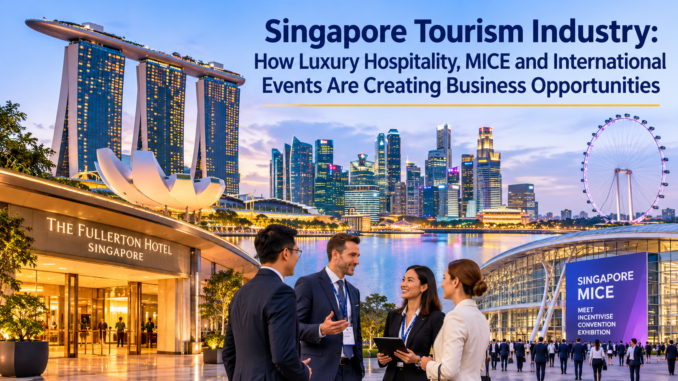
Nov 02: Singapore’s tourism industry is entering a new phase of growth, with luxury hospitality, international events and business tourism becoming increasingly important to its economic development. While the country has long attracted visitors through its shopping destinations, cultural attractions and modern cityscape, its tourism strategy is now placing greater emphasis on high-value travel experiences and international business events.
The shift is creating opportunities across hotels, restaurants, event management, travel services, retail and technology. Rather than focusing only on visitor arrivals, Singapore is looking to increase tourism spending, attract premium travellers and strengthen its position as a global destination for business events.
The latest figures underline this momentum. Singapore welcomed approximately 16.9 million international visitors in 2025, generating a record S$32.8 billion in tourism receipts. This represented a 10% increase in tourism receipts compared with 2024, highlighting the growing economic contribution of the sector.
For businesses, this growth presents opportunities that extend well beyond conventional travel and accommodation services.
Luxury Hospitality Strengthens Singapore’s Tourism Market
Luxury hospitality is becoming a significant part of Singapore’s tourism proposition. The country has developed a strong portfolio of premium hotels, integrated resorts, serviced residences and lifestyle destinations catering to affluent travellers, international executives and visitors seeking personalised experiences.
For this segment, a hotel stay is often only one part of the overall travel experience. Fine dining, wellness facilities, shopping, entertainment and exclusive activities influence where visitors choose to stay and how much they spend.
This creates opportunities for hospitality operators and businesses offering premium travel services. Private tours, personalised itineraries, luxury transportation, wellness experiences and concierge services can all benefit from demand for more specialised travel experiences.
Technology is also changing the way luxury hotels operate. Digital concierge services, personalised recommendations, contactless check-ins and data-driven guest management are helping hospitality companies improve customer service and operational efficiency.
For technology providers, this opens up opportunities to develop solutions for hotels seeking to improve guest engagement, streamline bookings and manage operating costs.
MICE Tourism Emerges as a Major Growth Driver
Meetings, Incentives, Conferences and Exhibitions (MICE) are among the most important segments of Singapore’s business tourism market.
The country’s international connectivity, modern convention facilities and established business infrastructure make it an attractive destination for global conferences, trade exhibitions and corporate gatherings.
The economic contribution of MICE tourism goes beyond venue bookings. Business delegates spend on hotels, restaurants, transportation, shopping and entertainment. Some also extend their visits for leisure, bringing additional revenue to the wider tourism ecosystem.
Singapore’s MICE sector recorded particularly strong growth in 2025. According to the Singapore Tourism Board, MICE tourism receipts increased by approximately 35% to S$2.3 billion, compared with S$1.7 billion in 2024.
The country also hosted 156 international association meetings in 2025, retaining its leading position as an Asia-Pacific meeting city in the International Congress and Convention Association rankings for the 23rd consecutive year.
This performance is significant for businesses involved in corporate travel, event production, exhibition management, catering, audio-visual services and delegate management.
The opportunities are not limited to large event organisers. Smaller companies specialising in registration platforms, exhibition stand design, digital event solutions, interpretation and event logistics can also find a place in Singapore’s MICE ecosystem.
International Events Bring New Business to Singapore
Singapore’s international events calendar is another important contributor to tourism demand. Corporate conferences, trade exhibitions, sporting competitions, concerts and cultural programmes attract different categories of visitors throughout the year.
These events generate business for more than the organisers themselves. Hotels experience additional bookings, restaurants receive more customers, and shopping and entertainment destinations benefit from increased footfall.
The Formula 1 Singapore Grand Prix, for example, continues to attract international visitors, while exhibitions and industry conferences bring together companies, investors and professionals from different markets.
Trade exhibitions also allow suppliers, manufacturers and technology companies to meet potential customers and distributors, while corporate conferences create opportunities for professional networking and investment discussions.
This combination of tourism and business activity makes international events an important part of Singapore’s wider economic strategy.
For event organisers and service providers, the market offers opportunities to develop specialised services catering to international businesses and visitors.
Tourism Investment Opportunities Across Multiple Sectors
The growth of the Singapore tourism industry is creating opportunities across several interconnected markets.
Hotel and boutique hospitality: Travellers seeking distinctive accommodation and personalised services are creating opportunities for boutique hotels, premium serviced residences and specialised hospitality operators.
Luxury travel and experiences: Private sightseeing, curated food experiences, wellness retreats and premium travel planning can help businesses serve visitors looking for more individualised experiences.
Event management and MICE services: International conferences and exhibitions create demand for event production, exhibition design, venue management, catering and corporate hospitality.
Travel technology: Digital booking systems, customer relationship management, payment solutions and data analytics are becoming increasingly important for hotels and travel operators.
Sustainable tourism: Energy-efficient accommodation, responsible travel experiences, waste management and environmentally conscious event operations offer opportunities for companies developing sustainable tourism solutions.
For investors and entrepreneurs, the potential lies in identifying specialised services that complement Singapore’s established tourism infrastructure.
Tourism 2040: Singapore’s Long-Term Growth Ambition
Singapore’s tourism development is supported by its Tourism 2040 strategy, which aims to strengthen the country’s position as a leading global destination while increasing the economic value generated by tourism.
The Singapore Tourism Board has set a target of S$47 billion to S$50 billion in tourism receipts by 2040. The emphasis is on attracting high-value visitors, developing distinctive experiences and building a more competitive and productive tourism sector.
MICE tourism is expected to play an important role in achieving this ambition. Singapore aims to increase MICE tourism receipts to S$4.5 billion by 2040, more than doubling its 2025 performance.
One development to watch is the proposed Downtown MICE Hub near Marina Bay. The project is intended to strengthen Singapore’s capacity to host major international business events by bringing together convention facilities and supporting tourism infrastructure.
The government is working towards a development process that includes a request for proposals in 2027.
The Singapore Tourism Board has also announced an additional S$740 million for the Tourism Development Fund over five years to support tourism businesses, develop new experiences and strengthen the sector’s competitiveness.
These initiatives indicate that tourism infrastructure, business events and visitor experiences will remain important areas for investment.
Challenges Facing Singapore’s Tourism Industry
Despite its strong performance, Singapore’s tourism sector faces growing competition from other Asian destinations, including Japan, Thailand and South Korea.
Travellers have more choices, making pricing, service quality and distinctive experiences important factors in destination selection.
Operating costs are another concern. Hotels and event companies must manage labour, rental, energy and maintenance expenses while maintaining competitive service standards.
Changing visitor preferences also require businesses to adapt. Younger travellers are increasingly interested in authentic local experiences and digital convenience, while luxury visitors expect personalised services and consistently high standards.
Global economic uncertainty and fluctuations in travel costs can also influence visitor spending and international travel demand.
Businesses that can balance customer experience, operational efficiency and competitive pricing will be better positioned to benefit from the industry’s expansion.
The Road Ahead for Singapore’s Tourism Industry
Singapore’s tourism industry is developing into a broader economic ecosystem where luxury hospitality, business travel, international events, retail and technology support one another.
The record tourism receipts of 2025 demonstrate the sector’s economic importance, while the growth of MICE tourism highlights the country’s ability to attract high-value international visitors.
For 2026, the Singapore Tourism Board projects international visitor arrivals of 17 million to 18 million and tourism receipts of S$31 billion to S$32.5 billion. These projections reflect the country’s continued growth ambitions while accounting for global economic uncertainty.
As Singapore works towards its Tourism 2040 targets, investments in hospitality, event infrastructure and tourism technology are likely to create opportunities for established companies, emerging businesses and international investors.
For businesses looking to expand in Southeast Asia, Singapore offers an established platform to explore opportunities across luxury hospitality, corporate travel, event management and premium visitor services. The next phase of its tourism growth will be shaped not simply by how many people visit the country, but by the experiences they seek and the economic activity they generate.
