
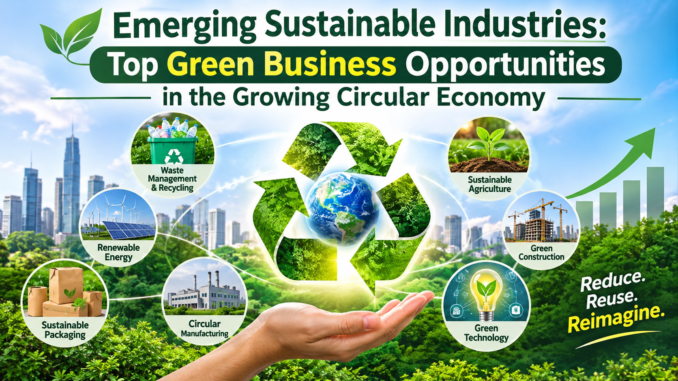
Nov 24: The global shift towards sustainability is opening new business opportunities across industries, from waste management and recycling to renewable energy, sustainable packaging and circular manufacturing. As companies look for ways to reduce costs, manage resources efficiently and meet changing environmental expectations, green businesses are becoming an increasingly important part of economic growth.
One of the most promising developments is the growing focus on turning waste into wealth. Materials previously treated as waste are now being recognised as potential sources of revenue. Plastic, agricultural residues, electronic waste and industrial by-products can be recovered, processed and converted into products that serve new markets.
This approach is encouraging businesses to move beyond traditional waste disposal and explore resource recovery models that create commercial value. For startups, manufacturers and entrepreneurs, the emerging circular economy offers opportunities to build businesses around recycling, reuse, renewable resources and more efficient production systems.
Why Sustainable Industries Are Gaining Business Attention
The increasing volume of waste and pressure on natural resources are making sustainability a business priority. Companies are beginning to recognise that responsible resource management can support operational efficiency, reduce material costs and create new revenue streams.
The World Bank’s What a Waste 3.0 report estimates that global waste generation reached approximately 2.56 billion tonnes in 2022. This figure could rise to 3.86 billion tonnes by 2050 if current trends continue.
This growing challenge presents a significant opportunity for businesses developing waste collection, recycling, processing and resource recovery solutions.
The transition towards a circular economy is also changing traditional business models. Instead of following a linear process of extracting, producing and discarding materials, companies are increasingly exploring ways to reuse resources and extend product lifecycles.
1. Waste Management and Recycling: Turning Discarded Materials into Revenue
Waste management is emerging as one of the most accessible entry points into the green economy. Businesses can generate revenue by collecting, sorting, processing and supplying reusable materials to manufacturers.
Plastic waste, paper, glass and metals can be converted into recycled raw materials for packaging, construction and industrial applications.
Electronic waste recycling offers another promising business segment. Discarded computers, smartphones, batteries and electronic equipment contain valuable materials that can be recovered through specialised processing.
In India, the growing focus on formal recycling and Extended Producer Responsibility (EPR) is encouraging the development of organised waste-processing businesses. Companies can participate through collection networks, recycling facilities, material recovery systems and technology-enabled waste management services.
For entrepreneurs, the opportunity extends beyond establishing recycling plants. Businesses can also develop waste collection platforms, segregation services and partnerships connecting waste generators with recycling companies.
2. Renewable Energy: Converting Agricultural and Organic Waste into Power
Renewable energy businesses are finding new opportunities in agricultural residues, food waste and other organic materials.
Biogas and biomass technologies allow companies to convert organic waste into usable energy. Agricultural residues, animal waste and food-processing by-products can be used to produce biogas, compressed biogas and organic fertilisers.
India’s agricultural sector provides a substantial resource base for these businesses. Government initiatives supporting biomass utilisation and biogas production are encouraging investment in waste-to-energy infrastructure.
For entrepreneurs, potential opportunities include:
-
Setting up biogas and biomass processing facilities.
-
Collecting and supplying agricultural residues.
-
Manufacturing equipment for organic waste processing.
-
Producing organic fertilisers and soil enhancers.
-
Developing technologies for converting waste into energy.
However, commercial success depends on reliable raw material supplies, transportation costs, suitable technology and consistent demand for the energy produced.
3. Sustainable Packaging: Building Businesses Around Alternative Materials
The demand for sustainable packaging is encouraging manufacturers to explore alternatives to conventional plastic.
Recycled paper, agricultural residues, reusable materials and other packaging alternatives are gaining attention among food manufacturers, e-commerce companies, retailers and consumer goods businesses.
This creates opportunities for businesses involved in packaging design, material innovation and manufacturing.
There is also potential in reusable packaging systems, where companies establish collection and return networks to keep packaging materials in circulation for longer.
The strongest business opportunities will come from solutions that balance affordability, durability, convenience and environmental performance.
4. Circular Manufacturing: Making Industrial Waste a Valuable Resource
Traditional manufacturing often follows a linear model in which raw materials are extracted, converted into products and eventually discarded.
Circular manufacturing takes a different approach by keeping materials in productive use for longer. Companies can recover industrial by-products, reuse components, recycle materials and redesign products to reduce waste.
For example, textile manufacturers can convert fabric scraps into reusable fibres, while construction companies can process demolition waste into recycled building materials.
Another emerging concept is industrial symbiosis, where the waste or by-products generated by one company become useful inputs for another business.
This approach can reduce disposal expenses, improve material efficiency and lower dependence on newly extracted resources.
The United Nations Environment Programme’s Global Resources Outlook 2024 highlights the growing pressure on natural resources, projecting that global resource extraction could increase by 60% from 2020 levels by 2060 without significant changes in resource management.
For manufacturers, circular production is therefore becoming both an environmental consideration and a long-term business strategy.
5. Sustainable Agriculture: Turning Agricultural Waste into Commercial Products
Agricultural waste offers considerable potential for businesses interested in resource recovery and sustainable production.
Crop residues, fruit peels, vegetable waste and other agricultural by-products can be converted into compost, organic fertilisers, biomass pellets and biochar.
These products can serve agricultural and industrial markets while creating additional income opportunities for farmers.
Businesses can also develop machinery and technology for collecting, processing and converting agricultural waste into commercially useful products.
For startups, partnerships with farmers, food-processing companies and agricultural organisations can help establish reliable supply chains.
The opportunity is particularly relevant in regions where agricultural residues are available in large quantities but remain underutilised.
6. Green Construction: Creating Demand for Sustainable Building Materials
The construction industry is also exploring ways to reduce material consumption, improve energy efficiency and minimise waste.
Green construction focuses on using sustainable building materials, energy-efficient designs, water conservation systems and responsible construction practices.
Recycled aggregates, recovered construction materials, low-carbon cement alternatives, solar installations and rainwater harvesting systems are creating new business possibilities.
Construction and demolition waste is particularly important. Materials such as concrete, bricks, metals and wood can be recovered and processed for reuse instead of being sent directly to landfills.
For entrepreneurs, this creates opportunities in recycled building material manufacturing, construction waste processing, green building consultancy and energy-efficiency solutions.
As infrastructure development continues, companies offering affordable and practical sustainable construction products could benefit from growing demand.
7. Green Technology Startups: Using Innovation to Improve Resource Management
Technology is becoming an important part of the sustainable business ecosystem. Startups are developing solutions that help companies monitor resource consumption, manage waste and improve recycling operations.
Artificial intelligence can help identify recyclable materials, forecast waste generation and optimise collection routes. Internet of Things technology can monitor energy consumption, water usage and industrial waste.
Digital platforms can also connect businesses generating waste with recyclers and manufacturers looking for reusable materials.
For example, a technology startup could develop a platform connecting restaurants and food-processing companies with compost manufacturers or biogas producers. Similarly, a digital marketplace could help manufacturers source recycled plastic and metal from verified suppliers.
These business models demonstrate how technology can make resource management more organised while creating new commercial opportunities.
Emerging Green Business Opportunities for Entrepreneurs
The growing circular economy is opening opportunities for businesses of different sizes. Entrepreneurs do not necessarily need to establish large manufacturing facilities to enter this market. Specialised services, technology platforms and partnerships can also provide viable entry points.
| Industry | Potential business model |
|---|---|
| Plastic recycling | Recycled plastic manufacturing |
| Electronic waste | E-waste collection and material recovery |
| Agricultural waste | Biomass pellets and organic fertilisers |
| Food waste | Composting and biogas production |
| Sustainable packaging | Reusable and recycled packaging |
| Construction | Recycled building materials |
| Industrial waste | By-product recovery and resale |
| Green technology | Digital waste management platforms |
Three practical waste-to-wealth business models deserve particular attention:
1. Agricultural residue processing: Entrepreneurs can collect crop residues from farmers and convert them into biomass pellets, biochar or organic fertilisers. Revenue can come from selling these products to industrial and agricultural customers.
2. Electronic waste recovery: Businesses can establish collection and sorting networks that supply discarded electronic equipment to authorised recycling facilities. Specialised operators can recover valuable materials through compliant processing.
3. Food waste management: Companies can partner with restaurants, hotels, supermarkets and food-processing facilities to collect organic waste and convert it into compost or biogas.
These examples show that sustainable businesses can generate income at different stages of the resource recovery chain.
Challenges Facing Green Businesses
Despite the growing opportunities, sustainable industries require careful planning and long-term investment.
Initial investment: Recycling plants, waste-processing facilities and renewable energy infrastructure can require substantial capital and specialised equipment.
Raw material availability: Businesses need a consistent supply of waste materials. Poor segregation and fragmented collection systems can affect the quality and availability of recyclable resources.
Technology limitations: Some recycling and resource recovery processes require advanced technology and technical expertise to become commercially viable.
Market demand: Recycled materials and sustainable alternatives must meet quality standards and remain competitive with conventional products.
Regulatory compliance: Companies operating in waste management, recycling and renewable energy must understand applicable environmental regulations, permissions and compliance requirements.
Addressing these challenges will require better infrastructure, access to finance, reliable supply chains and collaboration between businesses and government agencies.
How Businesses Can Prepare for the Growing Circular Economy
Companies interested in entering sustainable industries should focus on opportunities that combine environmental benefits with commercial viability.
A practical starting point is to examine existing operations and identify materials that can be recovered, reused or converted into new products.
Businesses can also consider the following approaches:
-
Identify resource recovery opportunities: Assess how industrial by-products, agricultural residues and discarded materials can become useful inputs.
-
Invest in appropriate technology: Explore automation, AI-based monitoring and efficient processing systems to improve productivity.
-
Build strategic partnerships: Work with manufacturers, farmers, recycling companies and municipalities to establish reliable supply chains.
-
Focus on commercial viability: Evaluate production costs, customer demand, pricing and potential revenue before investing in infrastructure.
-
Measure environmental performance: Monitor waste reduction, material recovery, energy efficiency and resource consumption.
Companies that approach sustainability as part of their business strategy, rather than simply as a compliance requirement, can identify opportunities for long-term growth.
The Future of Sustainable Industries and Green Businesses
The growth of sustainable industries represents a fundamental shift in how businesses view waste, resources and economic opportunities.
The World Bank’s latest What a Waste 3.0 assessment highlights the scale of the global waste challenge, while India’s recycling and agricultural waste recovery initiatives demonstrate the potential for resource management to support new economic activity.
Government data released in March 2026 recorded 4,574 registered recyclers across five waste categories in India, with approximately 417.57 lakh metric tonnes of waste recycled under the relevant Extended Producer Responsibility frameworks as of March 5, 2026.
India’s agricultural sector also offers considerable potential. A February 17, 2026, government backgrounder highlighted the potential to generate more than 18,000 MW of power annually from agricultural residues. It also reported 979 operational biogas plants under the GOBARdhan initiative as of January 14, 2026.
These developments indicate that waste recovery is becoming an important area for entrepreneurship, infrastructure development and industrial investment.
For startups and established companies, the next phase of growth could come from identifying underutilised resources and finding commercially practical ways to recover their value.
Conclusion
Emerging sustainable industries are demonstrating that environmental responsibility and business growth can go hand in hand. From recycling and renewable energy to circular manufacturing and green technology, the opportunities extend across multiple sectors of the economy.
Turning waste into wealth is no longer just an environmental concept. It is becoming a business strategy that can create revenue streams, support employment and encourage innovation.
Companies that invest in efficient resource management, sustainable production and practical recovery solutions can position themselves to participate in the growing circular economy while contributing to a more resource-efficient future.
