
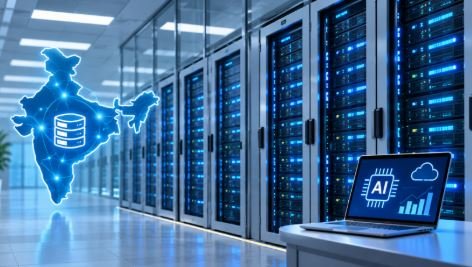
India is experiencing a major shift in its digital economy. Businesses are moving more operations online, consumers are using digital services every day, and artificial intelligence is becoming an important part of industries ranging from banking to healthcare. Behind this growing digital activity is an essential part of modern infrastructure: data centres.
Data centres are specialised facilities that store, manage and process digital information. They provide the computing power needed to run websites, mobile applications, online payments, cloud services, artificial intelligence and business software. As India’s digital economy expands, the need for reliable and secure data storage and processing facilities is increasing.
This is creating a significant investment opportunity. India’s data centre capacity is estimated at around 1.5–1.8 gigawatts in 2025–2026, with industry projections suggesting that it could increase to approximately 5.6–8 gigawatts by 2030. Although estimates vary, the expected expansion highlights the growing demand for digital infrastructure.
For businesses and investors, this growth offers opportunities across construction, commercial property, power supply, cooling technology, networking equipment, cybersecurity and data management.
Why Data Centres Are Becoming Important to India’s Economy
Almost every modern business depends on digital systems in some way. Banks process online transactions, hospitals manage electronic patient records, retailers operate online stores and manufacturers use digital platforms to monitor production.
All these activities require infrastructure capable of storing and processing large amounts of information. Data centres provide that foundation.
Without them, many of the digital services people use every day would not operate reliably or at the scale required by a large economy.
Their importance is increasing as India becomes more connected. Online shopping, digital banking, mobile payments, video streaming and government services are generating growing volumes of data. Businesses also need faster access to information to make decisions, manage customers and improve productivity.
For the economy, a strong data centre network supports digital business activity, encourages technology investment and helps companies introduce new services. It is becoming as important to the digital economy as reliable transport, electricity and communication infrastructure are to traditional industries.
Artificial Intelligence Is Increasing Demand for Data Centre Capacity
Artificial intelligence is one of the biggest reasons behind the expansion of data centres. AI applications require considerable computing power to process information, train models and deliver results quickly.
Traditional data centres were largely designed to support websites, business applications and general cloud services. However, advanced AI systems require more powerful processors, specialised graphics processing units (GPUs), faster networks and greater electricity capacity.
This is changing how new facilities are designed. Operators are increasingly investing in high-density server racks, advanced cooling systems and infrastructure that can handle demanding AI workloads.
The commercial opportunity is significant. As companies introduce AI into customer service, financial analysis, healthcare, manufacturing and other business functions, demand for specialised computing facilities is likely to increase.
Technology providers that can supply AI-ready infrastructure, cloud services and data management solutions may benefit from this change. Investors are also paying greater attention to facilities capable of supporting high-performance computing.
Cloud Computing Is Supporting Further Expansion
Cloud computing allows businesses to use storage, software and computing resources over the internet instead of maintaining all their own physical IT equipment.
This has made technology more accessible to companies of different sizes. Small businesses can use cloud-based accounting and customer management systems, while large organisations can operate complex applications across multiple locations.
However, these services still depend on physical data centres. Every cloud application needs facilities where information can be stored, processed and delivered to users.
As more Indian businesses move their operations to cloud platforms, demand for data centre capacity is increasing. Companies are also looking for secure, reliable services that can support business operations without major investment in their own infrastructure.
For data centre operators, this creates opportunities to earn revenue through long-term agreements with cloud providers, large enterprises and other customers.
Data Security and Localisation Are Encouraging Investment
Data security has become an important concern for businesses, financial institutions and government organisations. Companies handle sensitive customer information, financial records and commercial data that must be protected against cyberattacks and unauthorised access.
India’s Digital Personal Data Protection Act, 2023, and sector-specific regulatory requirements are increasing attention on responsible data management, privacy and security. Certain regulated sectors also have specific requirements concerning the storage and processing of data.
Having suitable infrastructure within India can help businesses manage their data requirements, improve control over important systems and support compliance with applicable regulations.
This is encouraging investment in domestic data centre facilities. For investors, the demand for secure infrastructure creates opportunities in data storage, cybersecurity, network protection and specialist technology services.
Investment Opportunities Extend Beyond Data Centre Buildings
The growth of data centres is creating opportunities across a wide range of industries. Developing a facility requires much more than land and server equipment. Operators need electricity connections, backup power, cooling systems, networking infrastructure, security and ongoing technical maintenance.
This creates demand for construction companies, engineering firms, electrical equipment suppliers and specialist contractors.
Cooling technology is particularly important because servers generate significant heat while operating. Efficient cooling systems help maintain equipment performance and reduce the risk of operational problems.
Power infrastructure is another major investment area. Data centres require a dependable electricity supply, supported by backup systems to maintain operations during disruptions. This creates opportunities for power equipment suppliers, energy companies and renewable energy providers.
Telecommunications and fibre-optic networks are equally important because data centres must connect with businesses, cloud platforms and users. Companies supplying network equipment and connectivity services can therefore benefit from the industry’s expansion.
For smaller businesses, the opportunity lies in providing specialist services such as equipment maintenance, cybersecurity, facility management and technical support.
Healthcare, Banking and Other Industries Depend on Data Centres
The importance of data centres extends across almost every major industry.
In healthcare, hospitals and medical service providers use digital systems to manage patient records, diagnostic information, appointments and medical images. Secure data infrastructure can help healthcare organisations access information more efficiently and support the use of digital health services and AI-assisted technologies.
In banking and financial services, data centres support online payments, digital banking, transaction processing and fraud monitoring. Reliable infrastructure is essential because even short interruptions can affect customers and business operations.
Retail businesses depend on data centres to manage online shopping platforms, payment systems, customer information and inventory. Manufacturers use digital infrastructure to monitor equipment, manage supply chains and analyse production data.
These examples show why data centre investment is not limited to the technology industry. It supports the functioning and growth of many other sectors of the economy.
Mumbai, Chennai and Other Cities Are Emerging as Investment Hubs
India’s data centre industry is expanding across several major business and technology locations.
Mumbai remains an important market because of its established financial services industry, telecommunications connectivity and access to international network routes. Chennai, Hyderabad and Bengaluru are also attracting attention due to their technology businesses, enterprise demand and developing infrastructure.
New investment announcements in locations such as Visakhapatnam and Jamnagar indicate that interest is extending beyond established data centre markets.
For regional economies, these projects can generate construction activity, employment and demand for supporting services. They can also encourage improvements in electricity infrastructure, telecommunications and industrial development.
However, the success of a new data centre location depends on more than the availability of land. Reliable power, water, fibre connectivity, suitable climate conditions and access to customers are all important factors in investment decisions.
Odisha Is Emerging as a New Data Centre and AI Investment Destination
Odisha is attracting growing attention as companies and government institutions look to expand digital infrastructure beyond India’s traditional technology and data centre hubs. Bhubaneswar and the surrounding Khordha district are becoming important locations for new investment, supported by the state’s push into artificial intelligence, digital services and technology infrastructure.
One significant recent development is the Reserve Bank of India’s data centre and Cybersecurity Training Institute at Info Valley-II in Jatni, near Bhubaneswar. The facility, built at a reported cost of approximately ₹169 crore, was inaugurated in October 2026. It strengthens the region’s role in secure financial data infrastructure and cybersecurity development.
Another major development is the proposed AI data centre in Bhubaneswar, planned with an investment of approximately ₹14,257 crore. The project is intended to support high-performance computing, AI development and services for government and private-sector organisations. It is part of the wider Odisha Sovereign AI Park initiative.
The state is also looking beyond a single facility. In September 2026, Odisha approved several major data centre and AI infrastructure proposals as part of a wider investment clearance involving 27 projects. The proposals included:
- An integrated data centre park in Khordha, with a proposed investment of approximately ₹1,04,550 crore
- An AI data centre and global capability centre in Puri, with a proposed investment of approximately ₹22,634 crore
- An AI-optimised data centre in Khordha, involving an investment of approximately ₹14,257 crore
- A data centre project in Cuttack, with a proposed investment of approximately ₹1,500 crore
These are approved investment proposals, not confirmation that all the facilities are already operational. Their actual economic contribution will depend on construction, financing, infrastructure development and commissioning.
The Odisha government has also approved a separate ₹266.48 crore State Data Centre 2.0 project. The proposed Tier-III facility is intended to improve the state’s digital governance infrastructure, strengthen cybersecurity and provide better disaster recovery support for government services.
For Odisha, these developments could create opportunities beyond the data centre operators themselves. Construction companies, electrical equipment suppliers, cooling technology providers, telecommunications businesses and specialist IT service companies may benefit from the development of this infrastructure.
The expansion could also support skilled employment and encourage more technology businesses to establish operations in the state. However, reliable electricity, water availability, connectivity and trained technical workers will be important to turning these investment announcements into successful operating facilities.
Rising Costs and Infrastructure Challenges Need Attention
Despite strong growth prospects, data centre development requires substantial capital. Facilities need expensive servers, electrical systems, cooling equipment and advanced security infrastructure.
Power consumption is one of the biggest operational challenges. AI-focused facilities can require considerably more electricity than traditional data centres because of their high-performance computing equipment.
Cooling also creates additional costs, particularly in locations with high temperatures. Efficient water management and energy-saving technology are therefore becoming important considerations.
Another challenge is the availability of suitable infrastructure. Delays in obtaining electricity connections, developing land and securing network access can increase project costs and affect construction timelines.
The industry also needs specialised employees who can manage servers, networks, cybersecurity and facility operations. Developing this workforce will be important as more projects become operational.
For investors, these challenges mean that choosing the right location, managing operating expenses and securing dependable customers are essential to long-term success.
Why Data Centres Could Become a Long-Term Investment Opportunity
Data centres are becoming an important part of India’s economic and business infrastructure. Their expansion is supported by several long-term trends, including AI adoption, cloud computing, digital payments, online services and growing enterprise demand for secure data storage.
Unlike many short-term technology trends, these services depend on physical infrastructure that must be maintained and upgraded continuously. This creates opportunities for recurring business relationships, long-term customer contracts and investment in supporting industries.
However, returns are not guaranteed. Data centre projects require significant upfront investment, and profitability depends on factors such as occupancy, electricity costs, financing, operating efficiency and customer demand.
For investors, the strongest opportunities may come from businesses that can provide reliable infrastructure while controlling energy use and operating costs.
India’s Digital Future Will Depend on Strong Data Infrastructure
India’s growing data centre industry reflects a wider transformation in the country’s economy. As businesses adopt AI, expand cloud services and move more operations online, demand for secure and reliable computing infrastructure will continue to increase.
The impact reaches far beyond technology companies. Data centres support healthcare, banking, retail, manufacturing, education and government services. They also create opportunities for construction, engineering, energy, telecommunications and specialist service providers.
The expected expansion of capacity towards 2030 presents an important opportunity for India’s infrastructure and technology sectors. Odisha’s recent projects show how this investment is also reaching emerging technology locations and creating new possibilities for regional economic development.
However, long-term growth will depend on reliable electricity, efficient cooling, skilled employees and responsible investment.
As digital services become more closely connected to everyday business and personal life, data centres will play an increasingly important role in supporting India’s economic development.
