
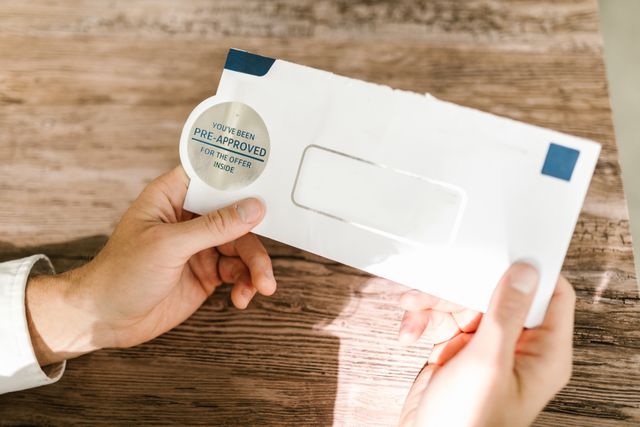
Direct mail is having a quiet renaissance. In an age of overflowing inboxes and ignored emails, a physical item that lands on a desk or a doormat cuts through in a way a digital message rarely does. But the effectiveness of a mailing depends heavily on what is inside the envelope, and this is where a lot of campaigns stumble: they either send a flat printed leaflet that gets binned like any other junk mail, or they try to include something substantial and watch the postage costs wreck the budget. The keyring solves that dilemma almost perfectly, and its suitability for direct mail is an advantage that does not get talked about nearly enough.
The whole problem with including an object in a mailing is physical. Postage is priced by size and weight, and most promotional items are too bulky or too heavy to post affordably at any scale, which is why so many mailings end up sending nothing but paper. A keyring sidesteps this neatly. It is small, flat enough to sit comfortably in a standard envelope, and light enough that it barely moves the postage into a higher bracket. That means you can send a real, physical, useful object, not just another leaflet, without the per-item mailing cost spiralling. For anyone planning a campaign, branded keyrings for direct mail promotions offer something genuinely rare: a tangible gift that still posts like a letter.
That physical presence changes how a mailing is received, and the difference is not small. An envelope with a keyring in it feels different in the hand from one containing only paper, and that slight weight and shape triggers curiosity, the envelope gets opened rather than binned unopened, because the recipient can feel there is something inside. Once it is open, the recipient is holding an actual object rather than skim-reading a page, and a useful object at that. The mailing has already achieved what most direct mail fails at, which is getting itself opened and getting something into the recipient’s hands, before a single word of the message has been read. That head start is worth a great deal in a channel where most pieces are discarded at a glance.
Then comes the keyring’s real advantage, which unfolds long after the mailing lands: it does not get thrown away. A leaflet is read once at best and recycled; a keyring is kept and used. So a direct-mail keyring keeps working for months or years after the envelope it arrived in has been forgotten, holding the recipient’s keys and showing your brand every day. Very little other direct-mail content does this. You are not buying a single moment of attention on the doormat; you are buying that moment plus a long tail of daily brand exposure afterwards, all for the cost of one small, light, postable object. That combination of immediate cut-through and lasting presence is unusually efficient for the money.
There is a practical targeting point that makes keyrings especially suited to the considered, lower-volume mailing rather than the mass drop. Because a keyring costs more than a bare leaflet, it rewards being sent to a well-chosen list rather than scattered indiscriminately, to prospects worth a small tangible investment, to existing customers you want to retain, to the decision-makers a campaign is really aimed at. Sent to the right, smaller list, the keyring’s cost is easily justified by the lift in open rates and the lasting exposure, and the mailing punches well above a cheap bulk drop. It is a precision tool for direct mail, not a blunt one, and used that way it is very cost-effective.
It pays to be honest about the limits, as always. A keyring will not rescue a badly targeted mailing or a weak offer; if the list is wrong or the message is poor, a nice keyring inside the envelope will not save it. The keyring is a delivery advantage and a retention advantage, not a substitute for the basics of a good campaign. Nor is it the right enclosure for every mailing, sometimes a different item fits the message better. What it offers is a specific, real edge in a specific situation: when you want a physical mailing that gets opened, gets kept and keeps advertising, all without the postage penalty that sinks most object-based direct mail.
So when a direct-mail campaign is being planned and the question of what to put in the envelope comes up, the keyring deserves a place near the top of the list. It is one of the few genuinely useful physical items that will post affordably at scale, it makes the envelope more likely to be opened, and it goes on working for years after it arrives. In a channel where the whole battle is getting noticed and then being remembered, an object that is small enough to post cheaply yet useful enough to be kept for years is a quietly powerful thing to send. The keyring’s modest size, so easy to overlook, turns out to be exactly what makes it one of the smartest things you can drop through a letterbox.
This is also why keeping the item matters more than any single clever design touch, and why usefulness quietly does the heavy lifting. A Gopromotional product only delivers any of this while it is kept and used; the moment it is thrown away, its advertising value drops to nothing. Cheap novelties get binned fast and deliver almost nothing regardless of how eye-catching they looked on the table. A keyring escapes that fate for a simple reason: it is genuinely useful every day, so people keep it and use it rather than discarding it. The humble usefulness that makes a keyring easy to overlook is precisely what keeps it in a pocket for years, quietly racking up the daily exposures that a more exciting but useless item never gets the chance to.