
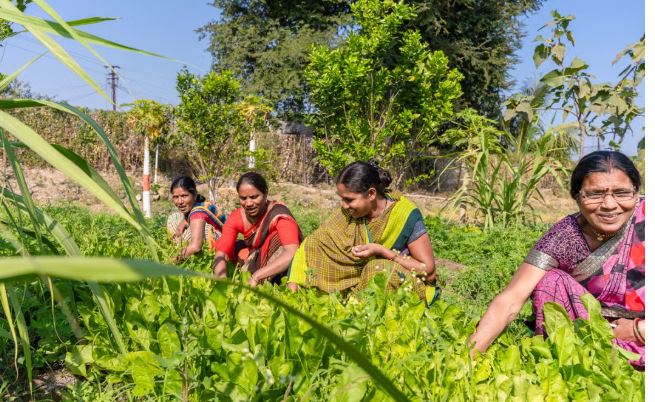
India’s agricultural economy depends on millions of small and marginal farmers, yet producing a good harvest does not always translate into a reliable income. Rising input costs, unpredictable market prices, limited storage facilities and dependence on intermediaries continue to affect the profitability of farming. For many rural households, the challenge is not simply growing more, but earning more from what they produce.
Farmer Producer Organisations (FPOs) are emerging as an important part of the solution. By bringing farmers together through organised, farmer-owned enterprises, these organisations help small producers pool resources, negotiate with buyers and explore opportunities beyond the sale of raw agricultural produce. Their collective strength can improve access to markets and services that individual farmers may struggle to secure independently.
The need for this approach is significant. Small and marginal farmers account for approximately 86% of India’s operational landholdings, according to official agricultural data. Their relatively small scale often limits bargaining power, making collective business models particularly relevant to improving farm profitability and strengthening rural livelihoods.
Collective Purchasing Can Ease the Pressure of Rising Costs
Agricultural profitability often depends on the gap between production expenses and the price received at harvest. Seeds, fertilisers, pesticides, machinery and transportation can consume a substantial share of a farmer’s earnings, particularly when input prices rise or crop yields fall.
FPOs can help reduce these pressures by purchasing agricultural inputs in bulk on behalf of their members. Consolidated orders may improve negotiating power, provide access to established suppliers and reduce certain procurement and transportation expenses.
Collective purchasing can also help farmers access quality inputs and technical services more efficiently. Where facilities and resources are shared, members may benefit from better access to equipment, storage and agricultural guidance without bearing the full cost individually.
These savings can improve farm-level profitability, although the actual benefit depends on the crops grown, the quality of procurement and the organisation’s ability to negotiate competitive terms. For farmers operating on narrow margins, even incremental cost reductions can help protect household income against fluctuations in agricultural markets.
Stronger Bargaining Power Can Improve Price Realisation
Selling produce remains one of the most difficult stages of the agricultural cycle. Small farmers may have limited access to wholesale buyers and organised retailers, while the lack of storage can force them to sell soon after harvesting, sometimes when local prices are unfavourable.
FPOs can address part of this imbalance by aggregating produce from multiple farmers and offering larger, more consistent quantities to buyers. This can make it easier to approach food processors, wholesalers, retailers and institutional purchasers that require regular supplies.
Collective marketing also gives farmers an opportunity to compare offers, coordinate transportation and negotiate commercial terms as a group. By reducing the need for separate transactions, FPOs may lower marketing costs and improve the share of the final selling price retained by producers.
However, better prices are not guaranteed simply because farmers belong to an organisation. The results depend on product quality, grading, buyer competition, market timing and the FPO’s negotiating capacity. Strong market relationships and transparent payment systems are therefore essential to making collective selling commercially effective.
Value Addition Can Help Farmers Capture More of the Market
A significant opportunity for FPOs lies in moving beyond the sale of unprocessed agricultural commodities. Sorting, grading, cleaning, packaging and processing can make produce more attractive to organised buyers and create opportunities to earn additional revenue.
For example, an FPO working with pulses may explore cleaning, grading and packaging its products for retail sale. A fruit-growing collective may investigate processing or improved storage to reduce losses and extend its selling window. Similar opportunities exist in spices, oilseeds, grains and other regionally important crops.
These activities can help rural enterprises participate in more stages of the agricultural supply chain, rather than depending entirely on prices offered at the farm gate. They can also create employment in packaging, processing, quality control and distribution.
The challenge is to identify products with sufficient demand and margins to justify the additional investment. Processing equipment, food safety standards, packaging and marketing all involve costs. FPOs need sound business planning and reliable buyers to ensure that value addition strengthens earnings rather than creating a new financial burden.
Access to Finance Can Support Rural Business Expansion
Limited working capital can prevent farmers from purchasing inputs on time, investing in better technology or storing produce until more favourable market conditions emerge. For FPOs, financing is equally important because collective procurement, storage and processing require money before sales revenue arrives.
Organised producer enterprises can help members engage with banks and other financial institutions, provided they maintain reliable records, demonstrate sound governance and meet lenders’ requirements. FPOs may also help farmers connect with insurance services and other formal financial products.
The government’s central scheme for the formation and promotion of 10,000 FPOs supports eligible organisations through management assistance, equity grants and credit guarantee mechanisms. This support is intended to help producer collectives establish stronger business foundations and improve their access to finance.
Nevertheless, assistance alone cannot ensure long-term viability. FPOs need competent management, transparent accounts, realistic sales projections and clear systems for distributing benefits among members. Their ability to generate consistent revenue will ultimately determine whether they can expand operations and support farmers over time.
Digital Markets Can Connect Farmers With More Buyers
Technology is creating additional opportunities for FPOs to improve market access and make better-informed business decisions. Digital platforms can help participating farmers and organisations access price information, identify potential buyers and manage transactions more efficiently.
The electronic National Agriculture Market, known as e-NAM, provides a platform for participating agricultural markets to facilitate online trading and improve price discovery. Digital record-keeping and inventory tools can also help FPOs monitor available stocks, coordinate deliveries and maintain more accurate business records.
These systems can be particularly useful when an organisation is looking to expand beyond its immediate local market. Better information can help managers compare commercial offers and plan sales according to demand.
However, technology works best when supported by practical infrastructure. Reliable transport, storage, quality testing, digital literacy and timely payments remain essential. Without these services, online market access may not translate into better returns for farmers.
FPOs Can Generate Wider Economic Benefits in Rural Areas
The contribution of FPOs extends beyond improving the selling price of crops. As producer organisations develop commercial activities, they can create demand for local transport, packaging, warehousing, processing and technical services.
This can support employment and help retain more agricultural value within rural economies. Small businesses supplying equipment, logistics and other services may benefit as FPOs expand their operations.
Women farmers and rural entrepreneurs can also gain opportunities to participate in collective enterprises, particularly in food processing, local products and other activities suited to regional agricultural strengths. Meaningful participation requires access to training, finance and decision-making rather than membership alone.
By linking farming with processing and distribution, FPOs can help diversify rural economic activity and reduce dependence on the sale of unprocessed crops.
Building Stronger FPOs Requires More Than Government Support
Despite their potential, many producer organisations face challenges in securing working capital, attracting professional managers, maintaining product quality and developing stable relationships with buyers. Some also struggle to invest in storage and processing facilities or to maintain sufficient sales volumes throughout the year.
Addressing these constraints requires a more business-oriented approach. FPOs need to understand their target markets, calculate operating costs, negotiate clear contracts and maintain transparent relationships with their members. Access to professional training and reliable market connections can be just as important as financial assistance.
Partnerships with food processors, retailers, logistics providers and agricultural technology companies can help organisations improve their operations. At the same time, members must remain involved in key decisions so that commercial growth translates into meaningful benefits for the farmers who own the enterprise.
The objective should be to build organisations that can sustain themselves through viable business activities rather than remain dependent on grants.
Conclusion: Turning Collective Strength Into Lasting Rural Prosperity
Farmer Producer Organisations can play a decisive role in making Indian agriculture more commercially resilient. By combining the purchasing power of small farmers, improving access to buyers and creating opportunities for value addition, they can help address some of the structural disadvantages that limit farm incomes.
Their long-term success, however, will depend on whether collective strength produces measurable economic gains. Better prices, lower costs, fewer post-harvest losses and more reliable payments must translate into higher net earnings for members. Equally important is the ability of FPOs to build businesses that can survive changing market conditions without relying indefinitely on external assistance.
The next stage of agricultural development must focus not only on increasing production but also on improving how farmers participate in the value chain. With professional management, dependable market partnerships, appropriate infrastructure and active member participation, FPOs can become more than purchasing or marketing groups. They can evolve into locally rooted enterprises that create employment, encourage rural investment and give farmers a greater stake in the commercial value of their harvests.
Ultimately, stronger rural incomes will come from giving farmers greater control over the economics of agriculture. Well-managed FPOs offer a practical route towards that goal by helping small producers negotiate collectively, reach wider markets and build a more secure economic future.
