
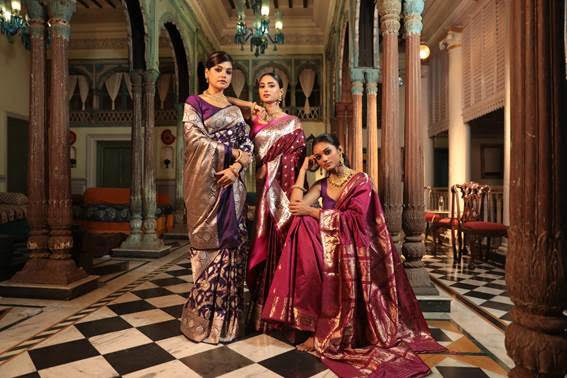

Across centuries, the saree has remained a constant thread in India’s cultural fabric. While trends have come and gone, this timeless drape has continued to evolve without ever losing its soul. Elegant yet powerful, simple yet profound, the saree is more than attire—it is a reflection of India’s history, craftsmanship, and identity.
Celebrated every year on December 21, World Saree Day honours this enduring garment that has wrapped itself around generations of women, carrying stories of heritage in every pleat. It is a day to celebrate not just the saree, but the hands that weave it, the regions that shape it, and the traditions that keep it alive.
A Celebration of Craft Over Convenience
In an age driven by speed and mass production, the handloom saree stands as a reminder that some things are worth time, patience, and care. A single handwoven saree can take weeks or even months to complete—each thread placed with precision, each motif shaped by tradition. World Saree Day highlights the importance of choosing handloom, not merely as fashion, but as an act of preserving India’s artisanal legacy.
When a woman drapes a saree, she becomes part of a larger story—one that connects weavers, villages, families, and generations. Wearing a saree is, in essence, wearing history.
How India Celebrates World Saree Day
Across the country, World Saree Day is celebrated with enthusiasm and pride. Women from all walks of life—students, professionals, homemakers, artists, and leaders—wear sarees to mark the occasion. Schools, offices, cultural institutions, and communities organise handloom days, exhibitions, workshops, and storytelling sessions to educate younger generations about India’s textile heritage.
Social media platforms also play a powerful role, with women sharing photographs, regional drapes, and personal stories underlining the emotional connection between the saree and Indian identity.
Iconic Sarees That Define India’s Textile Heritage
India’s saree traditions are deeply regional, each weave reflecting the culture and landscape of its origin:
-
Kantha Sarees turn simple running stitches into poetic expressions of needlework, blending heritage craft with contemporary appeal.
-
Tussar Silk Sarees are known for their raw texture and natural sheen, offering earthy elegance and timeless versatility.
-
Kanjivaram Sarees, the pride of South India, are celebrated for their rich silk, bold borders, and intricate motifs woven using age-old techniques.
-
Baluchari Sarees from Bengal narrate epics and folklore through silk, transforming fabric into storytelling canvases.
-
Banarasi Sarees, rooted in Varanasi’s centuries-old weaving legacy, are renowned for luxurious brocades, zari work, and cultural grandeur.
-
Georgette Sarees represent modern grace, with their fluid drape and lightweight elegance bridging tradition and contemporary fashion.
-
Tissue Silk Sarees shimmer with ethereal radiance, combining silk and zari to create celebratory elegance.
-
Uppada Silk Sarees are prized for their feather-light texture and refined craftsmanship, offering understated luxury.
Sambalpuri Saree: Odisha’s Global Pride
Among India’s finest handloom traditions, the Sambalpuri saree of Odisha holds a place of exceptional pride. Known for its distinctive ikat (bandha) weaving technique, Sambalpuri sarees are created by resist-dyeing the yarn before weaving—a process that demands extraordinary skill, precision, and time.
Characterised by traditional motifs such as the shankha (conch), chakra (wheel), phula (flower), and tribal symbols, Sambalpuri sarees are deeply rooted in Odisha’s culture and temple traditions. Each design carries symbolic meaning, reflecting harmony, spirituality, and the region’s artistic identity.
Celebrated not only across India but also globally, Sambalpuri sarees have earned international recognition for their craftsmanship, sustainability, and artistic excellence. Their bold patterns, vibrant colours, and geometric precision make them one of India’s most admired and respected sarees on the world stage—truly among the best sarees India has offered globally.
Choosing a Sambalpuri saree is choosing heritage, patience, and pride in indigenous craftsmanship.
A Shift Toward Meaningful Fashion
Today, women are increasingly moving beyond trend-driven buying toward choices rooted in authenticity, longevity, and cultural value. This shift has renewed appreciation for handwoven sarees—especially those like Sambalpuri—that represent sustainable fashion in its truest form. World Saree Day reinforces this movement by reminding us that every handloom purchase helps sustain artisans and preserve living traditions.
More Than a Garment
As women across India drape their favourite sarees this World Saree Day, the six yards stand as a powerful symbol of womanhood, resilience, and cultural continuity. The saree is not frozen in time—it adapts, reinvents, and continues to inspire, while remaining deeply rooted in tradition.
On December 21, World Saree Day reminds us that India is a civilisation that weaves its history, culture, and soul into cloth—and carries it forward, one generation at a time.