

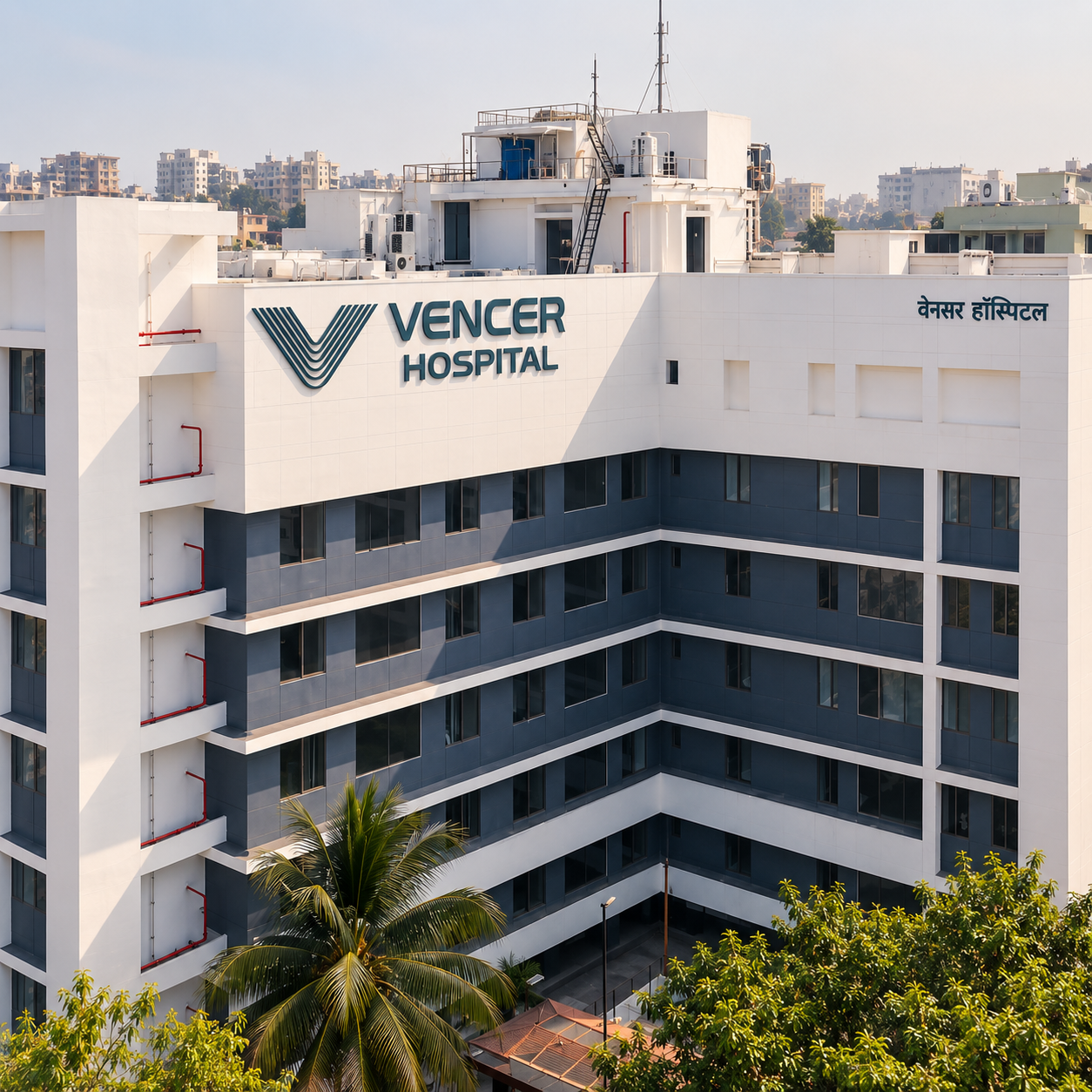
Pune | Sept 15: As India prepares for a rapidly ageing population, healthcare systems will need to move beyond treating individual diseases and focus increasingly on helping senior citizens live safely, independently and with dignity, according to Vencer Hospital, Pune.
At Vencer Hospital, where more than 40 per cent of patients are senior citizens, doctors are witnessing the changing realities of ageing in urban India. While people are living longer, families are becoming smaller and increasingly geographically dispersed, with many children working in other cities or countries.
The challenge is particularly relevant for Maharashtra, where the share of people aged 60 years and above is expected to rise from around 10 per cent in 2011 to 17.1 per cent by 2036. Pune’s growing retired population and increasing number of nuclear families offer an early picture of what other Indian cities may face.
Dr Sharoon Shitole, Consultant Ophthalmologist and Managing Director of Vencer Hospital, said the changing family structure requires stronger healthcare and social support systems for elderly people.
“The traditional Indian family acted as a safety net. When that support becomes smaller or disappears, a dependable social and healthcare system must take its place,” she said.
Vencer Hospital is exploring a socio-medical approach to geriatric care, which considers not only diseases but also eyesight, mobility, loneliness, financial circumstances, home environment and access to regular support.
The approach aligns with the broader principles of the World Health Organization’s Integrated Care for Older People framework, which focuses on maintaining the abilities that help older people live independently.
Through its Grandparent Care programme, Vencer Hospital is bringing together preventive healthcare, social engagement and financial awareness. Its Drishti Senior Vision and Cataract Programme focuses on vision as an important component of safe mobility and fall prevention, while Apna Circle provides senior citizens with an opportunity to interact, share concerns and connect with doctors.
Financial predictability is also an important part of the initiative. Under the Drishti programme, cataract surgery charges begin at ₹6,999, with the cost of the intraocular lens varying according to medical requirements and lens selection.
“India’s next healthcare challenge is not simply helping people live longer. It is building the support system that makes those longer lives safe, connected, affordable and dignified,” Dr Shitole added.