
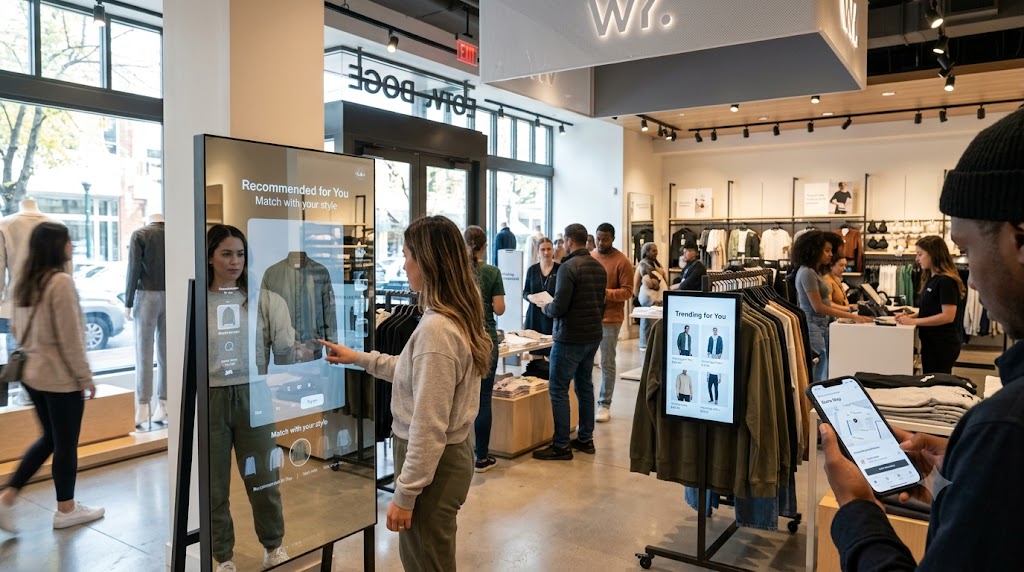
Artificial intelligence is changing how Americans discover products, compare prices and make purchasing decisions. From online shopping assistants that help customers find the right outfit to recommendation systems that suggest products based on individual preferences, retailers are increasingly using AI to make shopping more convenient, relevant and personalised.
For the American retail industry, this shift is about more than introducing new technology. It is changing how businesses attract customers, manage inventory, improve customer service and compete for consumer spending. As shoppers become accustomed to faster digital experiences, retailers are investing in AI tools that can understand customer needs, anticipate demand and connect product discovery with purchasing.
The transformation also reflects a broader change in retail strategy. Instead of presenting every shopper with the same products and promotions, businesses are moving towards experiences that adapt to individual interests, shopping habits and budgets.
From Product Searches to Personal Shopping Assistants
Traditional online shopping often requires customers to browse multiple categories, apply filters and compare dozens of products before making a decision. AI-powered shopping assistants are beginning to simplify this process by allowing shoppers to describe what they want in everyday language.
A customer looking for comfortable workwear, for example, can ask for clothing suitable for a professional setting within a specific budget. An AI assistant can help narrow the options, compare product features and suggest alternatives based on the shopper’s requirements.
Retailers are experimenting with conversational shopping experiences that make product discovery feel more like speaking to a sales assistant than navigating a conventional website. Amazon’s Rufus shopping assistant is one example of how generative AI can help customers explore products, answer shopping-related questions and compare options.
Walmart has also been expanding its use of AI to improve product discovery and digital shopping experiences. These developments reflect an effort to reduce the distance between identifying a need and finding a suitable product.
For retailers, the commercial benefit could be significant. A smoother shopping journey may reduce customer frustration, help shoppers discover relevant products and improve the likelihood of completing a purchase. However, recommendations must remain accurate and useful; an assistant that repeatedly suggests unsuitable products can quickly undermine customer confidence.
How AI Is Changing Personalised Recommendations
Personalised recommendations have been part of online retail for years, but AI is making them more adaptable and context-sensitive.
Retail platforms can analyse information such as browsing activity, previous purchases, product searches and stated preferences to suggest relevant items. A shopper who regularly searches for running shoes may see sportswear recommendations, while someone browsing home furnishings may receive suggestions for complementary household products.
AI can also help retailers personalise email campaigns, app notifications and digital storefronts. Rather than sending identical promotions to every customer, businesses can tailor messages to shopping interests, product availability and previous interactions.
In fashion retail, this approach can help customers discover outfits, accessories and products that fit their preferred style. In grocery retail, recommendations can highlight frequently purchased items or suggest alternatives when a product is unavailable.
The business objective is to make product discovery more relevant while increasing customer engagement and repeat purchases. When recommendations are genuinely useful, shoppers may spend less time searching and feel more confident about their decisions.
However, retailers must avoid confusing personalisation with excessive targeting. Repeated notifications, irrelevant promotions and recommendations based on outdated behaviour can make the shopping experience feel intrusive rather than helpful.
Virtual Try-Ons Bring Digital Shopping Closer to Reality
One of the most visible applications of AI in retail is the development of visual search and virtual try-on tools. These technologies address a longstanding problem in online shopping: customers cannot always judge how a product will look, fit or complement their existing possessions from a photograph alone.
Visual search allows shoppers to upload an image and find similar products. Someone who spots a jacket on social media, for example, may use an image-based search tool to discover comparable styles available through a retailer.
Virtual try-on technologies can help consumers preview certain cosmetics, eyewear and fashion items. Some applications use photographs, augmented reality or AI-generated visualisations to show how products might appear on an individual.
For fashion retailers, these tools create opportunities to make online browsing more interactive and reduce uncertainty before purchase. They can also help smaller brands compete by offering more informative digital experiences without operating large physical stores.
Nevertheless, virtual visualisations have limitations. The appearance of a garment on a screen does not necessarily reflect its actual fit, fabric quality or colour under different lighting conditions. Retailers must ensure that these tools supplement accurate sizing information and product descriptions rather than create unrealistic expectations.
AI Pricing and the Question of Consumer Trust
Pricing is another area where AI is influencing retail decisions. Retailers can use analytical systems to examine demand, inventory levels, competitor prices and sales patterns when deciding how to price products or plan promotions.
These systems can help businesses identify slow-moving stock, respond to changing costs and avoid unnecessary discounting. Electronic shelf labels can also make it easier for stores to update displayed prices without manually replacing paper labels.
However, the growing use of automated pricing has raised questions about transparency and fairness. Consumers may worry that retailers could charge different prices to different shoppers or increase prices when demand rises.
It is important to distinguish between AI-assisted price analysis and individualised pricing. A retailer using software to review competitor prices is not necessarily changing prices according to a particular customer’s identity or willingness to pay.
For businesses, clear communication is essential. Customers need to understand the prices they are being offered, the terms of promotions and whether prices may change. Opaque pricing practices could damage loyalty even if they improve short-term margins.
Retailers that use AI to manage costs while maintaining transparent and consistent pricing policies may be better positioned to build lasting consumer trust.
Behind the Scenes, AI Is Reshaping Inventory Management
Some of AI’s most valuable retail applications are not immediately visible to shoppers. Demand forecasting systems can analyse historical sales, seasonal patterns, local preferences and other relevant information to estimate which products customers are likely to buy.
These forecasts can help retailers determine how much stock to order, where to distribute products and when to replenish shelves. Better planning is particularly important for fashion retailers, where trends can change rapidly and unsold seasonal merchandise can lead to heavy markdowns.
Grocery businesses can use forecasting tools to improve stock availability and reduce waste, especially for perishable goods. Large retail chains can also apply AI to warehouse operations, delivery planning and supply chain management.
The financial implications are substantial. Excess inventory ties up working capital, while stock shortages can result in lost sales and disappointed customers. More accurate forecasting can help businesses balance these competing risks.
For consumers, the benefit is straightforward: greater availability of desired products, fewer disappointing stockouts and potentially better value when retailers manage their operations efficiently.
Yet forecasts are not infallible. Unexpected events, sudden shifts in consumer preferences and inaccurate data can lead to poor decisions. Human oversight remains important, particularly when retailers operate in markets where trends and demand change quickly.
The Business Economics of AI-Powered Retail
AI personalisation is becoming part of a wider effort to improve retail profitability. Acquiring new customers can be expensive, making customer retention and repeat purchases increasingly important to businesses.
By improving product discovery, providing faster customer support and making promotions more relevant, AI may help retailers strengthen customer relationships. Automation can also reduce some repetitive workloads, allowing employees to focus on complex enquiries and in-store assistance.
However, implementing these systems involves significant costs. Retailers must invest in technology, data infrastructure, cybersecurity, staff training and ongoing system maintenance. Smaller businesses may struggle to match the capabilities of major chains, although third-party retail software is gradually making some AI tools more accessible.
There is also a need to measure results carefully. Increased website engagement does not automatically translate into higher profits. Businesses must assess whether AI improves conversion rates, reduces returns, lowers operating costs or increases customer retention enough to justify the investment.
Retailers that introduce technology without a clear business objective risk spending heavily on tools that add complexity without delivering meaningful value.
Privacy and the Human Side of Shopping
As personalisation becomes more sophisticated, the collection and use of customer data will remain a central concern. Shopping platforms may process information about browsing habits, purchase histories, preferences and, in some applications, images uploaded by customers.
Retailers need to explain how such information is used, protect it against unauthorised access and provide appropriate choices over data collection. Customers should not have to surrender unnecessary personal information simply to receive basic shopping assistance.
Accuracy is equally important. AI systems can make incorrect recommendations, misinterpret a request or present misleading product information. Retailers need ways to correct errors and allow customers to reach human support when automated assistance is insufficient.
The most effective retail experience will not necessarily be the one with the greatest degree of automation. For many shoppers, the ideal combination is technology that makes routine tasks easier alongside knowledgeable staff who can offer judgement, reassurance and personal service.
The Future of AI in American Retail
AI is moving American retail towards a more connected model in which product discovery, customer service, pricing and inventory planning increasingly work together. Shopping assistants can help customers identify what they need, recommendation engines can surface relevant options, and forecasting systems can help ensure that products are available when demand emerges.
For retailers, the opportunity lies in turning these capabilities into measurable business improvements rather than adopting technology simply to follow a trend. The winners are likely to be businesses that combine useful personalisation with reliable products, competitive prices and transparent customer practices.
The transition will not eliminate traditional retail skills. Understanding consumer behaviour, maintaining strong supplier relationships and delivering dependable service will remain essential. AI can support these activities, but it cannot automatically replace sound business judgement.
Ultimately, the future of American retail will depend on how effectively businesses use AI to make shopping easier without making it intrusive or confusing. Personalisation can create a competitive advantage when it helps customers find better products, make informed choices and feel confident about their purchases. For retailers, that balance between technological innovation and consumer trust will be central to sustainable growth.
