
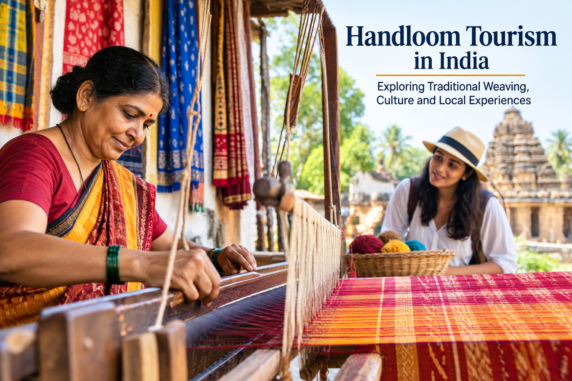
Oct 12: India’s handloom traditions offer travellers a chance to discover the country beyond its famous monuments, beaches and hill stations. In weaving towns and artisan villages, every textile tells a story of local identity, inherited skills and generations of craftsmanship. From Banarasi silk in Uttar Pradesh to Sambalpuri ikat in Odisha, these traditions offer the foundation for cultural experiences that bring visitors closer to the people and places behind the fabric.
For travellers interested in local culture, design, fashion and authentic shopping, a visit to a weaving centre can become a memorable part of a holiday. It can also create opportunities for artisans and small businesses, provided tourism is planned in a way that respects local communities and supports their livelihoods.
India’s Handloom Sector: A Tradition with Economic Potential
India’s handloom industry is both a source of traditional knowledge and an important part of the country’s rural economy. The Ministry of Textiles’ Fourth All India Handloom Census, conducted in 2019–20, recorded approximately 35.22 lakh handloom weavers and allied workers across 31.45 lakh households. These figures underline the scale of the communities involved in preserving India’s weaving heritage.
Tourism could provide these communities with additional ways to earn. Alongside selling sarees, fabrics and home furnishings, artisans may benefit from guided visits, weaving demonstrations, workshops and partnerships with travel operators.
The wider domestic tourism market offers a substantial potential audience. The Ministry of Tourism’s India Tourism Data Compendium 2024 recorded approximately 2.95 billion domestic tourist visits in 2024, compared with around 2.51 billion in 2023.
These figures do not measure demand for handloom tourism specifically, but they demonstrate the scale of domestic travel within which cultural and craft-based experiences could find an audience.
Five Destinations to Experience India’s Handloom Heritage
Each weaving region has its own materials, motifs and techniques. Exploring these destinations can give travellers a better understanding of how textiles are shaped by local culture and history.
1. Varanasi, Uttar Pradesh — The Craft of Banarasi Silk
Varanasi is renowned for its silk sarees, intricate designs and traditional weaving skills. Visitors can arrange visits to participating weaving units, observe the production process and explore textile shops. A weaving experience can also be combined with the city’s historic neighbourhoods, riverfront and local cuisine.
2. Sambalpur, Odisha — The Art of Ikat
Sambalpuri textiles are known for their distinctive patterns, created by tying and dyeing yarn before weaving. Visitors can explore the region’s textile traditions through arranged artisan visits and local shopping. The experience can be combined with regional food and nearby cultural attractions.
3. Kanchipuram, Tamil Nadu — A Heritage Woven in Silk
Kanchipuram’s silk sarees are closely associated with the town’s cultural identity. Visitors interested in textiles can arrange a visit to a participating weaving workshop to learn about traditional motifs, silk weaving and the skills involved in producing these garments.
4. Assam — Discovering Muga and Eri Silk
Assam’s silk traditions offer a distinctive cultural experience, particularly for travellers exploring Northeast India. Visitors can look for locally arranged weaving demonstrations and craft experiences, combining them with regional cuisine, village visits and nature-based travel.
5. Chanderi, Madhya Pradesh — The Beauty of Fine Weaving
Chanderi is known for its lightweight textiles and traditional designs. Exploring its weaving heritage can complement a visit to the town’s historic sites and offer travellers a closer look at the craftsmanship behind its fabrics.
These destinations can support craft-focused travel, but visitors should confirm access and timings with local tourism offices, artisan cooperatives or tour operators before travelling. Not every workshop is open to the public.
Craft Villages: Where Tourism Meets Traditional Skills
A handloom shop offers a chance to purchase a textile. A well-organised craft experience can reveal the work behind it.
India’s Ministry of Textiles has promoted Craft Handloom Villages to bring weaving, artisan engagement and tourism closer together. Locations identified under the initiative include Kanihama in Jammu and Kashmir, Sharan in Himachal Pradesh, Mohpara in Assam, Bodh Gaya in Bihar and Kovalam in Kerala. The programme aims to promote traditional crafts and connect craft destinations with established tourist circuits.
Such initiatives can help visitors understand how yarn is prepared, how patterns are created and why particular designs matter to a community. They can also create additional opportunities for local guides, accommodation providers, food businesses and transport operators.
For this model to succeed, artisans should have a meaningful role in designing experiences, setting prices and deciding how their work and communities are presented to visitors.
How Travellers Can Plan a Handloom-Focused Trip
Handloom tourism does not necessarily require a separate holiday. It can be incorporated into a wider trip with a little planning.
-
Arrange a workshop visit in advance. Contact local tourism offices, recognised cooperatives or tour operators to check whether weaving demonstrations are available.
-
Allow enough time. A visit should leave room to understand the process, speak with artisans and browse products without rushing.
-
Explore beyond the showroom. Where visitor access is permitted, a demonstration can explain the techniques and labour behind a finished textile.
-
Buy thoughtfully. Ask about the textile’s origin, materials and weaving method. Request a receipt and clear product details when purchasing.
-
Respect local customs. Seek permission before photographing artisans or their workspaces, and follow any restrictions in production areas.
These simple steps can make a visit more rewarding while helping ensure that tourism supports the people who maintain these traditions.
Festivals and Craft Markets Can Inspire Regional Travel
Handloom exhibitions and craft fairs give visitors an introduction to textiles from different parts of India. They can also spark interest in travelling to the places where those crafts originate.
The Surajkund International Crafts Mela, for example, brings together handicrafts, handlooms, regional food and cultural performances. Such events give visitors an opportunity to discover traditional crafts in one setting and learn about the regions associated with them.
Tourism organisations can build on this interest by creating itineraries that connect exhibitions with weaving centres, local markets, heritage attractions and regional cuisine. These combinations can turn an initial interest in textiles into a broader cultural journey.
Making Handloom Tourism Work for Artisans
The potential is promising, but successful handloom tourism requires more than publicity. Some weaving clusters may need better transport links, visitor facilities, trained guides and reliable information for travellers. Others may benefit from support with online bookings, digital payments and product presentation.
It is equally important to ensure that tourism income reaches the people who create the textiles. Fair compensation for demonstrations, transparent pricing and direct purchasing opportunities can help communities benefit from visitor spending.
Authenticity also matters. Clear information about materials, production methods and origin helps travellers make informed purchases and distinguish handwoven products from machine-made alternatives.
Most importantly, tourism should complement the work of weaving communities, not interfere with it. Visits need to respect artisans’ schedules, privacy and working conditions.
The Future of Handloom Tourism in India
India’s handloom heritage can become a stronger part of its tourism offering when weaving clusters are connected with cultural festivals, heritage towns, local food experiences and community-led travel.
A visitor to Odisha, for instance, could combine a textile experience with regional cuisine and nearby attractions. In Assam, traditional silk experiences could form part of a wider journey through local culture and nature. Similar combinations can help travellers discover destinations through their distinctive crafts rather than simply passing through.
The opportunity is not just to sell more textiles. It is to create travel experiences that help people understand the stories, skills and livelihoods behind them.
India’s handlooms represent generations of knowledge and creativity. By connecting travellers with the artisans who keep these traditions alive, handloom tourism can enrich cultural travel while creating additional opportunities for local communities.
