

Experts convene to forge an actionable policy on the future of AI in finance
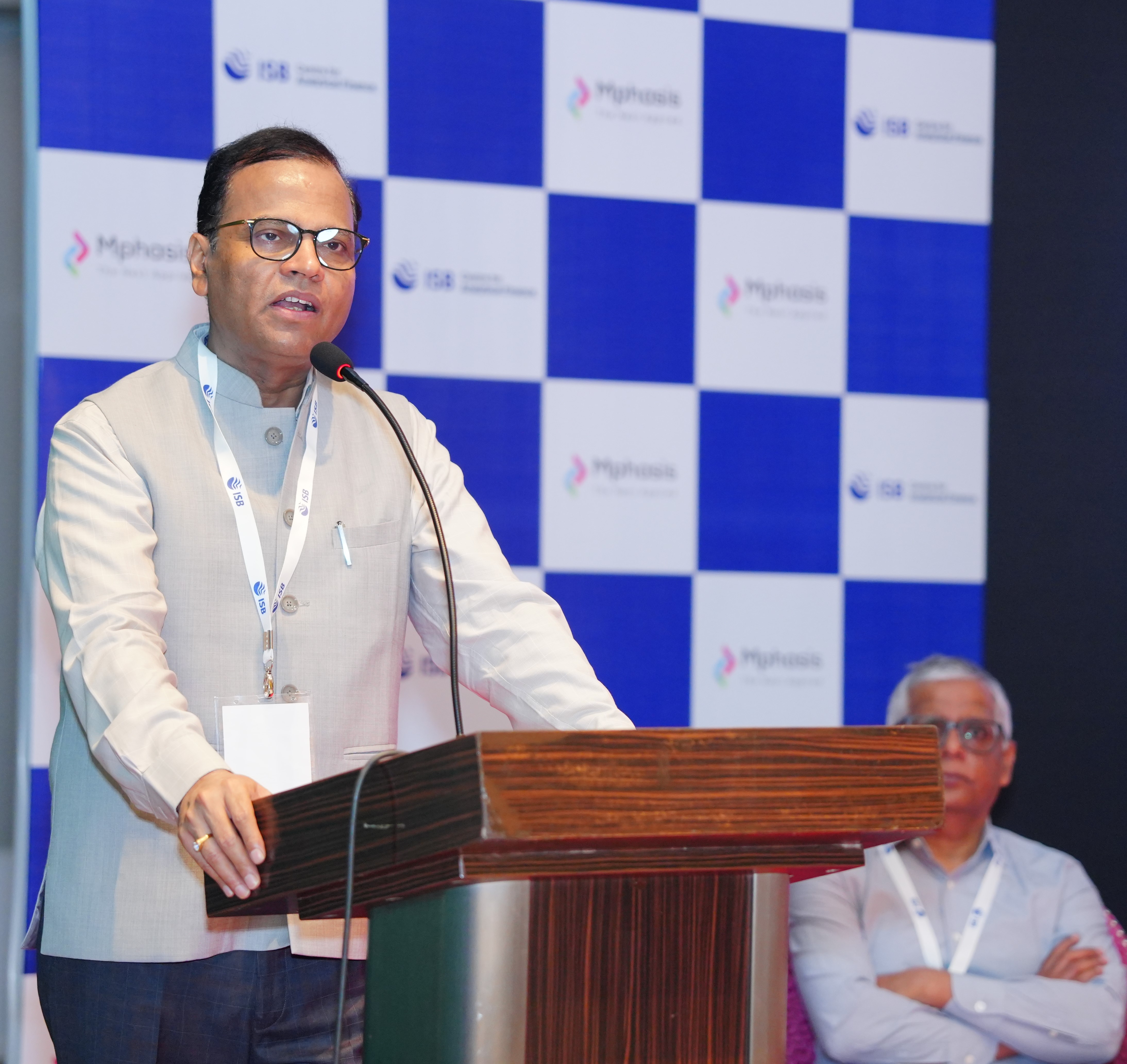
Hyderabad, Mar 26: The Centre for Analytical Finance (CAF) at the Indian School of Business (ISB), in collaboration with Mphasis, today hosted the Policy Conclave 2026, on the theme: ‘Impact of AI in Financial Inclusion and the Banking Landscape.’ The conclave brought together leaders from government, regulators, financial services, and academia to examine how AI can expand access to formal credit while ensuring trust, fairness, and regulatory stability.
Sharing his thoughts at the inaugural session, Ramakrishna Rao, IAS, Chief Secretary, Government of Telangana, highlighted the state’s remarkable economic trajectory, but stressed that the next frontier of financial inclusion requires moving beyond basic bank accounts. He emphasised that true inclusion means ensuring every citizen, especially those in remote areas, can seamlessly access comprehensive financial products such as credit and insurance. To achieve this at a massive scale, Rao positioned Artificial Intelligence as an essential game-changer. By leveraging Telangana’s robust, real-time citizen databases, he explained that AI can eliminate intermediaries, curtail corruption, and provide intuitive, uninterrupted access to government services.
He also spoke about the collaboration with ISB in the drafting of the Telangana Vision 2047 document and urged a strict focus on translating grand visions into immediate, actionable realities. Rao extended an open invitation for deep collaboration amongst academia, industry, and regulators, envisioning Telangana as the definitive national model for seamlessly integrating AI into daily governance.
Addressing the conclave, Professor Madan Pillutla, Dean, ISB, said that as ISB marks 25 years, it continues to build on its founding vision of producing rigorous academic research to inform business practices and public policy. Dismissing any perceived divide between academic rigour and real-world relevance, he asserted that exceptional research must drive tangible societal impact. Highlighting the new Mphasis-backed “AI for Impact” initiative, Pillutla championed ongoing efforts to develop robust, AI-driven mechanisms for evaluating the creditworthiness of the unbanked, underscoring how academic expertise solves pressing challenges in financial inclusion and healthcare.
Speaking at the conclave, Santosh Kulkarni, Vice President, Delivery- Banking & Capital Markets, Mphasis Limited, highlighted AI’s unprecedented acceleration and noted that milestones anticipated for 2028 are already being realised. Drawing on Mphasis’s global banking expertise, he detailed how AI actively transforms operations like anti-money laundering. Kulkarni emphasised that their collaboration with the Indian School of Business is a purpose-driven social cause. He expressed confidence that the convergence of academic rigour, government policy, and technology will be key to scaling AI solutions for meaningful societal impact.
Framing the discussion at the conclave, Professor Prasanna Tantri, Executive Director, Centre for Analytical Finance, ISB, emphasised that rigorous academic research must directly drive real-world implementation. Highlighting the actionable Telangana Vision document, he announced the impending rollout of an alternative credit score to advance tangible financial inclusion in the next 6-9 months.
Key discussions covered during the day included AI in financial decision-making, enhancing default risk prediction through alternative data and advancing financial inclusion in Telangana. Experts at the conclave emphasised the need for strong governance frameworks, consent-based data systems, and public-private collaboration. The conclave concluded with a call for sustained engagement across stakeholders to translate policy dialogue into actionable frameworks.
