
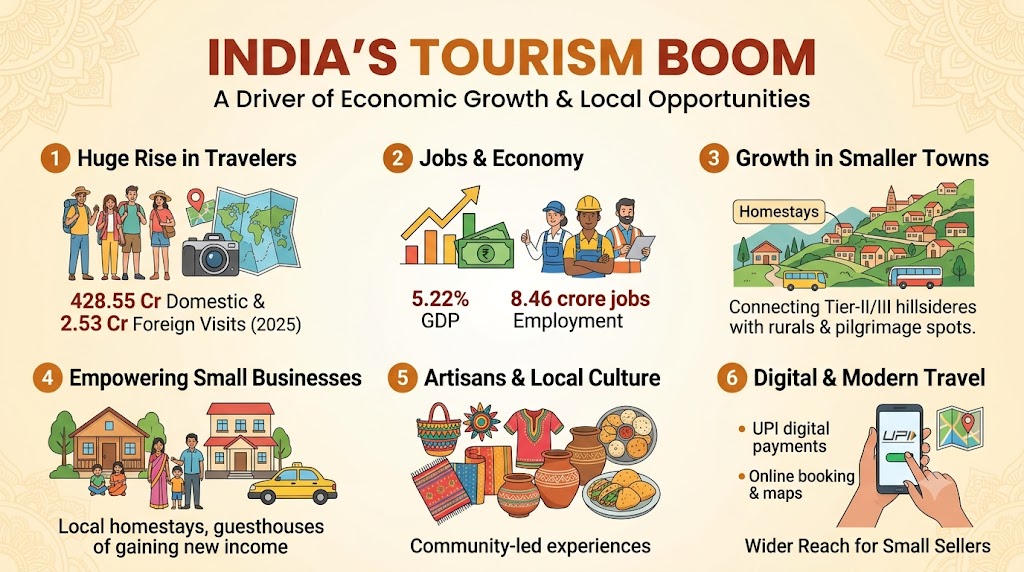
India’s tourism industry is emerging as a major driver of economic growth, creating new opportunities for small businesses, local entrepreneurs, artisans and hospitality providers. Rising domestic travel, improving transport infrastructure, digital booking platforms and growing interest in regional destinations are expanding the market beyond traditional tourist hotspots. With 428.55 crore domestic tourist visits and 2.53 crore foreign tourist visits recorded in 2025, the sector offers significant potential for employment generation, local enterprise development and regional economic growth.
Tourism Becomes a Stronger Driver of India’s Economy
Tourism contributes approximately 5.22% to India’s GDP and supports around 8.46 crore jobs, reflecting its importance to the country’s services economy. Foreign tourist visits generated foreign exchange earnings of ₹2,76,831 crore in 2025, highlighting the sector’s contribution to international revenue and local business activity.
The industry’s economic impact extends well beyond hotels and travel companies. Every tourist journey creates demand for transportation, accommodation, food, shopping, entertainment and local experiences. This interconnected business ecosystem allows enterprises of different sizes to benefit from increased visitor spending.
For small businesses, tourism can provide an additional source of income while encouraging investment in local products, services and infrastructure. As travel demand expands, destinations that offer distinctive cultural, culinary, natural and heritage experiences have greater opportunities to attract visitors and retain tourism revenue within their communities.
Tier-II and Tier-III Cities Open New Markets
Tourism growth is increasingly creating opportunities beyond major metropolitan centres. Smaller cities, pilgrimage destinations, hill towns, coastal regions and rural communities are attracting travellers seeking affordable holidays, spiritual experiences, wellness activities and cultural exploration.
Improved road connectivity, expanding rail networks, airport development and better digital access are helping make more destinations accessible. This creates opportunities for local entrepreneurs to establish guesthouses, homestays, cafés, travel services, guided tours and regional experience-based businesses.
The shift can also encourage investment in areas that have traditionally depended on agriculture, small-scale trade or seasonal employment. Tourism-related income gives households another avenue to earn money, while increased visitor spending can support local markets and service providers.
However, the long-term benefits will depend on reliable transport, sanitation, waste management, visitor safety and the availability of quality accommodation. Destinations that invest in these essentials are better positioned to build a sustainable tourism economy.
Homestays and Small Hospitality Businesses Gain Momentum
The growth of experience-based travel is creating fresh demand for locally managed accommodation. Rather than choosing only large hotels, some travellers prefer homestays and smaller properties that offer regional food, personal interaction and an understanding of local traditions.
This trend provides an entry point for families and small entrepreneurs who want to participate in the tourism economy without establishing large hospitality businesses. Spare rooms, traditional homes and locally owned properties can become sources of income when supported by adequate facilities, hygiene standards and effective marketing.
Beyond accommodation, visitors generate business for taxi operators, tour guides, restaurants, street-food vendors and local suppliers. Women-led enterprises and young entrepreneurs can also participate through food services, cultural experiences, travel assistance and digital promotion.
For established businesses, partnerships with homestays and local service providers can expand their reach while helping smaller enterprises connect with a wider customer base.
Local Handicrafts, Food and Cultural Experiences Create Value
India’s diverse craft traditions, regional cuisines, festivals and heritage sites offer tourism businesses an opportunity to differentiate themselves. Travellers purchasing locally made textiles, pottery, jewellery, souvenirs and other traditional products can help generate income for artisans and small manufacturers.
Direct sales to visitors can improve market access for craftspeople, particularly when local products are showcased through tourism centres, exhibitions, craft markets and digital platforms. This can reduce dependence on intermediaries and help producers communicate the cultural value of their work.
Regional food businesses can benefit in a similar way. Restaurants, home kitchens and food vendors can introduce visitors to local ingredients and traditional recipes, creating demand for agricultural produce and other locally sourced materials.
Community-led experiences, including heritage walks, village tours, craft demonstrations and traditional performances, can further diversify revenue streams. When organised responsibly, these activities allow communities to earn from their cultural assets while encouraging the preservation of local knowledge and traditions.
Government Initiatives Support Tourism Infrastructure
Government programmes are helping strengthen the foundations of India’s tourism economy. Initiatives such as Swadesh Darshan 2.0 focus on developing tourism destinations through a more sustainable and experience-led approach, while PRASHAD supports the development of pilgrimage destinations.
Digital initiatives and tourism-related information platforms can also help businesses improve their visibility, access information and connect with potential customers. Online bookings, digital payments and social media marketing have lowered some of the traditional barriers to reaching travellers, particularly for small accommodation providers and local experience operators.
These developments can create a more connected tourism ecosystem in which local businesses benefit from improved destination infrastructure and broader market access. However, the effectiveness of these initiatives will depend on implementation, local participation and the ability of small enterprises to meet visitor expectations.
Digital Platforms Give Small Businesses Greater Reach
Digital adoption is becoming increasingly important for tourism-related businesses. Online maps, booking services, digital payment systems and customer reviews help travellers discover accommodation, restaurants, guides and attractions that may otherwise remain outside mainstream tourism networks.
For a small homestay owner or local tour operator, an online presence can expand the customer base beyond nearby towns. Digital payments can simplify transactions, while online reviews can help build credibility and encourage repeat visits.
At the same time, businesses need to invest in clear pricing, responsive customer service, accurate listings and consistent service quality. Digital visibility alone cannot guarantee success, particularly in destinations with seasonal demand or intense competition.
Training in digital marketing, hospitality management and financial planning can help local entrepreneurs turn tourism demand into sustainable businesses.
Sustainable Tourism Is Essential for Long-Term Growth
The expansion of tourism also brings challenges. Excessive visitor numbers can place pressure on water supplies, waste management systems, local transport and fragile ecosystems. Rising property costs and poorly managed commercial development may also limit the benefits received by residents.
For tourism to generate lasting economic value, destination planning must balance visitor growth with environmental protection and community interests. Encouraging responsible travel, supporting local suppliers, managing visitor flows and investing in public facilities can help protect the assets on which the industry depends.
Businesses that adopt responsible waste management, conserve resources and source goods locally may also strengthen their appeal among travellers who value authentic and environmentally conscious experiences.
The Road Ahead for India’s Tourism Economy
India’s tourism boom presents an opportunity to build a broader and more inclusive business ecosystem. From homestays and restaurants to transport operators, artisans and digital service providers, local enterprises can play a larger role in meeting the needs of a growing number of travellers.
The next phase of growth will depend not only on attracting more visitors but also on ensuring that tourism spending translates into reliable livelihoods, stronger small businesses and better opportunities for local communities.
With continued infrastructure development, digital adoption, skill training and sustainable destination management, tourism can become an important source of regional investment and entrepreneurship. The real measure of success will be how effectively India converts its tourism potential into long-term economic benefits for the people who make its destinations distinctive.
