
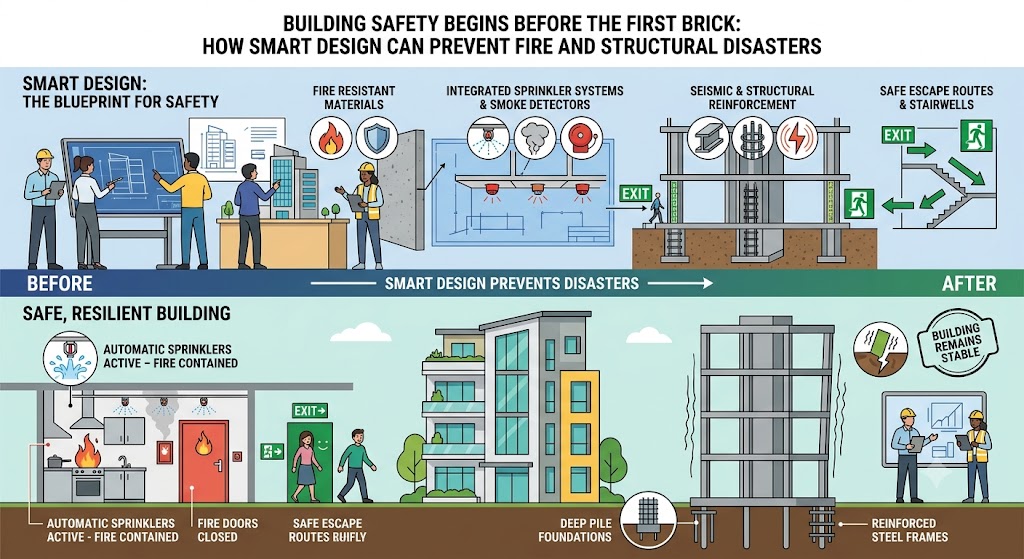
New Delhi, Sep 7: Building safety begins long before people move into a new structure. Careful planning, quality construction and proper fire protection at every stage can help prevent accidents, structural failures and loss of life.
The first step is to understand the condition of the land. Soil testing helps engineers decide the right foundation and identify possible problems that could affect the stability of a building. Structural designs should be prepared and checked by qualified professionals, while construction should strictly follow approved plans and safety requirements.
The quality of construction materials also matters. Concrete, steel, reinforcement and other structural components need to meet required standards and be used correctly. Regular inspections during construction can help identify weaknesses before they turn into serious problems.
Fire safety should be planned from the beginning rather than added after construction is completed. Fire resistant walls and doors, safe staircases, emergency exits and clearly marked escape routes can help slow the spread of fire and give people more time to get out safely.
Buildings should also have suitable fire detection and firefighting systems. Depending on the type and size of a building, these may include smoke detectors, fire alarms, sprinklers, extinguishers, hydrants and emergency lighting. These systems need regular testing and maintenance to remain effective.
Construction sites require particular attention because they often contain temporary electrical connections, welding equipment, fuel, paints, packaging and other materials that can increase fire risks. Welding, cutting and other activities that produce sparks should be carried out under proper supervision with firefighting equipment readily available.
Temporary electrical systems should also be installed and checked by qualified personnel. Damaged cables, overloaded circuits and unsafe connections can quickly lead to short circuits or fires.
Keeping the construction site clean is another simple but important safety measure. Wood, cardboard, plastic and other waste materials can provide fuel for a fire. Removing waste regularly can reduce the risk and keep pathways clear for workers and emergency services.
Flammable materials such as paints, solvents and fuel should be stored in safe and designated areas away from heat and sources of ignition. Gas cylinders and other hazardous materials also need proper storage and handling.
Emergency planning should begin during construction itself. Workers should know how to raise an alarm, where to evacuate and where to assemble during an emergency. Roads and access points should remain clear so that fire engines and rescue teams can reach the site without delay.
India’s National Building Code provides guidelines covering fire and life safety, structural design, construction practices and building services. The framework highlights the importance of considering safety throughout the life of a building, from planning and construction to operation and maintenance.
Ultimately, building safety is not only about following regulations. It is about creating structures that can protect people when unexpected situations occur. Strong foundations, quality materials, careful construction, proper fire protection and regular maintenance can significantly reduce risks.
A safe building is one where safety is considered from the foundation to the fire exit, not after an accident happens.