
In today’s competitive business environment, an efficient supply chain can make a significant difference to a company’s profitability and growth. Businesses need more than reliable suppliers and strong customer demand. They also depend on transportation networks that can move products quickly, manage costs and maintain consistent deliveries across international markets.
Dubai has emerged as an important location for companies looking to meet these requirements.
Over the years, the emirate has invested heavily in ports, airports, warehousing facilities and international trade infrastructure. These developments have helped transform Dubai from a regional trading centre into a major logistics destination connecting businesses across several continents.
For international companies, the attraction goes beyond its geographical position. Dubai offers an established business ecosystem where transportation, storage, distribution and trade services operate within a connected commercial environment.
As global supply chains become more complex, this combination is creating new opportunities for manufacturers, retailers, freight operators and international distributors.
Strategic Location Creates a Competitive Business Advantage
One of Dubai’s strongest advantages is its position between major manufacturing economies in Asia and growing consumer markets across Europe, Africa and the Middle East.
This location allows companies to manage international distribution through a central regional base rather than maintaining separate logistics arrangements in every market.
For example, a European retailer sourcing products from India or China can use Dubai to receive shipments, maintain inventory and distribute goods to customers across the Middle East and Africa.
This approach can help businesses simplify their logistics operations, improve inventory management and respond more efficiently to regional demand.
For manufacturers and wholesalers, the ability to access several markets from one location can also support business expansion without requiring significant investment in additional distribution infrastructure.
Dubai’s geographical advantage therefore has a direct commercial impact. It helps companies improve market access while creating opportunities to develop more efficient international trading operations.
Jebel Ali Port Strengthens International Trade Connectivity
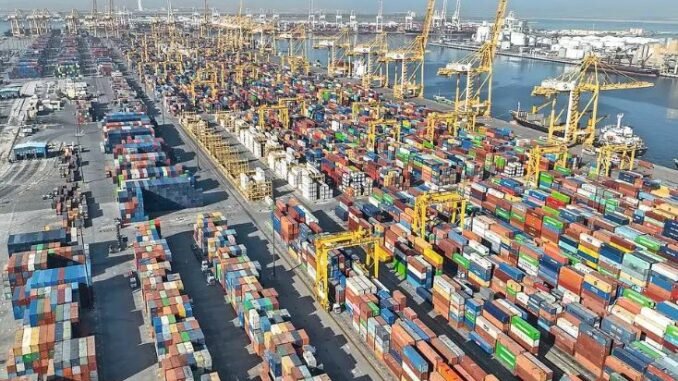
Dubai’s maritime infrastructure is a major contributor to its logistics competitiveness. At the centre of this network is Jebel Ali Port, operated by DP World.
As one of the region’s leading container ports, Jebel Ali supports international shipping activities and connects businesses with major trading destinations around the world.
For companies involved in importing and exporting, port efficiency is an important business consideration. Delays in cargo handling, customs procedures or transportation can increase operating costs and affect customer commitments.
Jebel Ali’s large-scale infrastructure and international shipping connections provide businesses with an established gateway for managing international cargo movements.
Its proximity to Jebel Ali Free Zone (JAFZA) adds further commercial value. Companies operating in the area can access warehousing, manufacturing, distribution and trading facilities close to major maritime infrastructure.
This creates opportunities for businesses to coordinate several supply-chain activities from one location, improving operational planning and reducing unnecessary transportation movements.
For international distributors and manufacturers, this integrated environment can make Dubai an attractive base for regional operations.
Air Freight and Multimodal Transport Are Improving Supply-Chain Efficiency
Maritime transportation remains essential for large-volume shipments, but businesses also require faster alternatives when dealing with time-sensitive products.
Dubai’s aviation infrastructure, supported by Dubai International Airport and Al Maktoum International Airport, provides important connections for international air cargo operations.
Air freight is particularly relevant for businesses dealing with pharmaceuticals, electronics, luxury goods and perishable products, where delivery schedules and product handling are critical.
However, Dubai’s logistics advantage comes from combining air transportation with sea and road freight networks.
The development of the UAE’s national railway infrastructure is also expected to strengthen freight connectivity between important industrial and commercial locations.
For businesses, having access to different transportation methods provides greater flexibility when selecting routes based on cost, delivery requirements and cargo characteristics.
A company transporting large quantities of goods may prefer maritime shipping for cost efficiency, while urgent orders can be moved through air freight. Road and rail connections can then support onward distribution.
This flexibility is particularly valuable for companies managing international supply chains where delays in one transportation channel can affect overall business performance.
Free Zones and Trade Policies Encourage International Investment
Dubai’s logistics growth is closely connected to its business-friendly regulatory and investment environment.
Free zones such as Jebel Ali Free Zone provide international companies with facilities for trading, warehousing, manufacturing and distribution. These zones are designed to support businesses seeking to establish regional operations and manage international commercial activities.
For foreign companies entering the Middle Eastern market, Dubai offers access to an established network of logistics providers, financial services and business infrastructure.
The government’s Dubai Economic Agenda D33 also reflects its ambition to strengthen the emirate’s position as a leading global business and trade destination.
Meanwhile, the UAE’s Comprehensive Economic Partnership Agreements are helping expand commercial relationships with international trading partners by improving market access and encouraging investment.
These initiatives are important for logistics businesses because international trade growth creates demand for transportation, customs support, warehousing and supply-chain management services.
A supportive business environment can also encourage manufacturers and distributors to establish long-term operations in Dubai, strengthening its position as a regional commercial centre.
Supply-Chain Resilience Is Becoming a Business Priority
Recent global disruptions have demonstrated how quickly international supply chains can be affected by geopolitical tensions, shipping delays, changing trade regulations and rising transportation costs.
For businesses, relying too heavily on a single supplier, shipping route or distribution centre can create significant operational risks.
Dubai’s logistics network offers companies opportunities to develop more flexible supply-chain arrangements.
Businesses can use the emirate as a regional storage and distribution base, allowing them to maintain inventory closer to customers and respond more effectively to changes in market demand.
For example, a company supplying consumer products across Africa and the Middle East can maintain stock in Dubai and distribute goods according to regional requirements.
This arrangement may help reduce delivery uncertainty and provide greater control over inventory management.
Companies can also explore alternative transportation routes when disruptions affect their usual shipping channels.
The commercial value of this flexibility is significant. Better supply-chain resilience can help businesses protect customer relationships, maintain sales activity and reduce the financial impact of unexpected delays.
Growing Opportunities for E-Commerce, Manufacturing and Retail
Dubai’s logistics ecosystem is creating opportunities across several business sectors.
E-commerce is one of the industries benefiting from improved logistics connectivity. As online shopping expands across the Middle East and Africa, retailers need reliable warehousing, fulfilment and delivery services to serve customers in different markets.
Dubai’s distribution infrastructure allows businesses to manage inventory, process orders and coordinate regional deliveries through established logistics providers.
Manufacturing companies also benefit from the emirate’s international connections. Businesses dealing in automotive components, electronics, industrial equipment and consumer goods can use Dubai as a distribution base for regional customers.
The pharmaceutical and food industries present additional opportunities because they require specialised storage, temperature-controlled facilities and reliable transportation.
Small and medium-sized enterprises can also benefit from Dubai’s logistics ecosystem. Instead of investing in their own warehouses and transportation networks in multiple countries, they can work with third-party logistics providers to manage international distribution.
This can reduce the complexity of entering new markets and allow smaller companies to focus their resources on production, marketing and business development.
Technology Is Transforming Logistics Operations
Technology is becoming an important competitive factor in the logistics industry.
Businesses increasingly expect accurate shipment tracking, transparent delivery information and better control over inventory. To meet these expectations, logistics companies are investing in automation, artificial intelligence, digital platforms and data analytics.
These technologies can help businesses monitor shipments, manage warehouse operations and identify potential delivery problems before they affect customers.
Automated warehousing can improve inventory handling, while digital tracking systems provide greater visibility throughout the transportation process.
For companies operating across multiple countries, better access to supply-chain information can improve purchasing decisions, financial planning and customer service.
Technology also creates opportunities for logistics providers to offer more integrated services rather than focusing exclusively on transportation.
As competition increases, companies that combine efficient infrastructure with digital capabilities are likely to have a stronger position in the international logistics market.
Challenges That Could Influence Future Growth
Despite its strong infrastructure and international connectivity, Dubai’s logistics industry must continue addressing several business challenges.
Operating costs remain an important consideration. Fuel, labour, warehousing and transportation expenses can influence the overall cost of logistics services and affect business competitiveness.
Geopolitical uncertainty also creates risks for companies operating across international trade routes. Disruptions to maritime corridors or regional aviation networks can lead to shipment delays and higher transportation expenses.
Sustainability is another growing concern. Businesses and logistics operators are facing increasing pressure to reduce carbon emissions, improve fuel efficiency and adopt more environmentally responsible transportation methods.
Maintaining competitiveness will therefore require continued investment in infrastructure, digital innovation, sustainable logistics and workforce development.
For Dubai, the challenge is not simply to expand logistics capacity but to ensure that its services remain efficient, cost-effective and attractive to international businesses.
The Future of Dubai’s Logistics Industry
Dubai’s future in global logistics will increasingly depend on how effectively it connects transportation infrastructure with business services and digital technology.
Further development of ports, airports, rail networks and distribution facilities can strengthen its role as an international trading centre.
At the same time, growing demand from e-commerce, regional manufacturing and international retail is likely to create new opportunities for logistics operators and supply-chain service providers.
Businesses are also expected to place greater importance on integrated logistics solutions that combine freight transportation, warehousing, customs support and inventory management.
Dubai is well positioned to benefit from this shift because of its established commercial infrastructure and international business relationships.
Its long-term competitiveness, however, will depend on its ability to manage costs, respond to changing trade patterns and provide reliable services in an increasingly demanding global market.
Conclusion:
Dubai’s logistics industry is becoming an increasingly important part of international business and regional trade. Its strategic location, maritime infrastructure, international airports, free zones and expanding transportation networks are helping companies manage supply chains across multiple markets.
For businesses, these developments offer opportunities to improve distribution efficiency, strengthen supply-chain resilience and reach customers in new regions.
The growth of digital logistics and integrated transportation services is also creating opportunities for manufacturers, retailers, e-commerce companies and logistics providers.
Although challenges involving operating costs, geopolitical uncertainty and sustainability remain, Dubai’s continued investment in its logistics ecosystem provides a strong foundation for future development.
Ultimately, Dubai’s competitive advantage lies in its ability to connect businesses with markets, suppliers and customers across the world. As international trade continues to evolve, this connectivity will remain a major factor in strengthening its position as a global logistics and business hub.
