
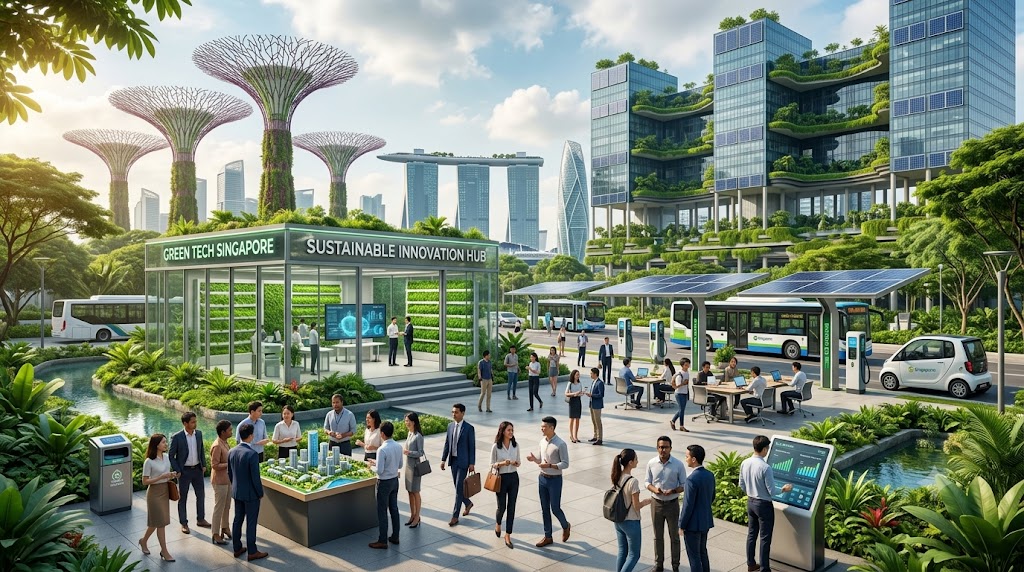
Singapore is turning green technology into a strategic opportunity for business growth, industrial innovation and long-term economic resilience. Through investments in clean energy, energy-efficient digital infrastructure, sustainable manufacturing and low-carbon solutions, the country is encouraging businesses to become more resource-efficient while preparing for a changing global economy.
As companies face rising operating costs and increasing expectations around environmental responsibility, sustainability is becoming an important business consideration. Businesses are looking beyond traditional cost-cutting measures and exploring technologies that can reduce energy consumption, minimise waste and improve productivity.
Singapore’s green transition reflects this shift. With its established technology sector, strong infrastructure and focus on innovation, the country is creating opportunities for companies to develop sustainable products, modernise existing operations and expand into emerging markets across Southeast Asia.
Green Technology Becomes a Business Growth Opportunity
Green technology is increasingly moving from the margins of corporate sustainability programmes into mainstream business planning. Companies are recognising that energy efficiency, responsible resource management and cleaner production methods can contribute to both environmental progress and financial performance.
The Singapore Green Plan 2030 provides a framework for advancing sustainability across several areas, including energy, infrastructure, industry and resource management. Its priorities are creating opportunities for businesses to explore new technologies and incorporate environmental considerations into their long-term strategies.
For startups, this transition can open markets for climate technology, carbon management, renewable energy and waste-reduction solutions. Established companies can benefit by upgrading equipment, improving supply chains and developing products that respond to changing customer expectations.
The commercial opportunity extends beyond Singapore. Businesses that develop effective and scalable green solutions can potentially serve customers throughout the region, where demand for energy-efficient infrastructure and sustainable industrial practices continues to develop.
Energy-Efficient Data Centres and Greener AI
Singapore’s role as a digital and financial hub makes sustainable computing an important part of its green technology strategy. Data centres provide the infrastructure needed for cloud services, artificial intelligence (AI) and digital business operations. However, their electricity consumption and cooling requirements create challenges as demand for computing capacity grows.
The country’s Green Data Centre Roadmap encourages more efficient digital infrastructure and supports the development of data centre capacity alongside sustainability objectives.
Advanced cooling technologies, efficient hardware and intelligent energy management systems can help operators use electricity more effectively. Businesses can also reduce unnecessary computing demand by reviewing software performance, improving server utilisation and selecting cloud resources that match their actual needs.
AI offers another opportunity, but it also requires careful planning. Smaller, specialised AI models may be sufficient for certain business applications and can sometimes require fewer computing resources than larger models. The benefits depend on the specific task, infrastructure and model design.
For businesses, greener digital operations can help control technology expenses while supporting environmental goals. SMEs can begin with practical steps such as monitoring cloud usage, removing redundant data and improving the efficiency of their digital systems.
Solar Power and Renewable Energy Investment
Renewable energy is another important part of Singapore’s sustainability ambitions. The country has set a target of deploying at least 2 gigawatt-peak of solar energy by 2030, making better use of available spaces and exploring innovative deployment options.
Expanding solar capacity in a densely developed country requires careful planning. Rooftops, suitable reservoirs and other available locations can contribute to solar generation, while energy management technologies can help businesses make better use of the electricity they consume.
This creates opportunities for solar developers, engineering companies, energy consultants and providers of storage and monitoring systems.
Businesses do not necessarily need to install renewable energy systems immediately to benefit from the transition. Reviewing electricity consumption, replacing inefficient equipment and improving building cooling can provide practical starting points.
For manufacturers, retailers and office-based companies, understanding where energy is being used can help identify improvements that reduce avoidable expenditure. The financial case will depend on energy prices, installation costs, available incentives and the expected operating life of the equipment.
Sustainable Aviation Fuel Opens New Industrial Opportunities
Singapore is also developing its role in sustainable aviation fuel (SAF), which can help reduce aviation’s life-cycle greenhouse gas emissions when produced using suitable feedstocks and processes.
The country’s established aviation, refining and logistics industries provide a foundation for developing alternative fuel supply chains. Neste operates a major sustainable aviation fuel production facility in Singapore, contributing to the availability of lower-carbon aviation fuel.
Singapore has also announced measures to encourage SAF use on departing flights, including an initial target of a 1% sustainable aviation fuel uplift under its policy framework.
The development of this sector can create opportunities for fuel producers, logistics providers, feedstock suppliers and companies offering emissions measurement and verification services.
However, sustainable aviation fuel is not automatically emissions-free. Its overall environmental benefit depends on how the fuel is produced, the feedstocks used and emissions generated throughout its life cycle.
For businesses, the wider lesson is that sustainability policies can encourage investment in new industrial capabilities while creating demand for specialised technologies and services.
Sustainable Manufacturing and the Circular Economy
Manufacturing and construction are important areas where green technology can improve resource efficiency. Companies are increasingly exploring lower-carbon materials, more efficient production methods and ways to reduce waste across their operations.
In construction, optimised building design, material-efficient engineering and suitable lower-carbon alternatives can help reduce the environmental impact of projects. In manufacturing, improved process controls and equipment upgrades can reduce unnecessary energy use and material losses.
The circular economy offers another practical approach. Rather than treating discarded materials as waste, businesses can identify opportunities to reuse, repair, recover or recycle them.
Industrial clusters such as Jurong Island provide opportunities to explore collaboration between businesses, including approaches that improve resource use and support industrial decarbonisation.
These changes can deliver commercial benefits when they reduce raw material consumption, disposal costs or production inefficiencies. Companies should nevertheless evaluate the technical suitability and life-cycle impact of new materials and processes before adopting them at scale.
Green Financing and Government Support for Businesses
Investment remains a major consideration for businesses looking to adopt sustainable technologies. Solar installations, efficient machinery, digital monitoring systems and low-carbon production equipment can require substantial upfront expenditure.
Singapore offers various business support initiatives and financing options intended to encourage enterprise development, energy efficiency and sustainability improvements. The availability and terms of support depend on the relevant programme, business eligibility and prevailing conditions.
Green financing can also help fund projects involving renewable energy, resource efficiency and industrial emissions reduction. For startups, funding may support research and commercial development, while established businesses may use it to modernise facilities or improve production processes.
Before committing to a project, companies should assess the initial investment, maintenance requirements, expected savings and potential operational risks. A clear business case supported by measurable outcomes can make it easier to evaluate whether a green technology investment is commercially viable.
How Small Businesses Can Adopt Green Technology
Green technology is not just for large corporations. Small and medium-sized enterprises (SMEs) can make meaningful progress through manageable changes that fit their budgets and operational requirements.
Businesses can begin by tracking electricity consumption, improving lighting and cooling efficiency, reducing packaging waste and reviewing purchasing practices. Manufacturers can examine production processes for avoidable material losses, while digital businesses can review their cloud computing and data storage needs.
Partnerships with technology providers and industry networks can help SMEs understand available solutions before making significant investments. Where relevant, businesses can also investigate current government support programmes and financing options.
Measuring progress is equally important. Monitoring energy bills, material use, waste generation and operating costs can help companies identify which initiatives are delivering results.
Reliable measurement also strengthens communication with customers, suppliers and investors. Rather than making broad environmental claims, businesses can demonstrate improvements through clear and verifiable performance indicators.
The Future of Green Technology and Business in Singapore
Singapore’s green technology ambitions are creating opportunities across renewable energy, digital infrastructure, sustainable aviation, construction and industrial innovation. By connecting environmental priorities with technological development, the country is working to strengthen its position as a regional centre for sustainable business solutions.
The transition will require continued investment, practical implementation and collaboration between public institutions and private enterprises. Companies must also distinguish between technologies that offer measurable improvements and those whose benefits remain uncertain or commercially unproven.
For businesses, the strongest approach is to treat sustainability as part of sound operational planning. Reducing energy waste, improving resource efficiency and developing useful low-carbon solutions can support cost management while opening opportunities for innovation.
As demand for sustainable products and services evolves across Southeast Asia, companies that combine commercial discipline with credible environmental performance may be better positioned to compete. Singapore’s experience highlights how green technology can support business modernisation while contributing to a more resource-efficient economy.
