
Singapore’s manufacturing industry is undergoing an important transformation as businesses increasingly focus on sustainability, energy efficiency and cleaner production. From electronics and chemicals to precision engineering and food processing, manufacturers are adopting new technologies to reduce emissions, manage resources and improve operational performance.
This shift is changing more than the way factories operate. It is also influencing investment decisions, business strategies and Singapore’s position as a leading manufacturing and industrial hub in Asia.
For many years, manufacturing growth was largely measured by production capacity, output and operating costs. Today, businesses are also looking at how efficiently they use energy, how much waste they generate and how well their operations meet environmental standards. Sustainability is becoming a key part of long-term business planning rather than simply an environmental responsibility.
Sustainability becomes a priority for Singapore’s manufacturers
Singapore has built a strong manufacturing base through its advanced infrastructure, skilled workforce, international connectivity and business-friendly environment. The sector plays an important role in the country’s economy, particularly in areas such as electronics, semiconductors, pharmaceuticals, chemicals and precision engineering.
However, manufacturers face growing pressure to reduce their environmental impact while remaining competitive in international markets. Rising energy costs, changing customer expectations and stricter environmental requirements are encouraging companies to rethink traditional production methods.
Singapore’s limited land and natural resources make this transition particularly important. Businesses must find ways to produce more efficiently while reducing their dependence on energy, water and raw materials.
As a result, manufacturers are investing in cleaner equipment, smarter production systems and technologies that help them monitor their environmental performance. These investments are helping companies reduce unnecessary costs while preparing their operations for future business requirements.
Green technologies are reshaping factory operations
Technology is playing a central role in Singapore’s move towards sustainable manufacturing. Modern factories are increasingly using artificial intelligence, automation, smart sensors and data analytics to improve production efficiency.
These technologies allow manufacturers to monitor electricity consumption, equipment performance and production processes in real time. By identifying inefficient operations, companies can make adjustments that reduce energy use and material waste.
For example, smart energy-management systems can help factories understand when and where electricity is being consumed. Automated controls can adjust lighting, cooling and machinery according to actual production requirements. Predictive maintenance systems can identify potential equipment problems before they lead to breakdowns.
These improvements are particularly valuable in industries such as semiconductor manufacturing and pharmaceuticals, where production requires precise temperature control, specialised equipment and reliable operating conditions.
The benefits go beyond environmental performance. More efficient machinery can reduce maintenance costs, improve productivity and limit production interruptions. This makes green technology an important business investment rather than an expense focused only on meeting sustainability targets.
Energy efficiency drives industrial investment
Energy consumption remains a major operating cost for many manufacturing businesses. Factories that depend on heavy machinery, industrial cooling and continuous production require large amounts of electricity.
To address this challenge, companies are investing in energy-efficient motors, advanced cooling systems, improved compressors, LED lighting and automated energy controls. Some manufacturers are also recovering waste heat from industrial processes and reusing it to reduce overall energy demand.
Although upgrading equipment can involve significant initial investment, the long-term savings can make these projects commercially attractive. Lower electricity consumption can improve operating margins, while modern machinery can also increase production reliability.
The Singapore Government is supporting this transition through initiatives such as the Energy Efficiency Grant, which helps eligible businesses invest in energy-efficient equipment. The programme is intended to make it easier for companies, particularly small and medium-sized enterprises, to adopt more efficient technologies.
For manufacturers planning to expand or modernise their facilities, these support measures can help reduce the financial burden of upgrading production systems.
Jurong Island strengthens Singapore’s green industrial ambitions
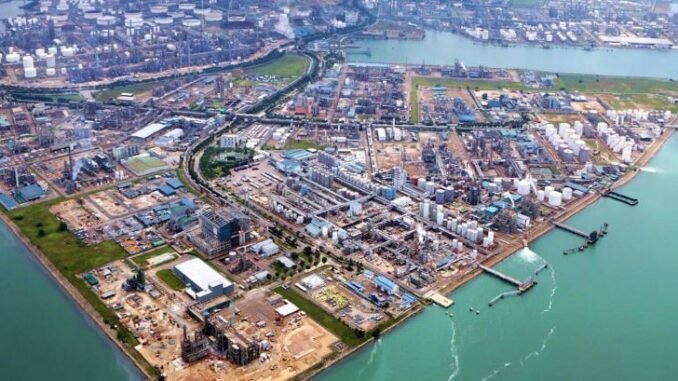
Singapore’s Jurong Island is an important centre for the country’s energy and chemicals industry. The island is home to major industrial facilities and plays a significant role in supporting Singapore’s manufacturing and energy sectors.
As global demand for lower-carbon products increases, Singapore is working to transform Jurong Island into a more sustainable industrial ecosystem. The focus includes improving energy efficiency, developing cleaner industrial processes and supporting the production of sustainable chemicals and other lower-carbon products.
The government has set targets to increase the output of sustainable products from Jurong Island to 1.5 times the 2019 level by 2030 and four times by 2050. It is also exploring carbon capture and other technologies that could help reduce emissions from energy-intensive industrial activities.
These plans are creating opportunities for investment in sustainable chemicals, industrial recycling, low-carbon fuels, carbon management and energy-efficient infrastructure.
For international businesses, the transformation of Jurong Island highlights Singapore’s intention to maintain a strong industrial base while adapting to the changing demands of global markets.
Carbon capture offers new opportunities
Reducing emissions is particularly challenging for industries that require high temperatures or involve chemical processes that release carbon dioxide. In sectors such as refining, petrochemicals and heavy manufacturing, switching to renewable electricity alone may not be enough to achieve significant reductions.
Carbon capture, utilisation and storage (CCUS) is therefore receiving greater attention. The technology involves capturing carbon dioxide from industrial processes before it enters the atmosphere. Depending on the application, the captured carbon may be used in industrial processes or transported for long-term storage.
Singapore is studying carbon capture and storage opportunities, including cooperation with regional partners. Since the country has limited suitable geological storage capacity, cross-border arrangements may become important for developing large-scale projects.
The development of this sector could create new opportunities for engineering companies, technology providers, infrastructure developers and industrial investors.
However, carbon capture remains a complex and capital-intensive area. Its commercial success will depend on technological improvements, suitable infrastructure, regulatory arrangements and the availability of reliable storage options.
Alongside carbon capture, manufacturers are also focusing on reducing emissions at their source through better production methods, material efficiency and cleaner energy.
Renewable energy and the search for cleaner power
Access to reliable electricity is essential for Singapore’s manufacturing industry. Industrial facilities need a stable power supply to maintain production, operate specialised equipment and meet customer deadlines.
Solar energy is one of the options supporting Singapore’s energy transition. Although the country’s limited land area restricts the development of large solar farms, rooftop installations and other suitable spaces are being used to increase solar capacity.
Singapore is also exploring regional electricity imports to expand access to lower-carbon energy sources. Cooperation with neighbouring countries could help diversify the country’s energy supply and support its long-term sustainability goals.
For manufacturers, access to cleaner electricity is becoming an important consideration when planning new facilities and expanding existing operations. Businesses are increasingly assessing not only the cost of power but also its environmental impact.
The availability of renewable energy, together with improvements in energy storage and electricity infrastructure, will play an important role in determining how quickly industrial operations can reduce their emissions.
Carbon pricing changes business decisions
Singapore’s carbon tax is another important factor influencing industrial investment. By placing a cost on greenhouse gas emissions from large facilities, the policy encourages businesses to improve energy efficiency and adopt lower-carbon production methods.
The carbon tax reached S$45 per tonne of carbon dioxide equivalent in 2026 and is scheduled to remain at that level in 2027. The government has indicated a longer-term target range of S$50 to S$80 per tonne by 2030.
For manufacturers, carbon pricing makes emissions an increasingly important part of operating costs. Companies that depend on energy-intensive processes may need to invest in cleaner equipment and production systems to manage future expenses.
It is also changing how businesses assess new investments. When planning a factory or expanding production capacity, companies must consider not only construction and equipment costs but also future energy requirements and potential carbon liabilities.
This is encouraging manufacturers to include environmental performance in their financial planning and long-term investment strategies.
International investors see opportunities in green manufacturing
Singapore’s move towards sustainable manufacturing is creating opportunities across several industries. Investors are increasingly looking beyond traditional factory expansion and considering businesses that provide the technologies and services needed for cleaner industrial operations.
These include renewable energy, industrial automation, energy storage, water treatment, recycling, sustainable materials and carbon management.
The growth of these supporting industries can strengthen Singapore’s wider manufacturing ecosystem. As factories adopt cleaner technologies, demand also increases for engineering services, software solutions, equipment suppliers and environmental consultants.
Research and development is another area with considerable potential. Collaboration between companies, universities and research institutions can help develop new materials, improve production processes and create technologies that reduce industrial emissions.
Singapore’s established infrastructure, skilled workforce and access to international markets make it an attractive location for companies seeking to develop and expand advanced manufacturing operations.
The growing importance of sustainability adds another advantage, particularly for businesses looking to serve customers with increasingly demanding environmental requirements.
Small manufacturers face the challenge of transformation
While large multinational companies often have the financial resources to invest in advanced green technologies, smaller manufacturers face greater challenges.
Upgrading machinery, installing digital monitoring systems and redesigning production processes can require substantial investment. Smaller businesses may also lack the technical expertise needed to identify the most suitable technologies.
For these companies, the transition must be carefully managed. Replacing equipment or changing production methods can affect cash flow, operational schedules and customer commitments.
Government grants, industry partnerships and technical support can help smaller businesses overcome some of these barriers. Access to financing and practical guidance can make it easier for them to improve energy efficiency without placing excessive pressure on their operations.
This transition is also important for supply-chain competitiveness. Large manufacturers increasingly expect their suppliers to demonstrate responsible environmental practices and provide information about energy consumption and emissions.
Smaller companies that invest in more efficient operations may therefore improve their chances of maintaining existing business relationships and securing new contracts.
Challenges facing sustainable industrial growth
Despite the opportunities, Singapore’s transition towards sustainable manufacturing will require considerable investment and planning.
The cost of new technology remains one of the biggest challenges. Advanced automation systems, energy-efficient equipment and carbon capture facilities can involve significant upfront expenditure. Businesses must carefully assess whether the expected savings and long-term benefits justify the investment.
Energy security is another important consideration. Singapore depends heavily on imported energy, making access to affordable and reliable low-carbon electricity essential for its industrial future.
Water management also remains important, particularly for semiconductor, pharmaceutical and chemical manufacturing. These industries require reliable supplies of water, and investment in recycling and treatment systems will be necessary to improve resource efficiency.
The availability of skilled workers is equally important. As factories become more automated and digitally connected, manufacturers need employees with expertise in data analytics, engineering, energy management and environmental systems.
Addressing these challenges will require continued cooperation between the government, businesses, educational institutions and technology providers.
The future of sustainable manufacturing in Singapore
The future of Singapore’s manufacturing industry will increasingly depend on its ability to combine industrial productivity with environmental responsibility.
Artificial intelligence, smart factory systems, renewable energy, industrial recycling and low-carbon production technologies are expected to play a growing role in shaping manufacturing operations. These developments could help businesses reduce costs, improve efficiency and respond to changing international market requirements.
However, successful transformation will involve more than installing new machinery. Companies will need to rethink how they manage energy, select raw materials, design production processes and develop their workforce.
Singapore’s approach is focused on ensuring that sustainability supports industrial competitiveness rather than slowing economic development. By encouraging investment in cleaner technologies and developing the infrastructure needed for low-carbon production, the country is working to strengthen its position in the global manufacturing industry.
Conclusion
Green technology is changing the way Singapore’s manufacturers operate and how investors evaluate industrial opportunities. Energy-efficient equipment, digital production systems, renewable energy and carbon management are becoming increasingly important to the future of the sector.
Although the transition involves financial, technical and operational challenges, it also creates opportunities for businesses willing to modernise their operations and adopt more efficient production methods.
For Singapore, sustainable manufacturing is not simply about reducing emissions. It is about building an industrial sector that can remain productive, competitive and attractive to international investors in a changing global economy.
As sustainability becomes a more important part of business decisions worldwide, Singapore’s investment in green manufacturing could play a major role in shaping the next phase of its industrial growth.
