
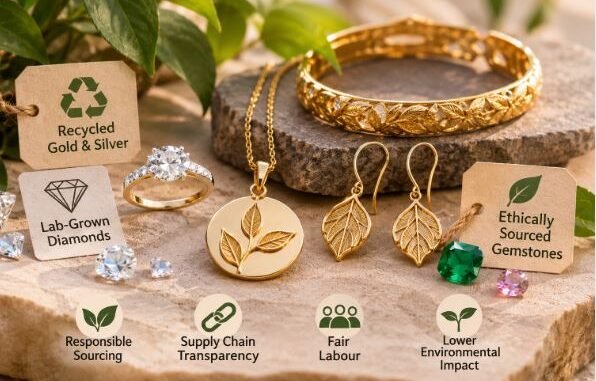
The jewellery industry is entering a period of change. Alongside design, quality and price, responsible sourcing and transparent production are becoming important parts of the business. Brands are exploring recycled gold and silver, lab-grown diamonds and traceable gemstones to meet changing expectations and build stronger customer relationships.
This shift is creating new opportunities for jewellery manufacturers, retailers and designers. Sustainable materials can help brands develop distinctive collections, improve supply-chain practices and strengthen their market position. However, long-term success will depend on genuine action, reliable sourcing and clear communication rather than sustainability claims alone.
Sustainable materials are changing production
Recycled gold and silver are gaining attention as alternatives to newly mined materials. They can be recovered from old jewellery, manufacturing waste and other existing sources, then refined and used in new designs.
For businesses, recycled metals offer a way to reduce reliance on newly mined resources and make better use of existing materials. They also support a circular approach to production, where valuable materials remain in use for longer.
Lab-grown diamonds are another important development. Produced in controlled environments, they offer manufacturers and retailers another option for diamond jewellery. Their environmental impact, however, depends on factors such as production technology and energy sources. Businesses need to provide accurate information rather than presenting every lab-grown diamond as automatically sustainable.
Design and consumer preferences create new opportunities
Sustainable jewellery is moving into everyday fashion as well as traditional occasion wear. Minimal necklaces, stackable rings, simple bracelets and versatile earrings allow brands to offer products for a wider range of customers.
Handcrafted designs and traditional techniques also give businesses an opportunity to build distinctive collections. Combining skilled craftsmanship with responsibly sourced materials can help brands stand apart in a competitive market.
For retailers, the focus is on offering attractive products at different price points while maintaining quality and transparency. Sustainability needs to become part of the main product range rather than remain a limited collection or marketing category.
Business impact and market opportunities
The shift towards responsible jewellery is influencing sourcing, manufacturing, branding and retail operations. Businesses are reviewing suppliers, checking material origins and investing in better supply-chain information.
These changes can increase operating costs, particularly for smaller manufacturers. However, they can also help businesses build credibility, reduce sourcing risks and develop stronger relationships with customers and business partners.
Clear product information is essential. Brands need to explain whether jewellery contains recycled metals, lab-grown diamonds or traceable gemstones. They must also ensure that environmental and ethical claims are supported by evidence.
India’s jewellery industry faces a changing market
India is one of the world’s largest jewellery markets, with strong demand linked to weddings, festivals and family occasions. Its large manufacturing and retail base gives the country an important role in the development of responsible jewellery.
The wider market is also adjusting to higher gold prices. According to the World Gold Council, Indian gold jewellery demand fell 18% year-on-year to 241.1 tonnes during the first nine months of 2026. However, the value of demand increased 29% to ₹3,618.3 billion.
These figures reflect the overall gold jewellery market and do not measure sustainable jewellery sales. They do show the pressure on buying volumes and the importance of value, pricing and product choices for businesses.
Indian manufacturers and retailers can build new opportunities by combining established craftsmanship with responsible sourcing, modern designs and better supply-chain transparency.
Traceability and responsible sourcing
Traceability is becoming an important part of jewellery business operations. Brands need reliable information about where their metals and gemstones originate and how they move through the supply chain.
Supplier checks, recognised certifications and independent audits can help businesses verify their sourcing practices. Digital tracking systems can also improve record-keeping and make product information easier to communicate.
This is particularly important for brands selling through international markets, where buyers and business partners may expect stronger documentation and sourcing standards.
Challenges for the industry
The transition to sustainable jewellery is not without challenges. Responsible materials can be difficult to source consistently, while verification, certification and improved production systems can add costs.
Smaller businesses may find it harder to invest in these processes. They also face the challenge of maintaining competitive prices while improving sourcing and manufacturing practices.
Greenwashing is another concern. Unverified claims can damage customer confidence and affect the reputation of the wider industry. Businesses need to make specific, measurable claims and provide evidence wherever possible.
The road ahead
Sustainable jewellery is becoming a business consideration rather than simply a design trend. Recycled metals, lab-grown diamonds and traceable gemstones are giving companies more options, but responsible production requires attention across the entire supply chain.
Brands that invest in reliable sourcing, transparent operations and strong product quality can build a more credible position in the market. The focus should be on practical improvements that can be measured and maintained over time.
Conclusion
The future of the jewellery business will depend on more than attractive designs and premium materials. Responsible sourcing, production standards and supply-chain transparency are becoming important factors in how brands operate and compete.
For manufacturers and retailers, sustainable jewellery offers an opportunity to develop new products, strengthen customer trust and prepare for changing market expectations. The transition will require investment, careful supplier management and honest communication, but it can also create long-term business value.
Ultimately, sustainable jewellery will succeed when responsible practices become part of everyday business operations. Brands that combine good design, quality craftsmanship and credible sourcing will be better positioned to grow in a changing industry.
